Professor Chien Publishes on Progressive Prosecutor Movement

Professor Shih-Chun Steven Chien has co-authored an article published in the Howard Law Journal.  The article, co-authored with Stephen Daniels (Senior Research Professor, American Bar Foundation), explores the “progressive prosecutor” movement.  Using data from the Law School Survey of Student Engagement, the article “investigates the importance of student motivations for attending law school and the connections to students’ career aspirations – in particular, the expectation of working as a prosecutor.” The article proposes “several policy recommendations about potential collaborations between prosecutors and law schools and between prosecutors and non-profits that may expand the presently small pool of potential hires,” and “discusses the importance of experiential learning opportunities that connect law students with reform prosecutors and the criminal justice system.” 

The article citation is: Shih-Chun Steven Chien & Stephen Daniels, Who Wants to be a Prosecutor? And Why Care? Law Students’ Career Aspirations and Reform Prosecutors’ Goals, 65 Howard Law Journal 173 (2021).

Professor Laser Cited by Apple in Supreme Court Petition

Professor Christa Laser’s law review article, “The Scope of IPR Estoppel,” is cited by Apple in its petition asking the Supreme Court to intervene in its $1 billion legal dispute with CalTech. Professor Laser’s article is Christa LaserThe Scope of IPR Estoppel: A Statutory, Historical, and Normative Analysis, 70 Fla. L. Rev. 1127 (2018). 

The petition was highlighted by Professor Dennis Crouch in a PatentlyO blog post. The blog post points out that “Apple’s petition relies heavily on the work of Cleveland-Marshall Prof. Christa Laser and her 2018 Florida Law Review article,” while the opposing view is articulated by Professor Greg Dolin (University of Baltimore), who “penned a responsive article concluding that Laser’s approach is too narrow.”

Professor Sterio Speaks, Writes on Ukraine Conflict

Professor Milena Sterio co-authored a blog post with Professor Yvonne Dutton on the topic of “The War in Ukraine and the Legitimacy of the International Criminal Court” on Just Security, one of the most prominent blogs dedicated to discussions of national security law and international law.  The post is available here: https://www.justsecurity.org/82889/the-war-in-ukraine-and-the-legitimacy-of-the-international-criminal-court/

Professor Sterio also participated in a series of virtual trainings for Ukrainian government officials and civil society organizations’ representatives from August 28-September 2, on international criminal law, transitional justice, and human rights documentation.  The trainings were organized by the Public International Law and Policy Group.

Finally, Professor Sterio participated as panelist in a panel discussion entitled “How is Europe Handling the Ukrainina Crisis” on August 22. The panel discussion was organized by the Plus Institute, an Austrian NGO based in Vienna, Austria.

Professor Sterio Participates in International Humanitarian Law Roundtable

Professor Milena Sterio participated in the International Humanitarian Law Roundtable in Chautauqua, New York, on August 28-30.  The IHL Roundtable is an annual conference convening academics, experts and practitioners in the field of international criminal law.  Professor Sterio moderated the Katherine B. Fite lecture, with lecturer Brenda Hollis, former Chief Prosecutor at the Cambodia Tribunal and currently the lead investigator at the International Criminal Court for its Ukraine investigation.  In addition, Professor Sterio served as Co-Chair of one of three conference subgroups, on the Use of Mercenaries and Irregular Forces in International Armed Conflict.  

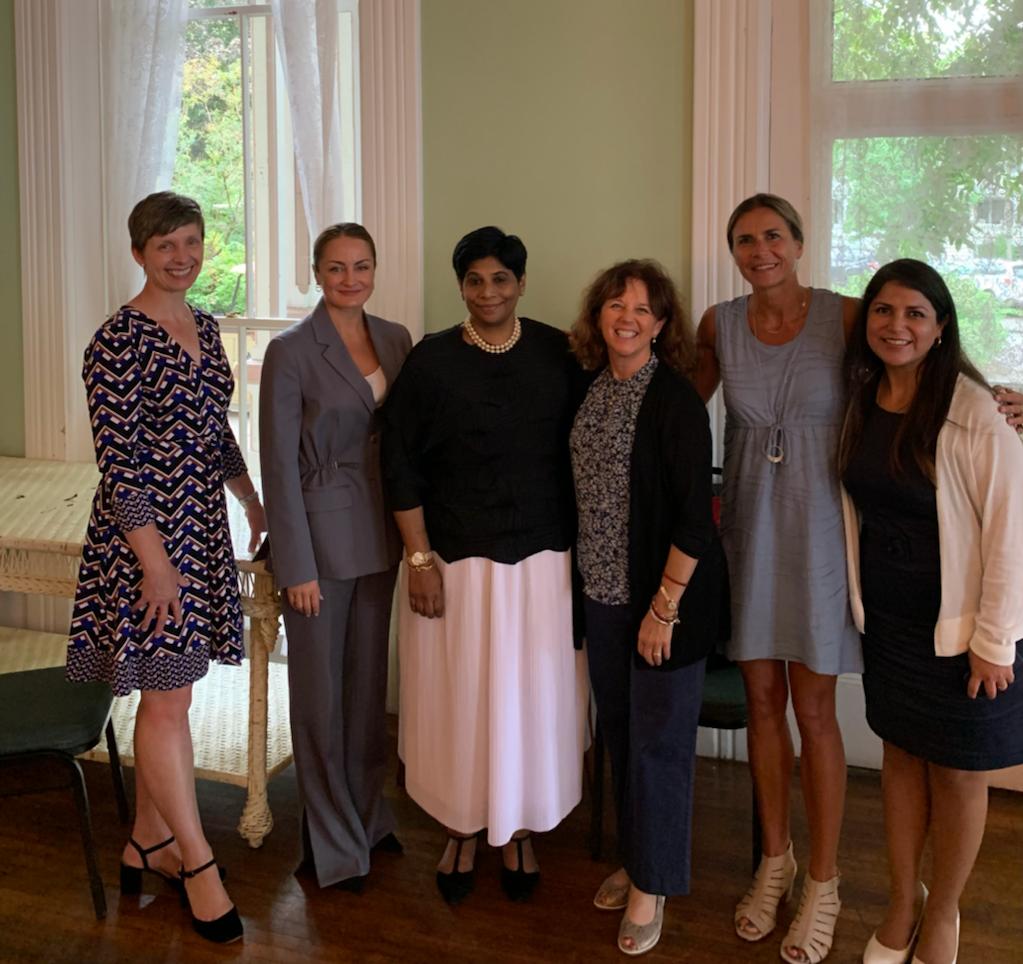
From left to right: Prof. Valerie Oosterveld, Western Law School (Canada); Anna Ogrenchuk, President of the Ukrainian Bar Association; Nazhat Shameem Khan, Deputy Prosecutor, International Criminal Court; Professor Leila Sadat, Washington University School of Law; Professor Milena Sterio; and a trial lawyer from the Office of the Prosecutor, International Criminal Court
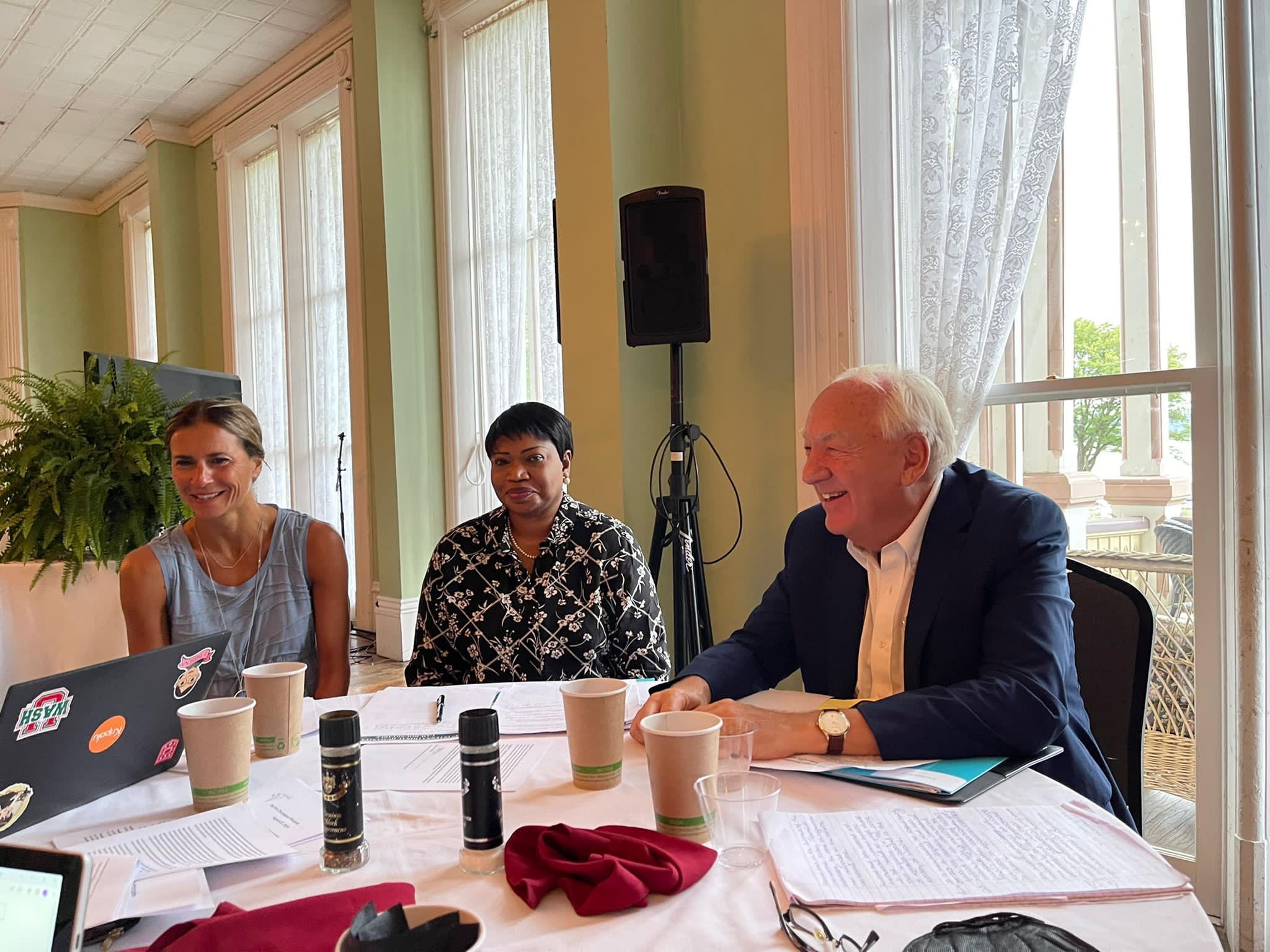
Professor Milena Sterio with Fatou Bensouda, Former Chief Prosecutor, ICC; and Stephen Rapp, Former U.S. Ambassador for Global Criminal Justice. 

Howard Katz Presents on Law Teaching

Legal educator-in-residence Howard Katz made several presentations at the Southeastern Association of Law Schools (SEALS) annual conference from July 28 to August 1 in Miramar Beach, Florida. He spoke at two sessions for newer professors about teaching: one on feedback and assessment in large classes, the other on course design and teaching methods. He contributed to a discussion group about reimagining the law school curriculum. In addition to making the case for courses such as public benefits law, public policy analysis, data analysis, and negotiation, he made the larger point that designing the curriculum of the future is not just about adding courses or adding to courses; it involves rethinking the curriculum to do more than one kind of law school early on, so different students can thrive. Howard also was part of a coaching session for teaching candidates who will be going onto the market this coming fall.

Professor May to Present on Drafting Wills and Trusts

Senior Legal Writing Professor Claire C. Robinson May will present alongside judges and practitioners as part of the 41st Annual Trumbull County Probate Practice Seminar on October 7, 2022, at the historic Robins Theatre in Warren, Ohio. Professor May’s session will focus on drafting wills and trusts. CLE credit is available.

Professor May’s Book Chapter Highlighted in the Journal of Legal Education

Senior Legal Writing Professor Claire C. Robinson May is quoted in the Journal of Legal Education’s recent book review of Lawyering Skills in the Doctrinal Classroom: Using Legal Writing Pedagogy to Enhance Teaching Across the Law School Curriculum, edited by Tammy Pettinato Oltz. Professor May’s chapter in the book focuses on pedagogical lessons from the Estates and Trusts: Doctrine and Drafting course she developed and taught at the College of Law with Professor April Cherry. The review’s author, Professor O.J. Salinas, concludes that Lawyering Skills in the Doctrinal Classroom is “an instructive read for professors teaching doctrinal classes who want not only to further engage their students in the substantive law that they are teaching in their courses, but also to engage their students in the type of skills that lawyers do in practice.”

Professor Witmer-Rich Reviews Supreme Court Criminal Decisions

On August 26, Professor Jonathan Witmer-Rich presented a review of the previous year’s Supreme Court criminal law and procedure cases at the Federal Public Defender’s Federal Criminal Practice Seminar in Cleveland.

Professor Plecnik Interviewed About Lake County Opioid Lawsuit

Professor Plecnik does not just write about changing the law. Through his public service as Lake County Commissioner, Professor Plecnik is working with his colleagues in Lake and Trumbull to set national precedent in federal court to help end the Opioid epidemic. Lake and Trumbull counties are the plaintiffs in a bellwether case to hold Big Pharma responsible for its role in flooding their local communities with pain pills.

On August 17, 2022, Judge Dan Polster of United States District Court for the Northern District of Ohio issued the Abatement Order in the National Prescription Opiate Litigation, which awards Lake and Trumbull Counties a combined $650.6 million. Walmart, CVS and Walgreens must pay Lake County $306.2 million and Trumbull County $344.4 million over the next 15 years for their role in the Opioid epidemic. In their complaint, the two counties alleged the three national pharmacies “abused their position of special trust and responsibility” as registered dispensers of prescription drugs, and in so doing “fostered a black market for prescription opioids.”

The day of the ruling, CNN reported:

Lake County Commissioner John Plecnik said his county is investing the $306.2 million awarded to them into tackling the impacts of the opioid crisis in their communities.

“I am grateful to the Court for recognizing the Opioid Epidemic as a public health crisis. This decision holds Big Pharma accountable for the great harm and lives lost due to the overselling of Opioids,” Plecnik said “We hope the legal precedent that Lake and Trumbull Counties have won together will set the stage for the rest of the nation and help end the Opioid epidemic.”

Professor Plecnik’s interview with Fox 8 is available here:

You can watch Professor Plecnik’s interview with Fox 8 News here:

Professor Plecnik’s interview with News 5 Cleveland is here:

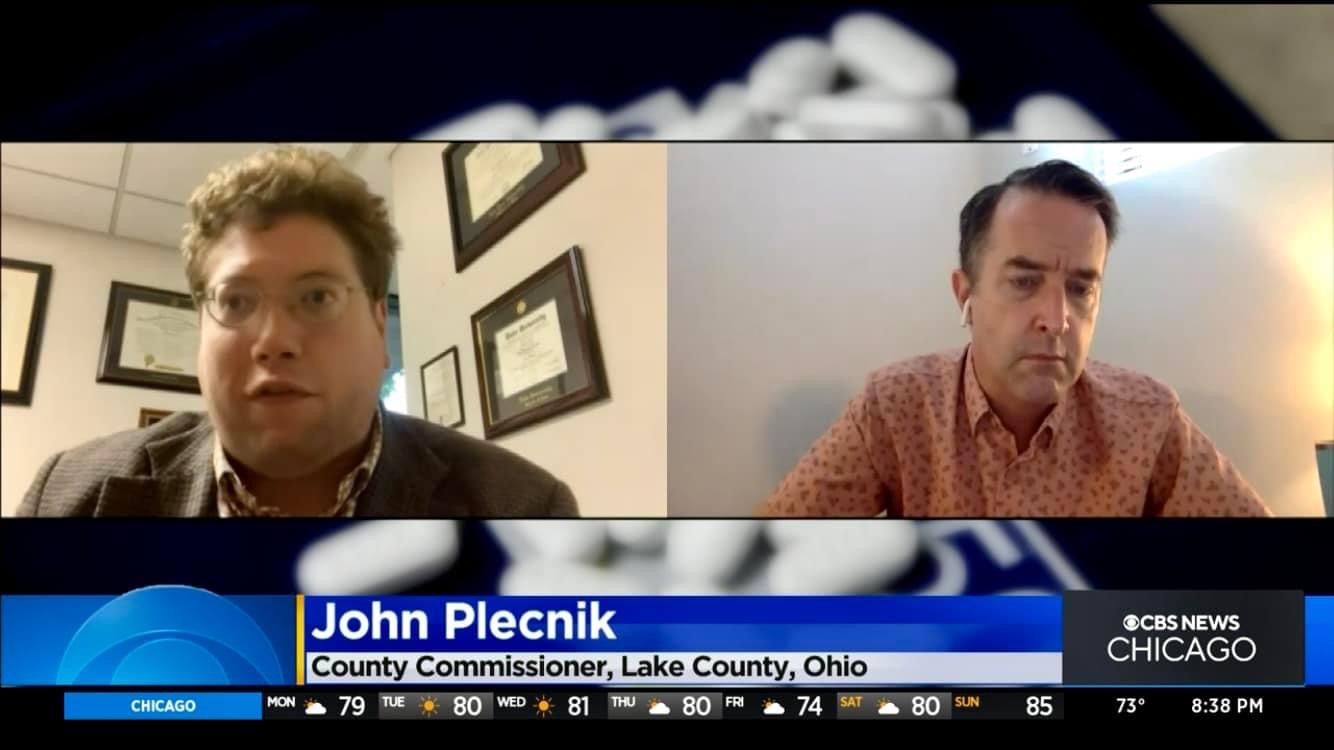
Professor Plecnik was also interviewed by CBS Chicago, available here.

Appellate Practice Clinic Wins Sixth Circuit Immigration Case

The Cleveland-Marshall Appellate Practice Clinic has secured a victory in the Sixth Circuit in an immigration case, Ramirez-Lopez v. Garland, No. 21-3794.

The Sixth Circuit Court of Appeals is not known for granting petitions filed by non-citizens. In fact, the vast majority of those petitions, many of which filed by immigrants who speak English as a second or third language, are summarily rejected. To be sure, these rejections may be understood in light of the fact that they come before the Court after two reviews — first by an Immigration Judge and then by the Board of Immigration Appeals (BIA). 

Mr. Ramirez-Lopez’s Petition did not seem different at first. Filed pro-se, it was summarily rejected by the Court after short review. But then the unexpected happened: the Biden Administration changed its policy regarding U-Visa petitions, which was at issue in Mr. Ramirez-Lopez’s petition. The Sixth Circuit, on its own accord, issued a new decision inviting supplemental briefs on the application of the new policy, as well as ordering that Petitioner would be represented by Counsel.

The Court then appointed the Cleveland-Marshall Appellate Practice Clinic to represent Ramirez-Lopez. The Clinic argued first that the new policy applied in this case and therefore it was justified to remand the matter to the BIA for further consideration. The Government, in response, agreed that the new policy applied, but claimed that in light of the Court’s first opinion the matter was moot, and that the issue could no longer be returned to the BIA. The Clinic, in response, argued that the Court’s New Order superseded the first, and therefore that the matter could — and should — be remanded. The Court, weighing these two arguments, held that “we think that Ramirez Lopez has the better argument,” and therefore remanded the case. 

This was an incredible win for the Client, and a great achievement for the Clinic. Students Katrice Williams, Victoria Kekkel, and Nicole Johnson worked tirelessly to ensure a timely submission of the briefs, and constant review of the expanded record in this case. Adjunct Professor, proud alum, and immigration Super-Lawyer Tanya Linetsky provided valuable advice and guidance. Professor Doron Kalir served as the attorney of record and supervised the work.