Ray Comments on Landau Article on Social Rights Enforcement in I.CONnect

C|M|LAW Professor Brian Ray posted an article on i.CONnectblog, a blog sponsored by the Journal of Constitutional Law and ConstitutionMaking.org.  This piece is the first installment of ICONnect’s Article Review & Response Series.  In it, Professor Ray reviews David Landau’s article on “The Reality of Social Rights Enforcement.” Professor Landau then responds to Professor Ray’s review.

To read the post, click here:

http://www.iconnectblog.com/2012/10/article-review-response-david-landau-on-social-rights-enforcement/#comment-1025

Lind Quoted in Detroit Free Press Regarding Cities Left to Deal with Homes When Homeowners Walk Away

On October 22, 2012, C|M|LAW Clinical Professor Emeritus Kermit Lind was quoted in the Detroit Free Press in an article by Eric D. Lawrence, Metro taxpayers foot bill as banks walk away from homes.  The article was about homeowners who walk away from their homes when they can no longer make mortgage payments.  This leaves cities with unpaid taxes, and potential nuisances that have to be dealt with at the expense of the taxpayers.

According to Lind, “local officials often face a tough challenge in notifying the mortgage servicer when a problem, such as a nuisance issue, arises.  He said taxing entities seeking unpaid taxes — such as county treasurers, or municipalities dealing with nuisance violations — have no choice legally but to contact those listed on property records. And the company on file is likely not the loan servicer, the company that might be designated to handle things such as tax payments.  A simple solution, Lind said, would be for banks to file an affidavit with the register of deeds that lists the name of the servicer.

“It’s up to them to do something about it,” Lind said of banks. “If the servicer isn’t doing their job, then the burden shouldn’t be on the taxpayer for that.””

.
To read the full article, see:
http://tablet.olivesoftware.com/Olive/Tablet/DetroitFreePress/SharedArticle.aspx?href=DFP%2F2012%2F10%2F22&id=Ar00114

Steinglass Speaks at Ohio Constitutional Law Seminar at the Ohio Historical Society

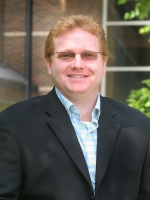
Professor and Dean Emeritus Steven H. Steinglass

On September 12, 2012, C|M|LAW Professor and Dean Emeritus Steven H. Steinglass participated on a panel at the Ohio Constitutional Law Seminar, sponsored by the law firm of Vorys, Sater, and presented at the Ohio Historical Society in Columbus.  The seminar, titled Should there be a Convention to Revise, Alter, or Amend the Ohio Constitution, included Steinglass’ presentation The History and Future of Constitutional Revision in Ohio.  In particular, Steinglass discussed the following questions: What is the history of changes to the Ohio Constitution?  How have constitutional conventions and the initiative provision been used to amend the Ohio Constitution?  Should there be a constitutional convention? What are the pros and cons of a convention versus a commission?   In addition to several other academics and lawyers from around the state, seminar participants included, The Hon. Ted Strickland, 68th Governor of the State of Ohio, The Hon. Peggy L. Bryant, Judge, Tenth District Court of Appeals, The Hon. William G. Batchelder, Speaker of the Ohio House of Representatives, The Hon. Nancy H. Rogers, Professor of Law Emeritus, The Ohio State University and Former Attorney General of the State of Ohio.

Sagers Interviewed on Huffington Live Regarding the Universal-EMI Merger

C|M|LAW’s James A. Thomas Distringuished Professor of Law, Chris Sagers, was interviewed on a new internet TV channel, Huffington Live, concerning the Universal-EMI merger.  The segment, titled “Music Merger: Peril For Music Business?”, was hosted by Mike Sacks and included co-panelists Brian Buchanan, a singer/songwriter for the band Enter the Haggis, Casey Rae, Deputy Director of the Future of Music Coalition, and Georgetown University Adjunct Professor of Music & Technology, Melissa Webster, Music Journalist, and Paul Josephs, an independent musician, songwriter and producer. This is the same transaction he blogged about on Huffington Post.

To view the web-based TV program, click here:
http://live.huffingtonpost.com/r/segment/504e6bcd02a76032d1000327

Robertson Organizes and Speaks at C|M|LAW Utica Shale Conference

C|M|LAW Professor and Associate Dean Heidi Gorovitz Robertson served on the organizing committee for a jointly-sponsored conference on the development of shale oil and gas in Ohio.  The conference, Utica Shale:  Issues in Law, Practice and Policy, took place at C|M|LAW  on September 13 and 14, 2012.  It was co-sponsored by CSU’s Levin College of Urban Affairs, the Cleveland Metropolitan Bar Association, Crain’s Cleveland Business, Bricker & Eckler, LLP, Hull & Associates, Inc., Steptoe & Johnson, PLLC, Tucker Ellis LLP, and the University Clean Energy Alliance of Ohio.  Other members of the planning committee were Andrew Thomas (Levin College), Matthew Warnock (Bricker & Eckler) and Glenn Morrical (Tucker Ellis).

The conference brought together many of the major players in the quickly emerging field of shale oil and gas development.  Included on the panels were representatives from JobsOhio, the Ohio Department of Natural Resources, the Nature Conservancy, economists, lawyers, geologists, engineers, and academics from a number of fields.  Panel  topics included economic development, environmental and policy concerns, legal issues such as leasing, litigation, new and recent regulations, and tax and accounting considerations.

Associate Dean Robertson spoke on two panels at the Utica Shale conference.  As part of the Legislative and Regulatory Update, she spoke on the future viability of local ordinances that purport to control or ban drilling within a locality when state legislation clearly seeks to preempt them.  In addition, she spoke on a panel on Lessons Learned from the BP Gulf Coast Oil Spill.  Along with Baker Hostetler attorney and C|M|LAW Adjunct Professor Maureen Brennan, she spoke about those lessons and how they might apply as Ohio moves quickly to develop and regulate the shale oil and gas industry.

For more information about the Utica Shale conference, click here: https://www.law.csuohio.edu/newsevents/events/2012091312451530

Hoke Comments on Ohio Redistricting Proposal on WCPN 90.3’s Sound of Ideas

C|M|LAW Professor Candice Hoke appeared this morning on WCPN’s Sound of Ideas radio show.  The show focused on a proposal by the non-profit group Voters’ First to change the system by which Ohio allocates its state legislative and U.S. House districts. Currently, whichever party is in power is able to exert influence over the process and draw boundary lines to its own benefit.  Voters’ First hopes to alter the system to remove much of the politics, but critics argue that the proposal lacks a mechanism for accountability and asks judges to play an improper role.  The proposal would ask judges to select and vet redistricting-commission members.   The Ohio State Bar Association has expressed deep concerns,” that the setup would be a conflict of interest and undermine the Constitutional doctrine of the separation of powers.” 

The proposal would create an independent citizens commission that would always meet in public sessions to discuss redistricting.  The commission would include equal numbers of Republicans, Democrats, and independents, who would serve for 10-year terms.  They would be charged to create districts that are compact and which minimize division of counties, towns, and and municipalities.

Ohio Republican lawmakers redrew the state’s Congressional boundaries last year. As a result, many districts now appear to favor Republicans at the ballot box.  The Voters First proposal will be on the ballot in November.  This radio show addressed whether the proposed system would be an improvement over the current one.  Other guests included: Professor Dan Tokaji, Ohio State University Law School, Chris Redfern, Chairman of the Ohio Democratic Party, and Rob Frost, Chair of the Cuyahoga County Republican Party.

To listen or watch, click here: http://www.ideastream.org/soi/entry/48410

Weinstein Moderates National Planning Law Teleconference and Contributes to Housing Encyclopedia

Professor Alan Weinstein

On Wednesday, June 26th, C|M|LAW Professor Alan Weinstein, who is jointly appointed at CSU’s Levin College of Urban Affairs, moderated a panel and spoke at the American Planning Association’s 2012 National Planning Law Review Teleconference/Webinar. The two other speakers on the panel were Michael Allan Wolf, who holds the Richard E. Nelson Chair in Local Government Law at the University of Florida’s Levin College of Law, and Dwight Merriam, a Partner in the Robinson & Cole law firm in Hartford, CT.  There were over 850 registrants for the teleconference/webinar.

The speakers discussed a number of issues, including: the Supreme Court’s ruling in Armour v. Indianapolis, 132 S.Ct. 2073 (2012), and what it means in the broader context of challenges to local government actions based on the equal protection and due process clauses of the 14th Amendment; the Court’s granting cert. in Arkansas Game & Fish Commission v. United States,  648 F.3d 1377 (Fed. Cir. 2011), an unusual physical takings claim against the federal government; and recent developments in such areas as first amendment, telecommunications, “green” building codes, beach erosion, and rent control.

In addition, Professor Weinstein contributed an entry on Zoning to the second edition of the Encyclopedia on Housing, edited by C|M|LAW/Levin Professor Dennis Keating.  (See https://cmlawfaculty.wordpress.com/2012/07/25/keating-edits-encyclopedia-of-housing-moderates-panel-on-lending-and-loss-mitigation/.)

Keating Edits Encyclopedia of Housing, Moderates Panel on Lending and Loss Mitigation

Sage has published the second edition of the Encyclopedia of Housing.  Professor of Urban Studies and Law Dennis Keating served on the editorial board for this publication and authored two of its entries, those on Displacement and Community Development Corporations.

In addition, on June 28 at the Federal Reserve Bank of Cleveland’s 2012 Policy Summit on Housing, Human Capital, and Inequality, Professor Keating moderated the panel on “Lending and Loss Mitigation: Towards a Stronger Housing Market”.  Panelist Andrea Ghent (CUNY- Baruch College) convincingly refuted the (conservative) argument that federal affordable housing legislation was a major cause of the subprime mortgage boom that led to the housing bubble bursting.   Mary Weselcouch (NYU – Furman Center for Real Estate and Urban Policy) analyzed determinents of the incidence of mortgage loan modification, arguing that, so far, problems continue with the federal programs and the participating lenders.   Lei Ding (Wayne State – Department of Urban Studies) analyzed loss mitigation practices by mortgage loan servicers in “soft” housing markets like Detroit. Difficulties remain with those facing foreclosure trying to get the loan servicers to respond positively, especially in a weak market like Detroit.

Lind and Keating Publish on Cleveland Responses to the Mortgage Crisis

Professor Dennis Keating, jointly appointed by CSU’s Levin College of Urban Affairs and C|M|LAW, and C|M|LAW Clinical Professor Emeritus Kermit Lind, have co-authored “Responding to the Mortgage Crisis:  Three Cleveland Examples” in the Winter 2012 issue of The Urban Lawyer, Vol. 44, No. 1:1-135.

Keating and Lind write that years before the mortgage crisis fueled by subprime and predatory lending became a national crisis in 2008, this emerging disaster was ravaging neighborhoods in Cleveland, Ohio. Investigations that followed revealed that homeowners were being persuaded to refinance their mortgages and often to finance home repairs and amenities through predatory lending, including adjustable rate mortgages with initial low interest rates (“teaser loans”). The Cleveland neighborhood of Slavic Village was especially hard hit, with massive amounts of mortgage fraud followed by hundreds of foreclosures of borrowers resulting in housing abandonment and widespread blight. Despite these discouraging data, the three examples of responses described in this article give hope that the challenges caused by this crisis can be met and the city’s neighborhoods can be rebuilt even with a reduced population and reconfigured land uses.

The article is available at:http://www.americanbar.org/publications/urban_lawyer/2012/winter_2012.html

Lewis Publishes “Papa’s Baby” with NYU Press

When a child is conceived from sexual intercourse between a married, heterosexual couple, the child has a legal father and mother. Whatever may happen thereafter, the child’s parents are legally bound to provide for their child, and if they don’t, they’re held accountable by law. But what about children created by artificial insemination? When it comes to paternity, the law is full of gray areas, resulting in many cases where children have no legal fathers.

In Papa’s Baby, C|M|LAW’s Professor Browne C. Lewis argues that the courts should take steps to insure that all children have at least two legal parents. Additionally, state legislatures should recognize that more than one class of fathers may exist and allocate paternal responsibility based, again, upon the best interest of the child. Lewis supplements her argument with concrete methods for dealing with different types of cases, including anonymous and non-anonymous sperm donors, married and unmarried women, and lesbian couples. In so doing, she first establishes different types of paternity, and then draws on these to create an expanded definition of paternity.

To order Papa’s Baby from NYU Press click here: http://nyupress.org/books/book-details.aspx?bookid=5825  or through Amazon, click here: http://www.amazon.com/Papas-Baby-Paternity-Artificial-Insemination/dp/0814738486/ref=sr_1_1?s=books&ie=UTF8&qid=1343232500&sr=1-1&keywords=papa%27s+baby