
C|M|LAW Professor Gwendolyn Roberts Majette was interviewed by WEWS News Channel 5 concerning the ongoing health care reform process and its implications. That interview was broken into 5 segments that will air each night this week during the 6 pm. news. The first segment is tonight, Monday, September 23, 2013. Professor Majette will be shown discussing the Affordable Care Act implementation and the upcoming opening of the Exchanges or Marketplaces where individuals and small businesses can purchase affordable health insurance.
Category Archives: Faculty News
Robertson Writes on Public Opinion Divisions on Shale Development around the World in Crain’s Cleveland Business
C|M|LAW Professor and Associate Dean Heidi Gorovitz Robertson, a regular contributor to Crain’s Cleveland Business’ Shale Report, has posted Ohio, U.S. are not alone in seeing public divided over shale development. In this post, she briefly explores public reaction to potential shale oil and gas exploration and development in other parts of the world, noting that in some countries, individuals see no personal upside in shale exploration and development. In particular, where residents do not own the mineral rights to the developed resource, they obtain no personal benefit from its development. Instead, they suffer from the added noise, disruption and environmental damage and risk. There is more support for shale development, understandably, in areas where residents see a potential individual benefit derived from their ownership interest in the resource.
To read this post, see:
http://www.crainscleveland.com/article/20130913/SHALEBLOGS/309139998
Lewis Quoted in Crain’s Cleveland Business Regarding Nurses in the Legal Profession
C|M|LAW’s Leon and Gloria Plevin Professor of Law Browne Lewis was quoted in Crain’s Cleveland Business in Nurse-lawyers bring rare skill, perspective to legal field-Organizations value knowledge of health system, patient care issues, by Eileen Beal. The article noted that there is an increasing and important role for lawyers with nursing backgrounds and law schools, like C|M|LAW, are working to find and train them. Lewis, who is also the Director of C|M|LAW’s Center for Health Law and Policy, said “[n]urses (who get law degrees) don’t leave nursing, they just take it to another level.”
To see this article in Crain’s, click here:
http://www.crainscleveland.com/article/20130818/SUB1/308189997/0/SEARCH
Lewis’ Book, Papa’s Baby, Reviewed in the Journal of Family and Consumer Sciences
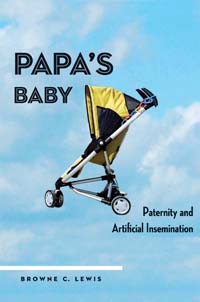 C|M|LAW’s Leon and Gloria Plevin Professor of Law, Browne C. Lewis’ book, Papa’s Baby, was reviewed favorably in the Spring 2013 issue of the Journal of Family and Consumer Sciences. The review, by Debra Eckert-Casha, calls Lewis’ work “captivating.” She writes “educators should enjoy stimulating discussions with their students based up on the many ideas Lewis proposes. . . . Papa’s Baby is well-worth reading. Considering the current times and advancements in reproductive technology, the implications for policy to ensure protections for children should receive thoughtful attention.
The book review is available in the spring issue of the Journal of Family and Consumer Sciences, vol. 105, no. 2, at page 60.
Lazarus Highlighted in “What the Best Law Teachers Do!”
Congratulations to Cleveland-Marshall Professor Steve Lazarus, who is highlighted in the new Harvard University Press book, “What the Best Law Teachers Do!” The book, by Michael Hunter Schwartz, Gerald F. Hess, and Sophie M. Sparrow, identifies the methods, strategies, and personal traits of professors whose students achieve exceptional learning.
Sundahl Quoted in Crain’s on Making Commercial Courts Permanent in Cuyahoga County
C|M|LAW Professor and Associate Dean Mark Sundahl was quoted in this week’s issue of Crain’s Cleveland Business News in an article regarding the recent decision to make permanent the commercial docket at the Cuyahoga County Court of Common Pleas. A three-year pilot program in which the operation of a commercial docket was tested returned favorable results, which led to the decision by the County Court judges to make the docket permanent. The commercial docket creates, in effect, “commercial courts” that are presided over by judges appointed to handle the cases on the docket. By hearing a greater volume of commercial cases, the judges have the opportunity to gain familiarity with business issues and expertise in commercial law. In the article, Sundahl states that “[t]he quick resolution of disputes and the ability of a business to have confidence in the consistent and fair application of the law allows for businesses to operate in an environment of certainty and predictability. All of this lowers the cost of doing business and increases the profit margin.”
You may access the article here:
Plecnik Quoted in Tax Notes Today Regarding Recent Cases on the Earned Income Tax Credit
C|M|LAW Professor John Plecnik was recently quoted in Tax Notes Today. The quote was in regard to two cases in U.S. Tax Court that Professor Plecnik is supporting pro bono as co-counsel with Cleveland Legal Aid. Both cases involve the so-called Earned Income Tax Credit (EITC) ban under section 32(k) of the Internal Revenue Code.
An excerpt from the article, entitled TAXPAYER ADVOCATE CRITICIZES IRS
USE OF EITC BAN, PLANS REVIEW, follows:
Plecnik said one might be left with the impression that there is no standard at all for imposing the ban on taxpayers, adding that he thinks the IRS is using the dictionary definitions of reckless or intentional disregard. However, the legislative history for section 32(k), in which the ban can be found, shows that section 6662, which does have a clear
definition of reckless or intentional disregard, was referenced in relation to section 32(k), he said.
“I think that the correct definition is best laid out in the regulations to 6662, where disregard is reckless if the taxpayer makes little or no effort to determine whether a rule or regulation exists under circumstances which demonstrate a substantial deviation from the standard of conduct that a reasonable person would observe,” Plecnik said. “There are tons of cases dealing with when it’s appropriate to apply 6662 penalties, and they typically don’t apply where someone goes to a return preparer in good faith, essentially does their best, and says, ‘Hey, I’m paying you, get it done,’ and gives them all the information as best they can.”
Robertson Posts on Ohio DNR’s Revised Rules for Drillers in Crain’s Shale Report
C|M|LAW Associate Dean and Professor Heidi Gorovitz Robertson recently posted ODNR Revises the Rules on Unitization in Crain’s Cleveland Business’ Shale Report. The Ohio Department of Natural Resources recently revised its rules for oil and gas companies seeking to “unitize” large swaths of land for shale gas drilling. Longstanding state law — Ohio Revised Code section 1509.28, enacted some 48 years ago — allows drilling operators to request that ODNR approve a designated drilling unit, even if it means including land against some landowners’ wishes. Ohio property owners’ land can thus be “unitized” against their will. ODNR grants the unitization request if the driller’s access to that land is predicted to yield substantially more oil and gas from the pool than would be produced without access to that land, and the added value of that extra oil and gas makes the whole operation cost effective.
Under the revised rules, the agency put in place and clarified the requirements for what the applicant must provide in order for the agency to grant a unitization request. Requirements range from the mundane — a cover letter requesting unitization — to more complex factors, such as the identification of the geologic formation(s) to be developed, an estimate of the value of the recovery of oil and gas for each well proposed to be drilled in the unit area, and an estimate of the cost to drill and operate a well in the proposed unit –and much,much more.
The process seems far from trivial and can yield 100+ page applications. However, despite this major effort to clarify and intensify the unitization application procedures, ODNR’s decisionmaking process still lacks any formal or required mechanism for considering specifically any rights or wishes of the affected landowner.
To read this blog post, see:
http://www.crainscleveland.com/article/20130701/SHALEBLOGS/307019960
Robertson is a regular to contributor to Crain’s Shale Report. To read her other posts, see:
Sagers Quoted Again on Apple Case Following the Trial Court’s Verdict
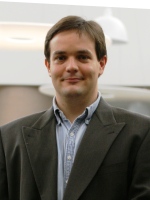
Professor Chris Sagers
Chris Sagers, C|M|LAWs James A. Thomas Distinguished Professor of Law, was widely quoted in press coverage of the historic verdict in the Justice Department’s antitrust suit against computer maker Apple. The government showed, to the trial court’s satisfaction, that Apple orchestrated a price-fixing conspiracy among five major publishers of eBooks for sale in its iBookstore. Sagers was quoted in the Wall Street Journal’s online technology blog Digits [http://blogs.wsj.com/digits/2013/07/10/how-apple-ruling-could-affect-itunes-group/], in two stories in Publisher’s Weekly (one here [http://www.publishersweekly.com/pw/by-topic/digital/content-and-e-books/article/58166-apple-loses-judge-finds-price-fixing-in-e-book-case.html] and one here [http://www.publishersweekly.com/pw/by-topic/digital/retailing/article/58240-with-the-verdict-in-what-s-next-for-apple.html]), a Bloomberg News story [http://www.bloomberg.com/news/2013-07-11/amazon-seen-gaining-advantage-with-apple-s-e-book-defeat.html] that was also carried in the Kansas City Star [http://www.kansascity.com/2013/07/11/4340821/other-retailers-could-gain-an.html], a story in the Global Competition Review [http://globalcompetitionreview.com/news/article/33793/apple-e-books-agreements-violated-us-antitrust-law/], and a featured interview in Competition Policy International [http://archive.constantcontact.com/fs193/1111629548505/archive/1114105687648.html].
Some of his comments were also picked up in stories in Crain’s Cleveland Business [http://www.crainscleveland.com/article/20130715/BLOGS03/130719888], Cleveland radio station FM 107.9 [http://zhiphopcleveland.com/4057322/cleveland-state-law-prof-hits-wall-street-in-i-tunes-debate-inventingthefuture/], and in several industry and financial blogs (see, e.g., here [http://kindleworld.blogspot.com/2013/07/doj-apple-lawsuit-clues-on-last-day-of.html], here [http://wallstcheatsheet.com/stocks/apples-e-book-loss-is-making-amazon-very-happy.html/?a=viewall], and here [http://wraltechwire.com/advantage-amazon-after-apple-s-e-book-court-defeat/12655021/]).
Becker Speaks on Marriage Equality Before and After Windsor and Perry
C|M|LAW Professor Susan J. Becker gave a presentation titled “Marriage Equality in the U.S. Before and After Windsor and Perry” at the Cleveland ACLU on July 11 and at the Columbus Urban League on July 16. She will give a similar presentation at the Clifton Cultural Art Center in Cincinnati on Aug. 8th.
A webcast of her Cleveland presentation is available here:

