Sterio Debates Militarized Humanitarian Intervention at International Affairs Symposium


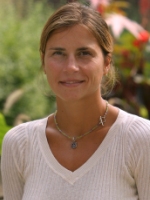
Professor Milena Sterio

Professor Milena Sterio

C|M|LAW’s Calfee Halter & Griswold Professor of Law Milena Sterio participated in the 52nd International Affairs Symposium at Lewis and Clark College on April 8, 2014.  Professor Sterio’s panel was entitled “Militarized Humanitarian Intervention: Guns for Good?”.  The panel was conducted in a debate format in which Professor Sterio argued the pro-militarized humanitarian intervention position. The other participants included law professors, international affairs/political science professors, and several retired officers of the Army and Air Force.  One of the debaters was Gen. Michael Hayden, former director of the NSA and then the CIA (during the Bush administration). Livening up the proceedings were many student protesters outside of the auditorium with signs like “don’t spy on me” and “the Constitution isn’t dead.” 

Cherry Speaks on Maternal Orthodoxy and the Criminalization of Women’s Behaviors

Professor April Cherry spoke at C|M|LAW’s Journal of Law and Health Conference on March 7, 2014.  Her talk was entitled: “Self-Harm, Fetal-Harm and the Ideology of the Good Mother.” It explored the connection between the “compelling state interest in the fetus” rhetoric, feticide statutes, and the image of maternal orthodoxy that leads us to criminalize behavior of pregnant women that results in fetal harm, regardless of the mental illness or mental health status of the pregnant woman.

Sterio Writes about Crimean Secession on IntLawGrrls.com

C|M|LAW’s Charles R. Emrick, Jr.- Calfee Halter & Griswold Professor of Law Milena Sterio has posted On Crimean Secession, Fairness, and Self-Determination on IntLawGrrls.com, a blog on international law, policy, and practice.  She argues that “the Crimean issue is complex, and that instead of simply proclaiming that Ukraine is right and Russia is wrong, we need to step back and analyze the region’s history, as well as to take into account its population’s true desires.”

To read her thoughts on Crimean secession, click here:

On Crimean Secession, Fairness, and Self-Determination

Witmer-Rich Comments on Fox 8 News on County Prosecutors’ Reenactment of 2012 Shooting

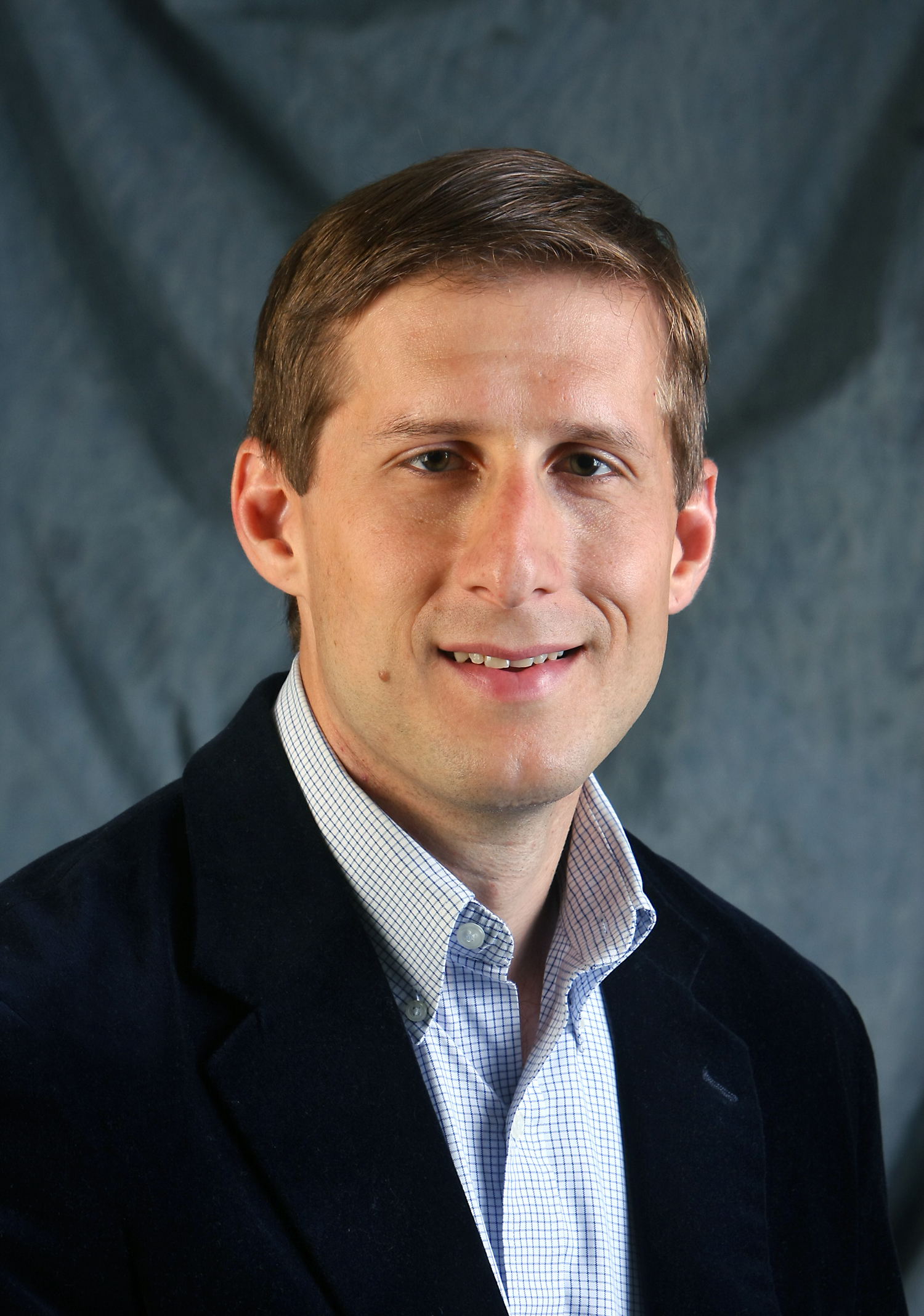
Professor Jonathan Witmer-Rich

Professor Jonathan Witmer-Rich

On March 7, 2014, C|M|LAW Professor Jonathan Witmer-Rich commented on Fox 8 News regarding the re-enactment, organized y Cuyahoga County prosecutors, of a fatal 2012 police shooting.

Witmer-Rich said re-enactments can be helpful.  He noted that “[i]t might be the case it will be helpful for the grand jury to see things as they happened in real time.”  He also said that re-enactments do shed light on how events might have transpired and even escalated.

“How would a reasonable officer react in these circumstances?” said Witmer-Rich, “Seeing it happen in real time might really give the grand jury a better sense of how to draw conclusions of how a reasonable officer would’ve behaved.”

Watch here:

What Really Happened? Shooting Re-enactment May be Helpful

Falk Cited by the Supreme Court of Canada

Professor Patricia J. Falk

Professor Patricia J. Falk

C|M|LAW Professor Patricia J. Falk’s 1998 article Rape by Fraud and Rape by Coercion, 64 Brook. L. Rev. 39 (1998) was cited on March 8, 2014, in a much anticipated decision by The Supreme Court of Canada. The decision involved a sexual assault case in which the man intentionally perforated a condom and was convicted of sexual assault.  The Supreme Court of Canada upheld the conviction.

Writing about “the distinction made in U.S. criminal and tort law between deceptions going to the fact (“fraud in the factum”) which vitiate consent for the purposes of rape and battery and other deceptions that act as inducements (“fraud in the inducement”) which do not”, on pages 33-34 of the opinion, the court says:

“A further example is the distinction made in U.S. criminal and tort law
between deceptions going to the fact (“fraud in the factum”) which vitiate consent for
the purposes of rape and battery and other deceptions that act as inducements (“fraud
in the inducement”) which do not. As expressed by one leading text, the rule is that
“if the deception relates not to the thing done but merely to some collateral matter”
the consent is valid: R. M. Perkins and R. N. Boyce, Criminal Law (3rd ed. 1982), at
p. 1079. No matter how beguiling it appears at first, the distinction has proved
unworkable. It is not helpful in differentiating between legally effective and
ineffective consent and where it attempts to draw the line has no basis in principle:

see, e.g., P. J. Falk, “Rape by Fraud and Rape by Coercion” (1998), 64 Brook. L. Rev.
39, at p. 159-61.”

Here is a link to the decision – http://scc-csc.lexum.com/scc-csc/scc-csc/en/item/13511/index.do   The reference to Professor Falk’s article is not visible on the html page, but you may view it by clicking on the small PDF icon in the right hand corner of the gray box at the top of the page.  The list of references appears on page 10.

Robertson Speaks on Leasing at Crain’s Shale Summit 2014

On February 20, 2014, C|M|LAW Professor and Associate Dean for Academic Enrichment Heidi Gorovitz Robertson served on a panel entitled “The Most from a Lease” at Crain’s Shale Summit 2014.  Robertson and the two other panelists highlighted potential legal and logistical issues for current and prospective lessees of mineral rights in Ohio.  In particular, the panelists spoke about the role of landmen and brokers in the leasing process, the impact of unitization on lessees’ rights, rights of access to the surface and subsurface, pipeline leases, and more.  The event was attended by nearly 300 lawyers, journalists, industry professionals, landowners, environmentalists, and others.

Video coverage of the event is available here:

http://www.crainscleveland.com/article/20140224/MULTI/302289999

The event program is available here:

Click to access CC93076213.PDF

Robertson Writes in Crain’s about the Pennsylvania Supreme Court’s Decision on Local Regulation of Shale Oil and Gas Development

On January 31, 2014, C|M|LAW Professor and Associate Dean for Academic Enrichment Heidi Gorovitz Robertson published a blog post, Pennsylvania’s Environmental Rights Might Snag Drillers, in Crain’s Cleveland Business’ Shale Report.  Robertson has written previously in Crain’s about the struggles Ohio and other states face when local governments attempt to control local activities of the shale oil and gas industries.  In particular, Ohio legislation seems effectively to preempt local regulation.  An intermediate court in Ohio has upheld the state’s ability to prohibit such local regulation, but the Supreme Court of Ohio has yet to hear a case on this issue.

In neighboring Pennsylvania, however, the Supreme Court has struck down, on state constitutional grounds, the legislature’s attempt to preempt most local regulation of shale oil and gas drilling.  To do this, the Pennsylvania court relied on an environmental rights provision in that state’s constitution. The court thus returned to Pennsylvania’s local governments the authority to regulate hydraulic fracturing as an industrial use under their land use and zoning ordinances. Pennsylvania’s preemption of local regulation of hydraulic fracturing appeared dead.

According to two state agencies, however, the Court’s decision was not supported by the facts, and on Jan. 2, 2014, they asked the Court to reconsider its December 2013 decision. We don’t know yet whether the Pennsylvania Supreme Court will agree to reconsider.  

In the meantime, Ohio’s can ponder the possibilities.  The Ohio and Pennsylvania Constitutions both have Home Rule provisions and some Ohioans have hoped that Ohio courts would use that provision to strike down Ohio’s legislative preemption of local oil and gas ordinances.  So far, Ohio courts have not done this. Although Pennsylvania has a similar Home Rule provision, that state’s court did not rely on it to strike down the preemption of local regulation.  Instead, it used the environmental rights provision.  Ohio’s Constitution does not include an environmental rights provision.

To read the complete post, click here:

http://www.crainscleveland.com/article/20140131/SHALEBLOGS/301319996
Sterio Quoted in Mauritias Press Article on Somali Piracy

C|M|LAW’s Calfee Halter and Griswold Professor of Law Milena Sterio was quoted recently in an article that appeared in LeMauricien.com, regarding the work being done by lawyers in that country in the area of Somali piracy.  Sterio has worked with other American lawyers and law professors to support the efforts of Mauritias and other countries in prosecuting Somali pirates.  Sterio outlined the growing problem of child piracy, saying it has emerged as “one of the most difficult legal issues.” She said that most child pirates are released upon capture or immediately after trial and as a result the Somali pirate kingpins are recruiting more and more of them, telling the juveniles that they have nothing to fear if captured.

To read this article, see:

http://www.lemauricien.com/article/somali-piracy-comes-ashore-mauritius-pirates-are-detained-and-trialed-island-courts

Sundahl Presents CLE Webinar on Legal Aspects of Space Tourism

On February 20th, C|M|LAW Associate Dean Mark Sundahl moderated a CLE webinar through the West LegalEdcenter entitled Space Tourism: What Lawyers Need to Know to Service this New Industry. Dean Sundahl spoke on the application of export controls to the operations of Virgin Galactic and other suborbital space tourism operators that will start flying their first passengers into space later this year. The webinar also feature Laura Montgomery of the FAA’s Office of the General Counsel and Milton “Skip” Smith, former Chief of Space Law at the Pentagon’s Air Force Headquarters.


Forte Completes Southern California Lecture Tour

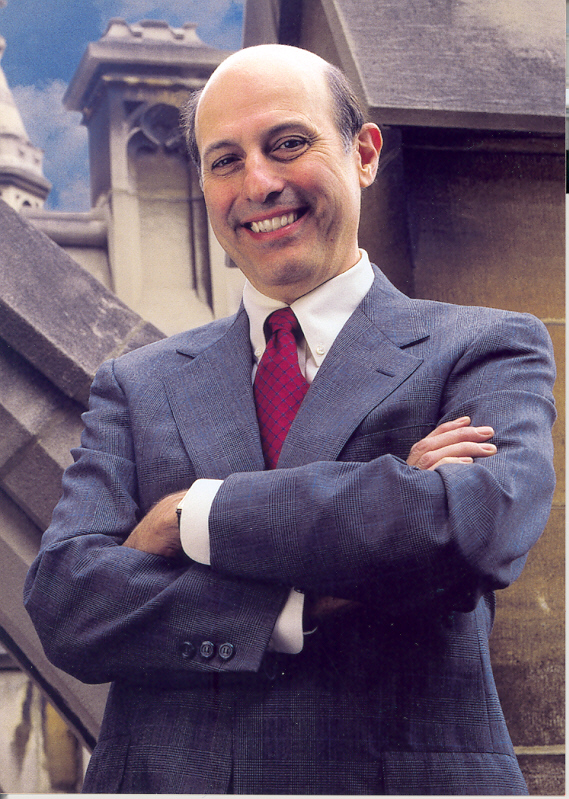
Professor David Forte

Professor David Forte

C|M|LAW Professor David Forte has returned from a February lecture tour in Southern California.  He presented several lectures over a 4-day period.

On February 4, Professor Forte spoke at Chapman Law School on the topic, “Prospects for Islamic Democracy.” He discussed both the ideological as well as cultural, economic, and juridical impediments to democracy adhering in the Arab Middle East. Professor Clarissa Cianciarullo of Chapman Law School offered commentary and question.
On February 5, he spoke at the University of California at Irvine Law School, and on February 6 at the University of Southern California Law School, on “Chief Justice Roberts’ New Federalism.” The thesis is that Chief Justice Roberts is taking up Chief Justice Rehnquist’s attempt to create a constitutional safe harbor for the states where the sovereign governing authority of the states will be free from federal regulatory authority in certain areas. At USC, Forte was joined by Professor Jeorg W. Knipprath of Southwestern Law School who offered commentary.
Also on February 5, Forte lectured to a graduate seminar in political science at the Claremont-McKenna Graduate School in Claremont, California on “The Response of Catholicism and Islam to Liberal Democracy.” He discussed how two religions, each claiming to be “the one true religion,” contend with the pluralistic and individualistic nature of liberal democracy.
Lastly, on February 7, Professor  spoke to a meeting of the Orange County Lawyers Chapter of the Federalist Society on “Religious Liberty: A Traveloque.” In that talk I discussed the historical sources that coalesced to give the United States its conception of the right of religious liberty.