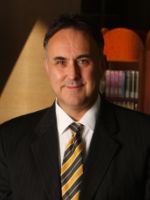
Robertson Speaks on Leasing at Crain’s Shale Summit 2014

On February 20, 2014, C|M|LAW Professor and Associate Dean for Academic Enrichment Heidi Gorovitz Robertson served on a panel entitled “The Most from a Lease” at Crain’s Shale Summit 2014.  Robertson and the two other panelists highlighted potential legal and logistical issues for current and prospective lessees of mineral rights in Ohio.  In particular, the panelists spoke about the role of landmen and brokers in the leasing process, the impact of unitization on lessees’ rights, rights of access to the surface and subsurface, pipeline leases, and more.  The event was attended by nearly 300 lawyers, journalists, industry professionals, landowners, environmentalists, and others.

Video coverage of the event is available here:

http://www.crainscleveland.com/article/20140224/MULTI/302289999

The event program is available here:

Click to access CC93076213.PDF

Robertson Writes in Crain’s about the Pennsylvania Supreme Court’s Decision on Local Regulation of Shale Oil and Gas Development

On January 31, 2014, C|M|LAW Professor and Associate Dean for Academic Enrichment Heidi Gorovitz Robertson published a blog post, Pennsylvania’s Environmental Rights Might Snag Drillers, in Crain’s Cleveland Business’ Shale Report.  Robertson has written previously in Crain’s about the struggles Ohio and other states face when local governments attempt to control local activities of the shale oil and gas industries.  In particular, Ohio legislation seems effectively to preempt local regulation.  An intermediate court in Ohio has upheld the state’s ability to prohibit such local regulation, but the Supreme Court of Ohio has yet to hear a case on this issue.

In neighboring Pennsylvania, however, the Supreme Court has struck down, on state constitutional grounds, the legislature’s attempt to preempt most local regulation of shale oil and gas drilling.  To do this, the Pennsylvania court relied on an environmental rights provision in that state’s constitution. The court thus returned to Pennsylvania’s local governments the authority to regulate hydraulic fracturing as an industrial use under their land use and zoning ordinances. Pennsylvania’s preemption of local regulation of hydraulic fracturing appeared dead.

According to two state agencies, however, the Court’s decision was not supported by the facts, and on Jan. 2, 2014, they asked the Court to reconsider its December 2013 decision. We don’t know yet whether the Pennsylvania Supreme Court will agree to reconsider.  

In the meantime, Ohio’s can ponder the possibilities.  The Ohio and Pennsylvania Constitutions both have Home Rule provisions and some Ohioans have hoped that Ohio courts would use that provision to strike down Ohio’s legislative preemption of local oil and gas ordinances.  So far, Ohio courts have not done this. Although Pennsylvania has a similar Home Rule provision, that state’s court did not rely on it to strike down the preemption of local regulation.  Instead, it used the environmental rights provision.  Ohio’s Constitution does not include an environmental rights provision.

To read the complete post, click here:

http://www.crainscleveland.com/article/20140131/SHALEBLOGS/301319996

Sterio Quoted in Mauritias Press Article on Somali Piracy

C|M|LAW’s Calfee Halter and Griswold Professor of Law Milena Sterio was quoted recently in an article that appeared in LeMauricien.com, regarding the work being done by lawyers in that country in the area of Somali piracy.  Sterio has worked with other American lawyers and law professors to support the efforts of Mauritias and other countries in prosecuting Somali pirates.  Sterio outlined the growing problem of child piracy, saying it has emerged as “one of the most difficult legal issues.” She said that most child pirates are released upon capture or immediately after trial and as a result the Somali pirate kingpins are recruiting more and more of them, telling the juveniles that they have nothing to fear if captured.

To read this article, see:

http://www.lemauricien.com/article/somali-piracy-comes-ashore-mauritius-pirates-are-detained-and-trialed-island-courts

Sundahl Presents CLE Webinar on Legal Aspects of Space Tourism

On February 20th, C|M|LAW Associate Dean Mark Sundahl moderated a CLE webinar through the West LegalEdcenter entitled Space Tourism: What Lawyers Need to Know to Service this New Industry. Dean Sundahl spoke on the application of export controls to the operations of Virgin Galactic and other suborbital space tourism operators that will start flying their first passengers into space later this year. The webinar also feature Laura Montgomery of the FAA’s Office of the General Counsel and Milton “Skip” Smith, former Chief of Space Law at the Pentagon’s Air Force Headquarters.


Forte Completes Southern California Lecture Tour

Professor David Forte

Professor David Forte

C|M|LAW Professor David Forte has returned from a February lecture tour in Southern California.  He presented several lectures over a 4-day period.

On February 4, Professor Forte spoke at Chapman Law School on the topic, “Prospects for Islamic Democracy.” He discussed both the ideological as well as cultural, economic, and juridical impediments to democracy adhering in the Arab Middle East. Professor Clarissa Cianciarullo of Chapman Law School offered commentary and question.
On February 5, he spoke at the University of California at Irvine Law School, and on February 6 at the University of Southern California Law School, on “Chief Justice Roberts’ New Federalism.” The thesis is that Chief Justice Roberts is taking up Chief Justice Rehnquist’s attempt to create a constitutional safe harbor for the states where the sovereign governing authority of the states will be free from federal regulatory authority in certain areas. At USC, Forte was joined by Professor Jeorg W. Knipprath of Southwestern Law School who offered commentary.
Also on February 5, Forte lectured to a graduate seminar in political science at the Claremont-McKenna Graduate School in Claremont, California on “The Response of Catholicism and Islam to Liberal Democracy.” He discussed how two religions, each claiming to be “the one true religion,” contend with the pluralistic and individualistic nature of liberal democracy.
Lastly, on February 7, Professor  spoke to a meeting of the Orange County Lawyers Chapter of the Federalist Society on “Religious Liberty: A Traveloque.” In that talk I discussed the historical sources that coalesced to give the United States its conception of the right of religious liberty.

Forte Joins Amicus Brief on NLRB Recess Appointments

C|M|LAW Professor David Forte joined an amicus brief submitted to the U.S. Supreme Court in NLRB v. Noel Canning.  The case is the appeal from the D.C. Circuit striking down President Obama’s recess appointments to the National Labor Relations Board.  The amici argue that the recess appointments clause of the Constitution only permits the President to make appointments during genuine adjournments, or intersessions, of the Congress, and that presidents in recent decades have exceeded their authority in making recess appointments during short intersession recesses.

Mika Edits Articles for ABA International Law Section Publication

C|M|LAW Legal Writing Professor Karin Mika was appointed a Deputy Editor for the ABA Section of International Law’s “Year in Review.”   The Year in Review is the summer issue of “The International Lawyer,” the quarterly journal of the ABA’s International Law Section. 

Sundahl Appointed Chair of FAA International Space Policy Working Group

C|M|LAW Associate Dean Mark Sundahl has been appointed the Chair of the International Space Policy Working Group (ISPWG) of the FAA’s Commercial Space Transportation Advisory Committee.  The ISPWG will monitor international developments in the regulatory landscape of commercial spaceflight and provide recommendations to the FAA to help ensure the continued international competitiveness of the U.S. space industry.

O’Neill Comments on California Decision Upholding the State’s Ban on Psychiatric Counseling to Dissuade Homosexual Conduct

Professor Kevin F. O'Neill

Professor Kevin F. O’Neill

C|M|LAW Professor Kevin O’Neill was quoted at length in an article,1st Amendment at issue in ban on gay-conversion therapy for minors, by David L. Hudson Jr., in
the January 2014 issue of the ABA Journal, on page 18.   The article deals with a recent Ninth Circuit decision upholding a California statute that bans a type of psychiatric therapy designed to dissuade gay and lesbian minors from homosexual conduct.  Professor O’Neill was asked to comment on the court’s First Amendment analysis.

According to O’Neill, “[p]laying the old ‘conduct-not-speech’ card is something that judges do when faced with particularly thorny speech issues . . .” He adds, “I don’t find it persuasive here, but it gave the 9th Circuit a convenient basis for applying rational-basis review.”

O’Neill says “[t]he statute singles out a particularly ludicrous treatment—a ‘medical’ treatment that is grounded upon ignorance and hostility toward gays and lesbians—and simply bans it. but the ugliness of the treatment doesn’t provide a constitutional basis for banning it.”

O’Neill notes that the Supreme Court invalidated “efforts to ban some of the ugliest speech ever” in the prohibition of images of animal cruelty in U.S. v. Stevens (2010) and violent video games in Brown v. Entertainment Merchants Association (2011).

“If you’re going to uphold this statute, you have to focus on the government’s legitimate power to protect children from medical quackery,” O’Neill says. “But that doesn’t fit too easily into any of the unprotected categories of speech, such as obscenity, child porn, true threats or advocacy of imminent lawless action. The absence of clear guidance in First Amendment law may be a strong reason for granting cert in this case.”

Here is a link to the article:

http://www.abajournal.com/magazine/article/1st_amendment_at_issue_in_ban_on_gay-conversion_therapy_for_minors/

Professor O’Neill’s comments appear toward the end of the article, in a section entitled, “Beyond Ugliness.”

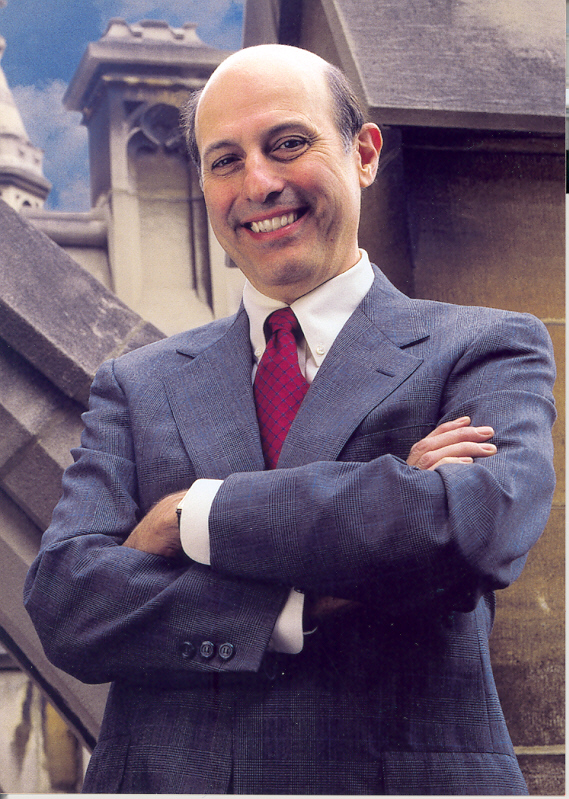


Engel Notes that Cleveland was Ahead of its Time on Subprime Lawsuits

Former C|M|LAW Professor Kathleen Engel published an Opinion piece in the Plain Dealer on December 23, 2013.  In the piece, Cleveland ahead of its time on subprime lawsuits, Engel notes that “Cleveland was the one of the first cities to cry foul when subprime lenders targeted people with complex and unaffordable loan products.” She explains that although Cleveland’s early efforts against the banks’ practices were ahead of their time and ultimately unsuccessful, they lit the way for those that followed.

To read Professor Engel’s piece, click here:

http://www.cleveland.com/opinion/index.ssf/2013/12/cleveland_ahead_of_its_time_in.html