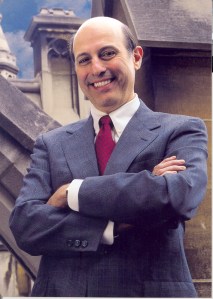
Professor Heidi Gorovitz Robertson’s article Public Access to Private Land for Walking: Environmental and Individual Responsibility as Rationale for Limiting the Right to Exclude was recently listed on 4 of SSRN’s Top Ten download lists. It was listed in the top ten for ERN: Natural Resources. It was also on the Top Ten download list for European Economics: Agriculture, Natural Resources & Environmental Studies eJournal. It was a Top Ten download in Property, Citizenship, & Social Entrepreneurism. Finally, it was on the Top Ten download list for SSRN’s International Environmental Law eJournal. You can access this article via SSRN at http://ssrn.com/abstract=1874046
Hoke Actively Engaged and Commenting on Voting and Election Law Issues
O’Neill Teaches Evidence to High School Students at Summer Legal Academy
On June 22, Professor Kevin F. O’Neill taught a two-hour evidence seminar at Case Western Reserve University School of Law as part of the 2011 Stephanie Tubbs Jones Summer Legal Academy. The Academy, now in its sixth year, is an annual program, co-sponsored by C|M|LAW, designed to encourage minority high school students to pursue a career in the law.
Lind Quoted Regarding Bank Responsibility for Foreclosed Properties
Clinical Professor Kermit Lind, who has long worked on nuisance actions against numerous banks, was quoted in the Washington Post newspaper on June 30th in Complex System Leaves Thousands of Foreclosure Properties to Become Eyesores. The article discusses the complicated system that leaves banks responsible for the condition of foreclosed properties, a responsibility that many say that are not meeting. You can read the full article at: http://www.washingtonpost.com/business/economy/complex-system-leaves-thousands-of-bank-owned-properties-to-become-eyesores/2011/06/28/AG0EFDsH_story_1.html
Robertson Publishes Public Access to Private Land for Walking: Environmental and Individual Responsibility as Rationale for Limiting the Right to Exclude
In her recently published article, Public Access to Private Land for Walking: Environmental and Individual Responsibility as Rationale for Limiting the Right to Exclude, Professor and Associate Dean Heidi Gorovitz Robertson argues that societies that value environmental and individual responsibility can support expanded public rights of access to privately owned land for recreation. Robertson explores public rights of access for responsible recreation in Britain, Scandinavia, and Continental Europe, and finds that countries with more expansive rights of access also present a strong system of support for personal and environmental responsibility. Usually this means that there is a deeply held culture of respect for the environment and respect for the rights of others. If there is not a strong cultural respect for privacy and protection of the land, the underlying support for an expanded right of access may come in the form of rules or regulations that protect the environment and the privacy of the land owner. Regardless whether the protection of the land owner’s land and privacy comes through culture or rule, it must be present to support a system of public access to privately owned land.
This article appears in the Georgetown International Environmental Law Review, at 23 Geo. Int’l Envtl. L. Rev. 211 (2011) and can be accessed via SSRN at http://ssrn.com/abstract=1874046
.
Witmer-Rich Publishes “It’s Good to be Autonomous: Prospective Consent, Retrospective Consent, and the Foundation of Consent in the Criminal Law”
In his recently published article, “It’s Good to be Autonomous: Prospective Consent, Retrospective Consent, and the Foundation of Consent in the Criminal Law,” C|M|LAW Professor Jonathan Witmer-Rich searches for the foundation of consent in the criminal law. In this quest, he assesses the thoughts of classically liberal commentators who have offered at least three distinct theories. J.S. Mill contends we value consent because individuals are the best judges of their own interests. Joel Feinberg argues an individual’s consent matters because she has a right to autonomy based on her intrinsic sovereignty over her own life. Joseph Raz also focuses on autonomy, but argues that society values autonomy as a constituent element of individual well-being, which it is the state’s duty to promote.
The criminal law’s approach to the problem of non-contemporaneous consent—prospective consent and retrospective consent—casts a unique light on the differences among these three justifications. Witmer-Rich notes that Peter Westen claims that neither Mill’s nor Feinberg’s justifications for consent fully explain how non-contemporaneous consent is treated in the criminal law. Specifically, Mill’s “self-interest” conception explains the criminal law’s limited recognition of prospective consent, but cannot explain its total rejection of retrospective consent. Conversely, Feinberg’s “sovereign autonomy”conception explains why the criminal law rejects retrospective consent, but cannot explain why the law recognizes irrevocable prospective consent only in limited circumstances.
Witmer-Rich resolves this dilemma by explaining that Raz’s “autonomy is good” conception is consistent with both the criminal law’s limited recognition of irrevocable prospective consent and its total rejection of retrospective consent. This suggests the existing criminal law embodies Raz’s theory that it is the duty of the state to promote morality, in particular the moral good of individual well-being through living autonomously. In contrast, the criminal law’s treatment of consent would have to be modified if it were to reflect Mill’s “self-interest” conception, or Feinberg’s “sovereign autonomy” conception.
The journal, “Criminal Law and Philosophy,” is a peer-reviewed international journal for philosophy of crime, criminal law, and punishment. It is edited by Douglas Husak and R.A. Duff. Founded in 2007, it publishes work by American and international law professors, philosophers, and criminologists. “Criminal Law and Philosophy” regularly publishes articles by leading criminal law theorists, such as Heidi Hurd, Andrew Ashworth, Peter Westen, Michael S. Moore, Kimberly Ferzan, and Larry Alexander.
The article is available on SSRN at http://ssrn.com/abstract=1856203. For libraries, institutions and their patrons who hold a SpringerLink license, Professor Witmer-Rich’s article is also available via ‘Online First’ on SpringerLink at http://www.springerlink.com/openurl.asp?genre=article&id=doi:10.1007/s11572-011-9126-9.
U.S. District Court Judge Polster Presides at Demonstration of C|M|LAW’s State of the Art Trial Courtroom
Professor Kevin O’Neill’s Evidence students test drove C|M|LAW’s brand new state of the art trial courtroom at its Grand Opening on April 21st. U.S. District Court Judge Dan Polster presided as the law students performed direct examination exercises in the new court room. Professor O’Neill put his acting skills to the test by serving as a variety of witnesses. Professor O’Neill designed direct examination exercises for use in his Evidence classroom, with the purpose of helping students to learn how to introduce and lay the requisite foundation for such tangible exhibits as a gun, a contract, and a bag of cocaine. For the trial courtroom debut he modified these exercises to show off the technological capabilities of the new courtroom. Judges, alumni, and visiting attorneys praised his students for the skill they showed in performing their direct examinations. For more information about the opening of the trial courtroom, see https://www.law.csuohio.edu/newsevents/news/cmlaw-debuts-state-art-trial-courtroom
Steinglass quoted in Cincinnati Enquirer article on the high stakes casino fight in Ohio
Dean Emeritus Steven Steinglass was quoted in a recent Cincinnati Enquirer article regarding Governor Kasich’s exploration of additional taxes and fees on the new casinos. Ohio voters opted to amend the Ohio Constitution to require the new casinos to pay a 33 percent tax on gambling revenues, all usual business taxes and a one-time $50 million licensing fee. Kasich would like to revisit the level of fees and taxes imposed on the casinos. Steinglass stated: “I don’t see how they change the tax rate or impose fees short of another constitutional amendment.” To see the full text of the article, click here http://news.cincinnati.com/apps/pbcs.dll/article?AID=/201105080522/NEWS0108/105080345
Inniss and Ray Win CSU Faculty Scholarship Initiative Grants
Professors Lolita Buckner Inniss and Brian Ray received CSU Faculty Scholarship Initiative grants from the CSU Office of Sponsored Programs and Research. Professor Inniss’ grant will support her project “The Princeton Fugitive Slave Case: Jimmy the College Apple Man and Memories of Slavery.” Professor Ray’s grant will support his project “South Africa, Socioeconomic Rights and the Second-Wave Cases.”
Sundahl Publishes A Bibliography of the Law of Ancient Greece
Associate Professor and Associate Dean Mark Sundahl has published A New Working Bibliography of Ancient Greek Law with the Academy of Athens Press. Dean Sundahl edited this new resource on ancient Greek legal scholarship along with David Mirhady of Simon Fraser University (Canada) and Ilias Arnaoutoglou of Research Centre for the History of Greek Law at the Academy of Athens (Greece). The book contains a comprehensive bibliography of scholarship on ancient Greek law during the archaic and classical periods from the 7th to the 4thcentury B.C. The purpose of the project was to bring together, in one place, the entire body of scholarship in the field in order to facilitate further research in ancient Greek law.
The book runs to 655 pages and organizes the entries both alphabetically by author and by subject matter in twelve sections (with some ninety subsections). The topics covered by the book range from constitutional law and legislative procedure to commercial, family, and international law, as they existed in ancient Greece.