C|M|LAW Associate Dean Mark Sundahl has published an article in latest issue of The Air & Space Lawyer, the newsletter of the American Bar Association’s Forum on Air and Space Law. In the article, entitled The Space Assets Protocol One Year Later: An Update and Reassessment, Sundahl argues that the Space Assets Protocol on the financing of satellites and other space assets was revised in the final drafting stages to address specific industry concerns regarding issues such as insurers’ salvage rights, the Protocol’s application to existing interests, and the definition of space assets. Sundahl concludes that the Protocol represents a rare opportunity to establish an international law of secured transactions for the space industry and urges industry to support the Protocol’s ratification.
Robertson Posts on Ohio DNR’s Revised Rules for Drillers in Crain’s Shale Report
C|M|LAW Associate Dean and Professor Heidi Gorovitz Robertson recently posted ODNR Revises the Rules on Unitization in Crain’s Cleveland Business’ Shale Report. The Ohio Department of Natural Resources recently revised its rules for oil and gas companies seeking to “unitize” large swaths of land for shale gas drilling. Longstanding state law — Ohio Revised Code section 1509.28, enacted some 48 years ago — allows drilling operators to request that ODNR approve a designated drilling unit, even if it means including land against some landowners’ wishes. Ohio property owners’ land can thus be “unitized” against their will. ODNR grants the unitization request if the driller’s access to that land is predicted to yield substantially more oil and gas from the pool than would be produced without access to that land, and the added value of that extra oil and gas makes the whole operation cost effective.
Under the revised rules, the agency put in place and clarified the requirements for what the applicant must provide in order for the agency to grant a unitization request. Requirements range from the mundane — a cover letter requesting unitization — to more complex factors, such as the identification of the geologic formation(s) to be developed, an estimate of the value of the recovery of oil and gas for each well proposed to be drilled in the unit area, and an estimate of the cost to drill and operate a well in the proposed unit –and much,much more.
The process seems far from trivial and can yield 100+ page applications. However, despite this major effort to clarify and intensify the unitization application procedures, ODNR’s decisionmaking process still lacks any formal or required mechanism for considering specifically any rights or wishes of the affected landowner.
To read this blog post, see:
http://www.crainscleveland.com/article/20130701/SHALEBLOGS/307019960
Robertson is a regular to contributor to Crain’s Shale Report. To read her other posts, see:
Plecnik’s Illustration to Accompany Dukeminier & Sitkoff’s Will, Trusts and Estates Casebook
C|M|LAW Professor John Plecnik has just given permission to Professor Robert Sitkoff (Harvard) to include a classroom example he created in his first year of teaching to illustrate the modes of intestate distribution. Plecnik’s illustration will appear in the teacher’s manual and in PowerPoint slides accompanying the new edition of Dukeminier & Sitkoff, WILLS, TRUSTS, AND ESTATES (9th ed. 2013), the leading American coursebook on trusts and estates.
Sagers Quoted Again on Apple Case Following the Trial Court’s Verdict
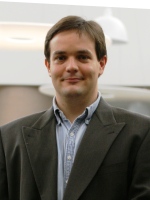
Professor Chris Sagers
Chris Sagers, C|M|LAWs James A. Thomas Distinguished Professor of Law, was widely quoted in press coverage of the historic verdict in the Justice Department’s antitrust suit against computer maker Apple. The government showed, to the trial court’s satisfaction, that Apple orchestrated a price-fixing conspiracy among five major publishers of eBooks for sale in its iBookstore. Sagers was quoted in the Wall Street Journal’s online technology blog Digits [http://blogs.wsj.com/digits/2013/07/10/how-apple-ruling-could-affect-itunes-group/], in two stories in Publisher’s Weekly (one here [http://www.publishersweekly.com/pw/by-topic/digital/content-and-e-books/article/58166-apple-loses-judge-finds-price-fixing-in-e-book-case.html] and one here [http://www.publishersweekly.com/pw/by-topic/digital/retailing/article/58240-with-the-verdict-in-what-s-next-for-apple.html]), a Bloomberg News story [http://www.bloomberg.com/news/2013-07-11/amazon-seen-gaining-advantage-with-apple-s-e-book-defeat.html] that was also carried in the Kansas City Star [http://www.kansascity.com/2013/07/11/4340821/other-retailers-could-gain-an.html], a story in the Global Competition Review [http://globalcompetitionreview.com/news/article/33793/apple-e-books-agreements-violated-us-antitrust-law/], and a featured interview in Competition Policy International [http://archive.constantcontact.com/fs193/1111629548505/archive/1114105687648.html].
Some of his comments were also picked up in stories in Crain’s Cleveland Business [http://www.crainscleveland.com/article/20130715/BLOGS03/130719888], Cleveland radio station FM 107.9 [http://zhiphopcleveland.com/4057322/cleveland-state-law-prof-hits-wall-street-in-i-tunes-debate-inventingthefuture/], and in several industry and financial blogs (see, e.g., here [http://kindleworld.blogspot.com/2013/07/doj-apple-lawsuit-clues-on-last-day-of.html], here [http://wallstcheatsheet.com/stocks/apples-e-book-loss-is-making-amazon-very-happy.html/?a=viewall], and here [http://wraltechwire.com/advantage-amazon-after-apple-s-e-book-court-defeat/12655021/]).
On IdeaStream, Witmer-Rich Predicts Madison Grand Jury Will Act Quickly
C|M|LAW’s Professor Jonathan Witmer-Rich comments in an IdeaStream interview on the Madison indictment for triple murder. See:
http://www.ideastream.org/news/feature/55130?utm_source=dlvr.it&utm_medium=facebook
Mika and Tyler Argue that the “Dunning-Kruger effect” Colors Law Students’ Evaluations of their Teachers
C|M|LAW Legal Writing Professor Karin Mika and C|M|LAW Legal Writing Professor Emerita Barbara Tyler attended the Association of Legal Writing Directors conference June 26-28 in Milwaukee, Wisconsin. Mika and Tyler participated on a panel called “Love me Now or Thank me Later,” arguing that the Dunning-Kruger effect colors law student reviews of law faculty teaching. This references a 2012 article that Tyler published in the Touro Law Review with Catherine Wasson, a Legal Writing Professor from Elon University.
Sundahl New Chair of CMBA International Law Section
On July 1st, C|M|LAW Associate Dean Mark Sundahl began a two-year term as the Chair of the International Law Section of the Cleveland Metropolitan Bar Association. The International Law Section provides a forum for international law practitioners as well as for student members of the CMBA with an interest in international law. The section holds monthly luncheon meetings featuring a presentation on current issues in the field of international law. An annual full-day CLE event is also organized for the spring. Dean Sundahl plans to involve students to a larger extent in the section’s activities in order to raise student awareness of the importance of international law in the era of globalization.
Becker Speaks on Marriage Equality Before and After Windsor and Perry
C|M|LAW Professor Susan J. Becker gave a presentation titled “Marriage Equality in the U.S. Before and After Windsor and Perry” at the Cleveland ACLU on July 11 and at the Columbus Urban League on July 16. She will give a similar presentation at the Clifton Cultural Art Center in Cincinnati on Aug. 8th.
A webcast of her Cleveland presentation is available here:
Brian Ray, C|M|Law Fulbright Scholar in South Africa, is Named the Joseph C. Hostetler-Baker & Hostetler Professor of Law
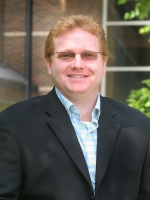
Professor Brian E. Ray
Congratulations to Brian Ray, currently serving as a Fulbright Scholar in South Africa, who was recently named by C|M|LAW Dean Craig M. Boise to serve as the Joseph C. Hostetler-Baker & Hostetler Professor of Law.
Ray has recently published a book review of Sandra Liebenberg’s Socio-Economic Rights. Adjudication under a Transformative Constitution in the European Journal of International Law 2013 24: 739-744. It’s available here: http://ejil.oxfordjournals.org/content/24/2.toc
Ray also recently helped organize a half-day conference “Meaningful Engagement as a Political Process: Understanding the Roles of Government, Communities, Civil Society and Courts.” The Community Law Centre’s Socio-Economic Rights Project hosted the event on May 30 at the University of the Western Cape and Stellenbosch University’s Socio-Economic Rights and Administrative Justice Project co-sponsored. The roundtable discussion brought together government officials, civil society groups active in socio-economic rights and citizen leaders to discuss ways to implement the constitutional requirement that government “meaningfully engage” with people and civil society when developing social welfare policies.
Milena Sterio, C|M|LAW Fulbright Scholar in Azerbaijan, is Named The Charles R. Emrick Jr. – Calfee Halter & Griswold Professor of Law

Professor Milena Sterio
Congratulations to Milena Sterio, named recently by C|M|LAW Dean Craig M. Boise to serve as The Charles R. Emrick Jr. – Calfee Halter & Griswold Professor of Law. Professor Sterio is currently serving as a Fulbright Scholar in Baku, Azerbaijan. You can read her first-hand account of her experience here:
https://www.law.csuohio.edu/newsevents/news/milena-sterio-cmlaw-fulbright-scholar

