Sterio Debates Militarized Humanitarian Intervention at International Affairs Symposium


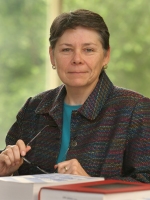
Professor Milena Sterio

Professor Milena Sterio

C|M|LAW’s Calfee Halter & Griswold Professor of Law Milena Sterio participated in the 52nd International Affairs Symposium at Lewis and Clark College on April 8, 2014.  Professor Sterio’s panel was entitled “Militarized Humanitarian Intervention: Guns for Good?”.  The panel was conducted in a debate format in which Professor Sterio argued the pro-militarized humanitarian intervention position. The other participants included law professors, international affairs/political science professors, and several retired officers of the Army and Air Force.  One of the debaters was Gen. Michael Hayden, former director of the NSA and then the CIA (during the Bush administration). Livening up the proceedings were many student protesters outside of the auditorium with signs like “don’t spy on me” and “the Constitution isn’t dead.” 

Plecnik’s “Modest Proposal” for a Constitutionally Apportioned Wealth Tax Published in Hastings Constitutional Law Quarterly

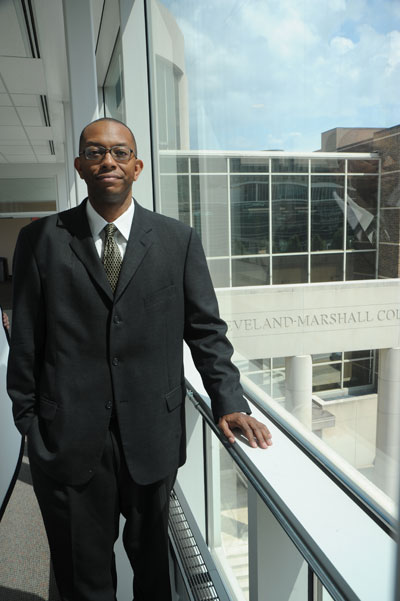
Professor John Plecnik

Professor John Plecnik

C|M|LAW Professor John Plecnik’s article, The New Flat Tax: A Modest Proposal For a Constitutionally Apportioned Wealth Tax, was published in the Hastings Constitutional Law Quarterly at 41 Hastings Const. L.Q. 483 (2014).  As usual, Professor Plecnik begins with a flourish:

“Eat the poor children,” proposes Jonathan Swift.
“Nay,” protests Occupy Wall Street, “Eat the rich!”

His Article does not really propose eating the rich with draconically high taxes. However, he says, the United States has experienced years of multi-billion dollar deficits. Many liberals have proposed a European-style value added tax or VAT to balance the budget. Many conservatives have proposed a “fair” or flat tax. Like the Devil, regressive consumption taxes go by many names. Whether they know it or not, liberals and conservatives are proposing essentially the same thing — a federal sales tax, which disproportionately impacts the poor and middle class. Plecnik’s article counters with a truly modest proposal for the New Flat Tax on wealth rather than consumption.

Congressional power to “lay and collect Taxes” is subject to two rules. Indirect taxes must be uniform, whereas direct taxes must be apportioned so that states pay in proportion to their population. Under the Obamacare decision, there is little doubt that wealth taxes are direct taxes. However, levying a wealth tax based on population has the unfair result of different tax rates in different states.

For some time, scholars have debated ways to skirt the Apportionment Clause. For the first time, this Article demonstrates how a wealth tax may comply with Apportionment and still be fair. Under this Article’s proposal, the federal government would collect a wealth tax at a uniform rate and retain each state’s constitutionally apportioned share of the tax. The excess unapportioned share would be refunded to the state of origin via a state-level “pick up” tax. This revenue sharing arrangement — inspired by the pre-EGTRRA credit for state death taxes — ensures a uniform state and federal tax burden without redistributing wealth among the states. Thus, horizontal equity is achieved and both the letter and spirit of the law are satisfied.

You can read the full article on SSRN at:

http://papers.ssrn.com/sol3/papers.cfm?abstract_id=2423803


Cherry Speaks on Maternal Orthodoxy and the Criminalization of Women’s Behaviors

Professor April Cherry spoke at C|M|LAW’s Journal of Law and Health Conference on March 7, 2014.  Her talk was entitled: “Self-Harm, Fetal-Harm and the Ideology of the Good Mother.” It explored the connection between the “compelling state interest in the fetus” rhetoric, feticide statutes, and the image of maternal orthodoxy that leads us to criminalize behavior of pregnant women that results in fetal harm, regardless of the mental illness or mental health status of the pregnant woman.

Falk Speaks about the Epidemics of Rape on College Campuses and in the Military

Professor Patricia J. Falk

Professor Patricia J. Falk

On March 29, 2014, C|M|LAW Professor Patricia J. Falk presented Is VAWA Enough?:  The Epidemics of Rape on College Campuses and in the Military at a conference presented by Dusquesne Law School in Pittsburgh– The Violence Against Women Act and Its Impact on the U.S. Supreme Court and International Law.

Professor Falk explained that on January 22, 2014, President Barack Obama created a special task force to combat the epidemic of rape on college campuses.  She noted that the statistics are alarming:  one in five college women is either sexually assaulted or the victim of an attempted sexual assault during her college years, and only 10-12% of those who are sexually assaulted reported the attacks.  Less than a month earlier, in December of 2013, President Obama had issued a warning to the military – that it had to decrease the number of sexual assaults experienced by service members within one year.  The President stated that if improvement were not forthcoming, he would have to step in and take more aggressive measures himself.  The statistics are also alarming.  In Fiscal Year 2010, 19,000 service members were victims of sexual assault, and only about 14 percent of the victims reported the crime.  A recent VA study indicated that nearly one in four women sent to Iraq or Afghanistan reported being sexually assaulted.

Professor Falk indicated that within the past few months, the Obama administration had identified two specific sites in our society that are in urgent need of reform in terms of sexual assault.  In this talk, she explored whether these very different spaces have some things in common that make the crime of rape more likely to occur.  She asked whether, if we can understand the characteristics that make these spaces fertile ground for sexual assault (i.e., more rape-prone), we might be able to turn the tide on these epidemics and make progress toward their eradication.   In particular, she examined victims’ accounts, the juxtaposition of non-legal actors in decision making regarding the prosecution of rape, conflicts of interest in those to whom sexual assault is reported, motivated offenders and a surfeit of potential victims, the role of alcohol and drugs, and the current legal rules or systems.


Sterio Writes about Crimean Secession on IntLawGrrls.com

C|M|LAW’s Charles R. Emrick, Jr.- Calfee Halter & Griswold Professor of Law Milena Sterio has posted On Crimean Secession, Fairness, and Self-Determination on IntLawGrrls.com, a blog on international law, policy, and practice.  She argues that “the Crimean issue is complex, and that instead of simply proclaiming that Ukraine is right and Russia is wrong, we need to step back and analyze the region’s history, as well as to take into account its population’s true desires.”

To read her thoughts on Crimean secession, click here:

On Crimean Secession, Fairness, and Self-Determination

Witmer-Rich Comments on Fox 8 News on County Prosecutors’ Reenactment of 2012 Shooting

Professor Jonathan Witmer-Rich

Professor Jonathan Witmer-Rich

On March 7, 2014, C|M|LAW Professor Jonathan Witmer-Rich commented on Fox 8 News regarding the re-enactment, organized y Cuyahoga County prosecutors, of a fatal 2012 police shooting.

Witmer-Rich said re-enactments can be helpful.  He noted that “[i]t might be the case it will be helpful for the grand jury to see things as they happened in real time.”  He also said that re-enactments do shed light on how events might have transpired and even escalated.

“How would a reasonable officer react in these circumstances?” said Witmer-Rich, “Seeing it happen in real time might really give the grand jury a better sense of how to draw conclusions of how a reasonable officer would’ve behaved.”

Watch here:

What Really Happened? Shooting Re-enactment May be Helpful

Falk Cited by the Supreme Court of Canada

Professor Patricia J. Falk

Professor Patricia J. Falk

C|M|LAW Professor Patricia J. Falk’s 1998 article Rape by Fraud and Rape by Coercion, 64 Brook. L. Rev. 39 (1998) was cited on March 8, 2014, in a much anticipated decision by The Supreme Court of Canada. The decision involved a sexual assault case in which the man intentionally perforated a condom and was convicted of sexual assault.  The Supreme Court of Canada upheld the conviction.

Writing about “the distinction made in U.S. criminal and tort law between deceptions going to the fact (“fraud in the factum”) which vitiate consent for the purposes of rape and battery and other deceptions that act as inducements (“fraud in the inducement”) which do not”, on pages 33-34 of the opinion, the court says:

“A further example is the distinction made in U.S. criminal and tort law
between deceptions going to the fact (“fraud in the factum”) which vitiate consent for
the purposes of rape and battery and other deceptions that act as inducements (“fraud
in the inducement”) which do not. As expressed by one leading text, the rule is that
“if the deception relates not to the thing done but merely to some collateral matter”
the consent is valid: R. M. Perkins and R. N. Boyce, Criminal Law (3rd ed. 1982), at
p. 1079. No matter how beguiling it appears at first, the distinction has proved
unworkable. It is not helpful in differentiating between legally effective and
ineffective consent and where it attempts to draw the line has no basis in principle:

see, e.g., P. J. Falk, “Rape by Fraud and Rape by Coercion” (1998), 64 Brook. L. Rev.
39, at p. 159-61.”

Here is a link to the decision – http://scc-csc.lexum.com/scc-csc/scc-csc/en/item/13511/index.do   The reference to Professor Falk’s article is not visible on the html page, but you may view it by clicking on the small PDF icon in the right hand corner of the gray box at the top of the page.  The list of references appears on page 10.

Kalir Files Amicus Brief with United States Supreme Court

C|M|LAW Clinical Professor Doron Kalir, together with Civil Litigation Clinic students Amy Polomsky and Kate Southworth, filed an Amicus Brief with the United States Supreme Court on behalf of the National Association of Social Workers. The brief argues that social workers are entitled to qualified immunity whenever they make a reasonable decision to remove an abused child, even in the absence of a prior judicial hearing. Recently, in a 2:1 decision, the Sixth Circuit held that social workers are not entitled to qualified immunity under those circumstances. The social workers are currently seeking a grant of certiorari from the Court, and 13 States have filed an amicus in their support. Now, the National Organization of Social Workers (NASW) has joined them. The circuit split on the issue, and the fact that the Court has ruled on a related issue 25 years ago – but left this question unanswered – increase the likelihood that the Court will grant cert. in this matter.

Robertson Speaks on Leasing at Crain’s Shale Summit 2014

On February 20, 2014, C|M|LAW Professor and Associate Dean for Academic Enrichment Heidi Gorovitz Robertson served on a panel entitled “The Most from a Lease” at Crain’s Shale Summit 2014.  Robertson and the two other panelists highlighted potential legal and logistical issues for current and prospective lessees of mineral rights in Ohio.  In particular, the panelists spoke about the role of landmen and brokers in the leasing process, the impact of unitization on lessees’ rights, rights of access to the surface and subsurface, pipeline leases, and more.  The event was attended by nearly 300 lawyers, journalists, industry professionals, landowners, environmentalists, and others.

Video coverage of the event is available here:

http://www.crainscleveland.com/article/20140224/MULTI/302289999

The event program is available here:

Click to access CC93076213.PDF

Plecnik Publishes in Tax Notes on the EITC Ban and the Definition of “Reckless”

C|M|LAW Professor John Plecnik has published Reckless Means Reckless: Understanding the EITC Ban in Tax Notes at Vol. 142, No. 8, Feb. 24, 2014, p. 847.  It was published electronically in Tax Notes Today.

In this article, Plecnik argues that Congress intended to incorporate in the earned income tax credit ban the well-established definition of reckless or intentional disregard from section 6662, which imposes the accuracy-related penalties.  Plecnik has previously argued that the legislative history demonstrates Congress intended the same definition of reckless or intentional disregard for sections 32(k) and 6662. That argument was inspired by Plecnik’s work as pro bono counsel for the Legal Aid Society of Cleveland on two EITC ban cases in the Tax Court. Both cases were settled last fall on terms favorable to his clients with no ban or other penalties. Plecnik thanks Professor Leslie M. Book of Villanova University School of Law as well as Camille R. Gill and Susan E. Morgenstern, his co-counsels from Legal Aid.