On Saturday, April 13, C|M|LAW Professor David Forte delivered a paper, Civility and Nihilism, at conference at John Carroll University. The theme of the conference was “Freedom of Expression vs. Respect for the Sacred.”
Category Archives: Faculty News
Kowalski Assists with National Employment Law Project Petition for Certiorari

Clinical Professor Ken Kowalski
C|M|LAW Clinical Professor Ken Kowalski assisted attorneys from the National Employment Law Project, a national advocacy organization for employment rights of lower-wage workers, in drafting a petition for certiorari in the US Supreme Court. The petition in the case of James A. Lang [et al.] v. Director, Ohio Department of Job and Family Services was submitted March 15, 2013. The case involves the denial of certain unemployment benefits to three Ohio workers who lost their jobs when their employer transferred its manufacturing operations to Mexico. A wage subsidy program, Alternative Trade Adjustment Assistance, created by Congress for older workers whose jobs are terminated due to national trade policies, is administered by the Ohio Department of Job and Family Services through contract with the federal Department of Labor. At issue is whether the ODJFS and DOL interpretations of the requirements for participation in the program contravened the statute itself. The Ohio Supreme Court in a 4-3 decision, ruled against the workers. The case presents interesting questions of statutory construction and deference to administrative interpretations.
Forte Reviews Scalia and Garner in The Claremont Review of Books
 C|M|LAW Professor David Forte has published Taking Law Seriously, a review of Reading Law: The Interpretation of Legal Texts, by Antonin Scalia and Bryan A. Garner, in The Claremont Review of Books.
The article currently is available on-line to subscribers only. This links connects to the contents of the issue. http://www.claremont.org/publications/crb/
Witmer-Rich Writes in Pepperdine Law Reivew on “Sneak and Peak” Searches
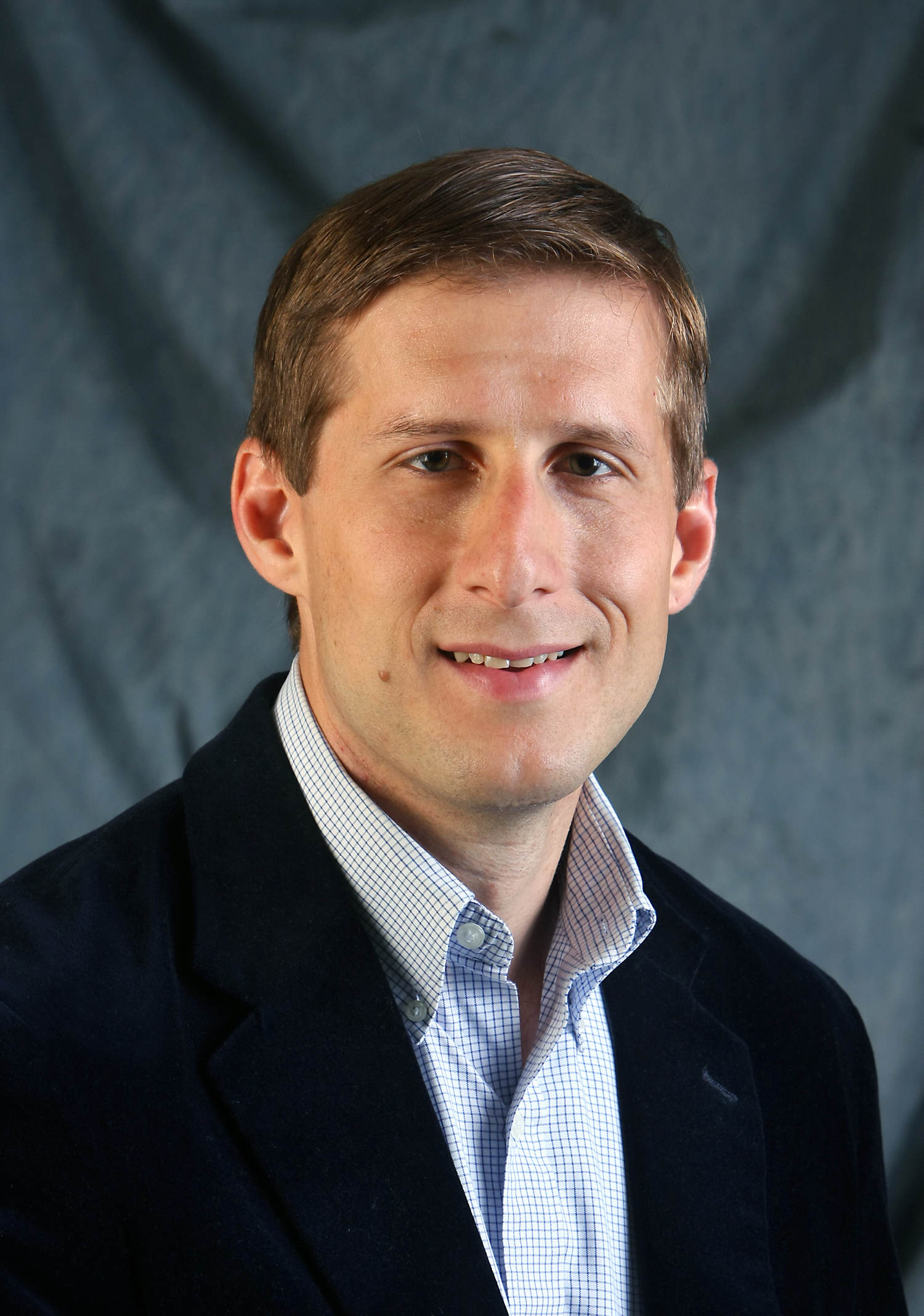
Professor Jonathan Witmer-Rich
The Pepperdine Law Review has accepted C|M|LAW Professor Jonathan Witmer-Rich’s article, The Rapid Rise of “Sneak and Peek” Searches, and the Fourth Amendment “Rule Requiring Notice.” The article examines delayed notice search warrants, authorized in the USA Patriot Act, permitting police to conduct covert searches of homes and businesses, only notifying the resident of the search weeks or months later. The article presents the first empirical account of the rapid rise in covert searching: from around 25 delayed notice search warrants nationwide in 2002, to over 3,700 in 2011, representing approximately ten percent of all federal search warrants. Most courts to date have held that covert searching raises no Fourth Amendment concerns. Witmer-Rich argues to the contrary, based on Fourth Amendment first principles, an historical analysis of search and seizure at the time of the founding, and a re-examination of the Supreme Court’s so-called “knock and announce” rule. In a separate article, still in progress, Witmer-Rich explains why the current statutory regime governing delayed notice search warrants has facilitated the dramatic increase in the practice of covert searching, and proposes legal reforms that would substantially limit the number of delayed notice warrants, while still preserving the technique for cases involving sufficiently compelling law enforcement interests.
Ray Reviews Liebenberg’s Socio-Economic Rights: Adjudication under a Transformation Constitution
 The European Journal of International Law (http://www.ejil.org/) recently accepted for publication C|M|LAW Professor Brian Ray’s review of Socio-Economic Rights: Adjudication under a Transformative Constitution by Sandra Liebenberg. The review will be formally published in the European Journal of International Law’s Volume 2 later this year but it is currently available on the journal’s website. EJIL is jointly published by New York University and the Oxford University Press.
You may view the book review here: http://globallawbooks.org/reviews/detail.asp?id=767
Sundahl Discusses International Traffic in Arms Regulations before Cleveland Foreign Credit Group
On March 14, 2013, C|M|LAW Professor and Associate Dean Mark Sundahl delivered a talk on the Obama Administration’s initiative to reform the International Traffic in Arms Regulations (ITAR) at the Cleveland Foreign Credit Group’s monthly meeting. Sundahl spoke about the impending paradigm-shift in the U.S. approach to regulating international trade in military hardware and data. He explain how, under the leadership of President Obama, the complicated, ambiguous, and frequently absurd system of export controls under the bifurcated regulations administered by the Department of Commerce and the Department of State is in the process of being merged into a more rational set of regulations overseen by a single administrative agency.
Hoke Quoted in Courier-Journal Regarding Potential Vulnerabilities in Electronic Voting
C|M|LAW Professor Candice Hoke was quoted in a Courier-Journal article, Kentucky Democrats say online voting will be more secure than Florida’s vulnerable system, by Joseph Gerth. In reaction to Kentucky Secretary of State Alison Lundergan Grimes’ assertion that the exposed vulnerability of Florida’s electronic absentee ballot request system is not applicable to Kentucky’s electronic voting plans, Hoke said “[n]ot only are we dealing with a high-risk situation, we’re also dealing with state and local offices that are not equipped to deal with any kind of cyber defense.” According to Grimes, Kentucky’s system incorporates multilevel security measures to ensure votes aren’t tampered with, whereas the Florida ballot request system, for which a vulnerability was exposed, did not even require the use of passwords or specific log-ins. Grimes accused the Verified Voting Foundation, for which Hoke serves as an advisor of “stirring up fear about electronic voting and using the Florida case to raise concerns about unrelated systems,” like that being considered in Kentucky.
To read the full article, click here:
Weinstein’s Article on RLUIPA and Local Government to be Included in the 2013 Zoning and Planning Handbook
C|M|LAW and Levin College of Urban Affairs Professor Alan Weinstein’s article, The Effect of RLUIPA’s Land Use Provisions on Local Governments, 39 FORDHAM URB. L.J 1221 (2012), has been selected to be included in the 2013 edition of Zoning and Planning Law Handbook, published by Thomson-Reuters on the basis that it represents an important contribution to the literature of zoning and land use law. In the article, he argues that in the absence of perfect information about how RLUIPA (Religious Land Use & Institutionalized Persons Act) has affected local governments, courts have adopted a pragmatic approach to addressing RLUIPA challenges that combines appropriate judicial deference to a local government that enacts a neutral law of general applicability with the heightened judicial scrutiny that becomes appropriate when that same local government applies that same law to a specific zoning approval, a circumstance that frequently allows for subjectivity in the approval process and thus the potential for discrimination or arbitrary action against religious uses.
Hoke Quoted Widely on the Election-Related Cyber Attack in Florida
C|M|LAW Professor Candice Hoke was quoted in a news story that has been syndicated widely across the country regarding last fall’s election-related cyber attack in Florida. The case involved an attempt, last fall, to 2,500 absentee ballots through phantom requests carried about by a computer program on the Miami-Dade County elections board’s website. The large number of false requests came from a small number of IP addresses overseas, and therefore, the board’s protection software was able to discover and to reject the phony requests. The concern, however, is that this attempt exposes the vulnerabilities of computer-based elections. According to Hoke, “[t]his has been in the cards, it’s been foreseeable.” Commenting on the attractive cost-savings provided by on-line voting, Hoke said “It’s cheap, if you don’t care whether elections are stolen.”
To read the original story, see:
To see a related story click here:
Inniss to Speak at Princeton re the Princeton Fugitive Slave
C|M|LAW’s Joseph C. Hostetler-Baker & Hostetler Professor of Law, Lolita K. Buckner Inniss will speak at Princeton University on February 25, 2013. Her lecture, James C. Johnson and the Princeton Fugitive Slave Case, will be presented through the History Department and will focus on Professor Inniss’ research on the history of slavery in the Princeton area.
Details about the presentation are available here: http://www.princeton.edu/history/events_archive/viewevent.xml?id=761
More information, and many photos and facts are available at the Facebook page Professor Inniss created: The Princeton Fugitive Slave: James Collins Johnson, accessible here: https://www.facebook.com/ThePrincetonFugitiveSlaveJamesCollinsJohnson
 CSU Law Faculty