On Saturday, June 6, Clinical Professor of Law Doron Kalir delivered a lecture to new attorneys on Professionalism. The lecture was part of the Continuing Legal Education Series hosted by Cleveland-Marshall Alumni Association in partnership with the Federal Bar Association. It focused on the four groups of stake holders with which new attorneys are likely to communicate: clients, supervisors, the court, and opposing counsel.
Monthly Archives: June 2015
Sagers Quoted in New York Times in Airlines
Chris Sagers, the James A. Thomas Distinguished Professor of Law, was quoted in James Stewart’s “Common Sense” column this week in the New York Times. Stewart questioned statements made at an airline trade association last week, and how they might relate to continued high fares and record high industry profits following the merger of American Airlines and US Airways in 2013. He sought Sagers’ views on the antitrust implications of the executives’ statements and the industry’s conduct overall.
The article is available online here.
Professor Daiker-Middaugh Joins Inns of Court for 2015-16
Clinical Professor Pamela Daiker-Middaugh was invited to join the American Inns of Court for 2015-2016. The Inn is a group of judges and lawyers that meets once a month at the City Club of Cleveland, with the goal of fostering excellence in professionalism, ethics, civility, and legal skills. Professor Daiker-Middaugh’s invitation letter is available below:
Professor Sterio Publishes Post on Maritime Piracy: Are Sea Shepherds Pirates?

Sea Shepherds Engaging a Japanese Whaling Vessel
Professor and Associate Dean Milena Sterio published a blog post on Communis Hostis Omnium, an academic blog dedicated to a discussion of maritime piracy legal issues, entitled “Are Sea Shepherds Pirates? The United States Supreme Court May Decide Soon.” In this post, Professor Sterio discusses a recent petition for a writ of certiorari, filed by Sea Shepherds, a marine conservationist not-for-profit organization, asking the Supreme Court to review a Ninth Circuit decision and injunction.
The Ninth Circuit had issued an injunction sua sponte against Sea Shepherds, prohibiting them from approaching Japanese whaling vessels and from engaging in any violent activity against such vessels in the Pacific Ocean. The Ninth Circuit had determined, in this case, that Sea Shepherds were pirates under international treaty law (because they engage in violent activities on the high seas committed for private ends), and that because of the piracy categorization, the United States’ courts could exercise extra-territorial jurisdiction necessary to support the enforcement of this overseas injunction under the so-called Alien Tort Statute. The piracy categorization is problematic in this case, because it is unclear under international law whether private parties, such as Sea Shepherds, acting for non-pecuniary goals, are truly acting for private ends (does private ends imply that parties are acting for truly private goals, such as robbery/pecuniary gain?) and what level of violence is necessary to support a finding of piracy (do acts such as ramming whaling vessels, which are mildly violent yet fall short of more violent acts of “traditional” piracy, such as robbery/murder/setting vessels on fire, suffice for a finding of piracy?). Professor Sterio’s post explores these issues in the context of the above-mentioned petition for a writ of certiorari filed by Sea Shepherds and their attorneys.
Professor Robertson’s Article on House Bill 8 Published by Crain’s Cleveland Business
Heidi Gorovitz Robertson, Steven W. Percy Distinguished Professor of Law at Cleveland-Marshall College of Law and Professor of Environmental Studies with the Maxine Goodman Levin College of Urban Affairs, wrote an article for Crain’s Cleveland Business entitled “Proposed law may saddle cities and towns with unwelcome costs and ugly well sites.” Professor Robertson’s article is available on Crain’s website here. In this article, Professor Robertson discusses several issues of concern regarding House Bill 8, which, if passed, would amend Ohio’s laws on unitization.
Professor Mead Takes on Pro Bono Matter in Cooperation with ACLU of Ohio
Assistant Professor Joseph Mead recently sent a letter to Youngstown City Council threatening a lawsuit if the City does not repeal a citywide ban on “begging.” The letter points out that the apparent scope of the law prohibits all charitable requests of any sort anywhere in the city, although it appears that the law is being selectively enforced only against individuals perceived as poor. The US Court of Appeals for the Sixth Circuit has already held that bans on begging violate the First Amendment. In the letter, available here, Professor Mead explained: “Freedom of speech belongs to the rich and the poor alike, and applies whether the community finds the speech or the speaker to be agreeable or not. No one is required to donate to charity or to individuals, but by allowing all voices into the marketplace of ideas, the First Amendment entrusts citizens—not their government—with the choice to decide which causes to heed and which requests to answer.”
Professor Mead has given two media interviews regarding this case: one to WKSU (available here) and another to the Youngstown Vindicator (available here). Most recently, according to press reports, Youngstown has already stopped enforcing this “begging” law.
In a forthcoming article in the Ohio State Law Journal’s online supplement (“First Amendment Protection of Charitable Speech”), Professor Mead explains the First Amendment problems with ordinances that restrict requests for charity (including charitable solicitation, panhandling, and begging), pointing out defects in laws found in Akron, Dayton, and other places in Ohio and across the country. Professor Mead holds a joint appointment as Assistant Professor of Nonprofit Management and Public Administration in the Maxine Goodman Levin College of Urban Affairs and at the Cleveland-Marshall College of Law, and is handling this matter pro bono in cooperation with the ACLU of Ohio.
Professor Mead’s Articles Forthcoming in Administrative Law Review, Pittsburgh Law Review, and Ohio State Law Journal Furthermore
Professor Joseph Mead, who holds a joint appointment at the Maxine Goodman Levin College of Urban Affairs and the Cleveland-Marshall College of Law, has three law review articles slated for publication.
“Choosing a Court to Review the Executive” (with N. Fromherz) is forthcoming in the Administrative Law Review; this article is available here.
“Courts, Constituencies, and Nonprofit Corporations: Enforcement of Fiduciary Duties in the Nonprofit Sector” (with M. Pollack) is forthcoming in the Pittsburgh Law Review; this article is available here.
“First Amendment Protection of Charitable Speech” is forthcoming in the Ohio State Law Journal Furthermore.
Professor Mika Presents at Association of Legal Writing Directors Biennial Conference
Professor Karin Mika presented at the Association of Legal Writing Directors (ALWD) Biennial Conference held at the University of Memphis Law School June 3-5th. Her presentation was titled, “The Times are a Changing … and they’re not changing back anytime soon — meeting students where they are, not where we would like them to be.”. The presentation discussed the growing perception (and frustration) that students are ill-prepared to be attending law school and are difficult to teach. The presentation discussed how the world we live in (information overload, helicopter parenting, increased stress, technology, over-scheduling, standardized testing formats in primary schools, etc….) has changed the nature of how students grow up and how they are educated prior to attending law school. The presentation asserted that most students are not ill-equipped to learn, but learn differently and/or at different paces. Professor Mika concluded that we must figure out how best to connect with our students (or revamping curriculum appropriately) rather than spending most of our time lamenting what students are not.
“Prosecuting Maritime Piracy” Published by Cambridge University Press – Professor Sterio Served as Editor and Chapter Contributor

Professor Milena Sterio with a newly published copy of “Prosecuting Maritime Piracy” at the Cambridge University Press stand at the Law and Society Annual Meeting 2015 in Seattle.
Cambridge University Press published “Prosecuting Maritime Piracy: Domestic Solutions to International Crimes” (edited by Michael P. Scharf, Michael Newton, and Milena Sterio). In addition to her role as editor on this collected volume, Professor and Associate Dean Milena Sterio contributed two chapters: “Incorporating International Law to Establish Jurisdiction over Piracy Offenses: A Comparative Examination of the Laws of the Netherlands, South Korea, Tanzania, India, and Kenya,” and “Pirates’ Right to a Speedy Trial.”
Professors Lewis, Ray and Sterio Present at Law and Society Annual Meeting in Seattle
Three professors from the Cleveland-Marshall College of Law presented at the Law and Society Annual Meeting in Seattle, Washington, from May 28-31.
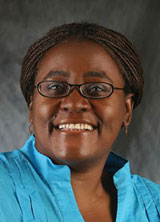
Professor Browne Lewis
Professor Browne Lewis presented her paper entitled “The Equitable and Legal Consequences of Human Oocyte Cryopreservation,” on a panel focused on the discussion of “Sexuality in the 21st Century: Law and Gender Equality Norms.”

Professor Brian Ray
Professor Brian Ray presented his paper entitled “Anti-Land Invasion Units and South Africa’s Third-Generation Eviction Cases” as part of a panel on “Courts, Human rights Institutions and Rights Enforcement in South Africa- Recent Developments and Reform Proposals.” Professor Ray also served as Chair of this panel.

Professor Milena Sterio
Professor and Associate Dean Milena Sterio presented her paper entitled “The Covert Use of Drones: How Secrecy Undermines Oversight and Accountability” on a panel focused on “Terrorism, Security, and Counter-Terrorism: Narratives, Decisions and Responses.
 CSU Law Faculty