Professor Sterio Moderates ABILA Panel on Lack of Gender Parity in the International Judiciary

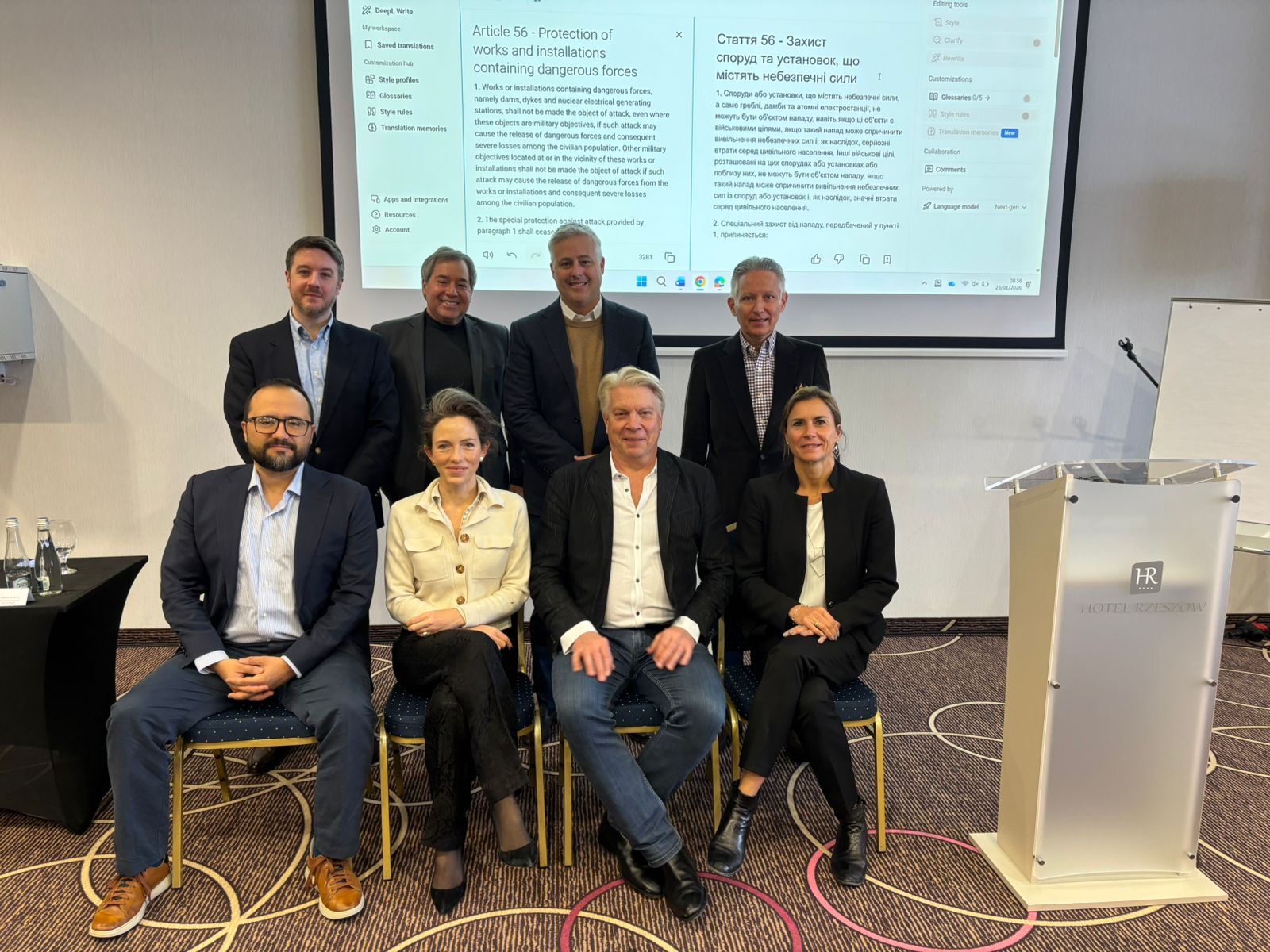
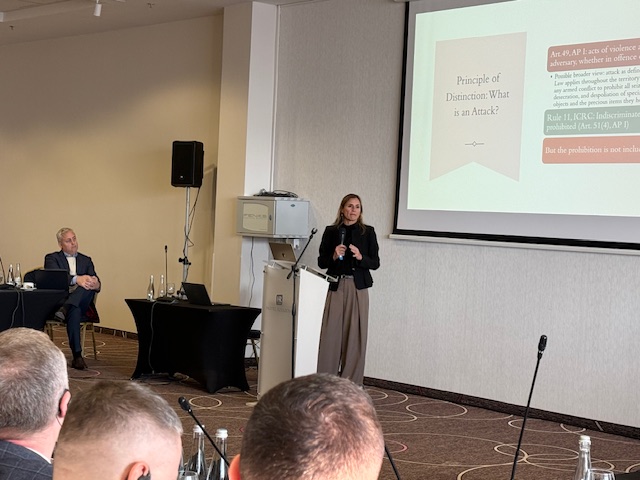
Professor Sterio moderated a panel on the topic of “The Right to Equal Participation in the Judiciary and the ICJ: Where are the Women?”  The panel was hosted by the American Branch of the International Law Association (ABILA), and co-sponsored by the American Society of International Law Women in International Law Interest Group, GQUAL, the Working Group for Gender Partiy for the International Court of Justice, and the Institute for African Women in the Law.  The panel was also the inaugural event for the new ABILA committee on Gender Justice, which Professor Sterio co-founded with Dr. Jessica Corsi. 

The panelists included Dr Jessica Corsi, Senior Law Lecturer at The City Law School at City St George’s, University of London; Prof. Margaret deGuzman, Temple University Beasley School of Law & Judge, International Residual Mechanism for Criminal Tribunals; Prof. Valerie Oosterveld, Western Law School (Canada) and Former ICC Advisor on Crimes Against Humanity; Prof. J. Jarpa Dawuni, Howard University; Corinne Detmeijer, Vice Chair of the CEDAW Committee to End Discrimination against Women; and Prof. Claudia Martin, American University Washington College of Law.  

The right to equal participation in decision making is a fundamental human right enshrined in international law, including in the International Covenant on Civil and Political Rights, the International Covenant on Economic Social, and Cultural Rights, and the Convention on the Elimination of All Forms of Discrimination against Women. In its General Recommendation 40 (GR40) issued in October 2024, the Committee on the Elimination of Discrimination Against Women (the CEDAW Committee) made it clear that this right applies to international judiciaries. GR40 notes that despite the fundamental nature of this right, States do not enforce it. The International Court of Justice (ICJ) is one such example. In the almost 80 years of the court, only 5.22% of its permanent judges have been women, the rest men, and no data is known regarding other genders. Justice systems should reflect the diversity of the societies they serve, and the ICJ is no exception. Known as the ‘World Court’, the historical and ongoing overrepresentation of one gender on its bench demonstrates its lack of representativeness. This panel discussion focused on the need for gender parity on the ICJ bench from a human rights lens with a special focus on the right to equal participation in decision making and in the international judiciary. Panelists discussed the causes and consequences of women’s absence from the ICJ bench and assessed barriers to ICJ judicial gender parity and how to overcome them. The discussion also addressed gender-based discrimination and gendered barriers to the fulfillment of other human rights that may impede the effective exercise of judicial participation rights for women. One year on from GR40, and one year away from the November 2026 ICJ judicial election, it is time to turn the recommendation into reality.  

The Panel recording is available here: https://www.youtube.com/watch?v=U5yeCXM0GNc

Professor Sterio Serves as Peer Reviewer for Oxford University Press Journal

Professor Sterio served as peer reviewer for the Journal of International Dispute Settlement, a prestigious peer reviewed academic journal published by Oxford University Press.  Professor Sterio reviewed an article on self-determination and the International Court of Justice’s 50-year-old Advisory Opinion in the Western Sahara case.

Professor Milena Sterio Serves as Peer Reviewer for International Criminal Law Review

Professor Milena Sterio submitted an expert review to the International Criminal Law Review. Professor Sterio was solicited by the Review to serve as a peer reviewer; the Review is a top-ranked peer-reviewed journal in the field of international criminal law.  

Professor Sterio Participates in Expert Meeting with Latvian State Secretary

On October 13, Professor Milena Sterio participated in an expert group discussion, organized by the Cleveland Council on World Affairs, with Latvian State Secretary Aivars Puriņš on European security and US-NATO cooperation.

State Secretary Puriņš traveled to Cleveland as part of a German Marshall Fund Across America trip focused on the state of transatlantic defense cooperation and the deep ties that connect Americans and European communities across the Atlantic. Ohio has a large defense manufacturing sector, and participants in this trip will engage with state and local elected officials, students, and business leaders to further the discussion around what it means to be part of NATO and the importance of the alliance’s role in security and prosperity in the United States and Europe.

Professor Sterio serves on the Cleveland Council on World Affairs’ Board of Directors.  

Professor Sterio Organizes, Participates in American Society of International Law Meeting

Professor Milena Sterio co-organized and participated in the American Society of International Law’s Midyear Meeting, which took place in Cleveland from September 25 to 27.  Professor Sterio co-chaired the Midyear Meeting and helped organize the entire conference, which consisted of the Practitioners’ Forum, held at Jones Day, and the Research Forum, held at Case Western Reserve University School of Law. 

During the Practitioners’ Forum, on September 25, Professor Sterio moderated a panel on the topic of “Algorithms on Trial: Navigating the Nine-Figure Litigation Minefield of Generative AI.”  During the Research Forum, on September 26, Professor Sterio presented her paper, on the topic of “The Role of International, Regional, and Domestic Courts in Transitions Toward Peace and Security.” On September 27, she also moderated a panel on the topic of “Accountability under International Legal Frameworks.”

Professor Luisetto Presents at UC Berkeley Collective Bargaining Conference

On September 19, Professor Lorenzo Luisetto presented his paper, “Collective Bargaining and Monopsony: The Regulation of Noncompete Agreements in France,” at the Collective Bargaining Special Issue Conference hosted by the UC Berkeley Institute for Research on Labor and Employment. The conference brought together industrial relations scholars from around the world, including keynote speakers Christian Dustmann and David Card (2021 Nobel Prize winner).

In his paper, Professor Luisetto examines how the regulation of noncompete agreements for employees through collective agreements affects firm-level markdowns in the French manufacturing sector. A key takeaway is that, by enhancing compliance or imposing additional requirements, collective bargaining serves as an effective tool to regulate the use of noncompete agreements in France.

Professor Milena Sterio Presents at International Law Conference in Berlin

On September 11, Professor Milena Sterio presented her research at the European Society of International Law Conference in Berlin, Germany. Her paper, “The Role of International, Regional, and Domestic Courts in Transitions Toward Democracy,” was selected through a highly competitive call-for-papers process.

In her work, Professor Sterio examines how courts can play an essential role in supporting peace and democracy when traditional global security mechanisms falter. She argues that the United Nations Security Council—long the cornerstone of international peace and security since 1945—has become increasingly paralyzed. In this context, judicial bodies at the international, regional, and domestic levels may step in to fill the void.

When courts determine that a state has violated international law, or that a leader bears responsibility for atrocity crimes, they not only advance transitional justice but may also help restore peace and security within affected regions. Professor Sterio’s scholarship highlights the evolving role of courts in shaping pathways toward democracy in times of crisis.

Professor Robertson Invited to Environmental, Natural Resources, and Land Use Law Scholars Workshop

Professor Heidi  Gorovitz Robertson has been invited to participate in the Fifth Annual Environmental, Natural Resources, and Land Use Law Scholars Workshop, hosted by the Loyola University Chicago School of Law. Nine scholars are invited each year to engage in a multi-day workshop, writing retreat, and works-in-progress symposium. 

Robertson will be working on a paper about the way Ohio (and perhaps other) agencies value stakeholder comments in their decision-making processes — in particular, she will be thinking about how agencies should weigh the volume of comments against their value.

Robertson is the Steven W. Percy Professor of Law at CSU|Law and Professor of Environmental Studies at the Levin College of Public Affairs and Education, Cleveland State University.

Professor Sterio Presents at European Society of International Law Conference

Professor Milena Sterio presented at the European Society of International Law Conference in Berlin, Germany, on September 11, on the topic of “The Role of International, Regional, and Domestic Courts in Transitions Toward Democracy.”  Professor Sterio’s paper was selected from a competitive call-for-papers.  In this paper, Professor Sterio argues that because our traditional peace and security apparatus, which has existed since 1945 through the United Nations Security Council, is mostly paralyzed, we may need to increasingly turn toward courts.  When international, regional, or domestic courts proclaim that a state is responsible for an international law violation or that a specific country leader ought to bear individual criminal responsibility for the commission of atrocity crimes, courts thereby play a role in transitional justice, and may contribute toward a re-establishment of peace and security in a region.  

Professor Robertson Publishes Article on Property Rights in Meteorites

Professor Heidi Gorovitz Robertson has published an article titled, Who owns a space rock that landed in a privately owned Swedish forest? in the Real Estate Law Journal, a Thompson Reuters peer-reviewed publication.  The article is available at 54 Real Est. L.J. 47 (Summer 2025).

The article abstract provides:

Questions pertaining to property rights in natural resources have moved beyond the areas above and beneath Earth’s surface to outer space itself. In November 2020, an iron meteorite fell from the sky and landed randomly on privately owned forest land, outside of Enköping, Sweden. Two geologists entered the land, found the meteorite and removed it from the land. The landowner did not challenge the geologists’ right to walk or explore his land, but he believed they had illegally removed the meteorite. Sweden’s longstanding customary right of public access to privately owned land (allemansrätt) means that persons other than the landowner have the right both to enter the land and to collect and remove some natural resources from it. This usually is explained with examples of visitors removing wild berries or mushrooms. A visitor cannot take away cultivated crops or items that are the “immovable” property of the landowner.

What about a meteorite? A meteorite is not much like a cultivated crop. But neither is it much like a wild growing berry. Is it an object that is the personal or immovable property of the landowner? It certainly was not such propertybefore it landed randomly on the landowner’s forest. Did it become the landowner’s property merely by arriving there from outer space?

The Uppsala, Sweden, district court (a trial court) held that, the meteorite was a moveable object, thus more like wild berries than cultivated crops. This meant that, under the right of public access (allemansrätten), the geologists were entitled not only to enter the land, but also to remove the rock. The landowner appealed.

The Svea Court of Appeals overturned the lower court holding that meteorites are ‘immovable property’. This court said that because the iron meteorite landed on property that also contains iron, the meteorite could not easily be distinguished from the land. Hence, although the geologists were allowed to enter the land, they were not entitled to remove the meteorite.

In the context of the Swedish courts’ decisions applying allemansrätten to the recovered meteorite, this article will consider whether a space rock that lands on private land should be the immovable property of the landowner, whether it should be moveable property and thus available to be taken by visitors, or whether another theory of property ownership would better apply. It will consider and apply classic theories of property ownership such as the first possession, fruits of labor, utilitarian, civic republicanism, and personhood theories.

Upon petition by the geologists, the case currently is under review by the Supreme Court of Sweden.

Professor Robertson is the Steven W. Percy Professor of Law at CSU|Law and Professor of Environmental Studies at the Levin College of Public Affairs and Education, Cleveland State University.