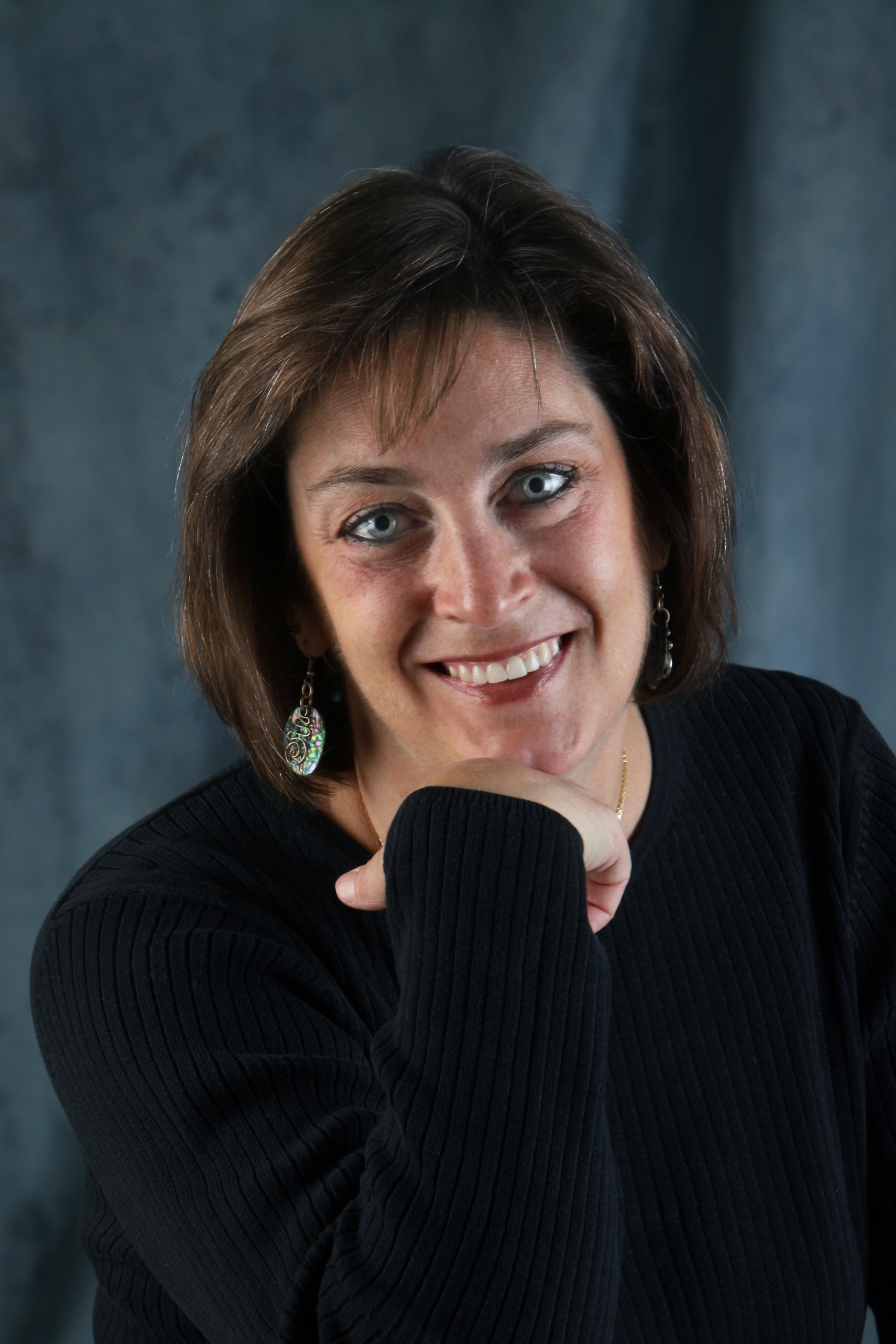
Professor Sterio Co-Hosts International Law Chats

International Law Chats is a podcast from the American Branch of the International Law Association (ABILA), hosted by Professor Chiara GiorgettiAlison Macdonald KC, and Professor Milena Sterio. Episodes air on the first Monday of every month and feature prominent guests in the field of international law. Episodes are available on Spotify, YouTube, and our website.

This month’s episode features Professor ⁠Gian Luca Burci⁠, Adjunct Professor of international law at the Graduate Institute of International and Development Studies, Geneva since 2012. He is also the Director of the joint LLM on Global Health Law and Governance between the Graduate Institute and Georgetown Law School, as well as Academic Adviser in the Global Health Centre of the Graduate Institute. Since 2016, Prof. Burci has been a Visiting Professor and Senior Scholar at the O’Neill Center on National and Global Health Law, Georgetown University School of Law. He shares his thoughts on the WHO global pandemic treaty and the future of global health law. 

Listen to Episode 2: Look WHOs Talking? below and subscribe to the podcast on Spotify and YouTube.

Professor Sterio Moderates ABILA Panel on Lack of Gender Parity in the International Judiciary

Professor Sterio moderated a panel on the topic of “The Right to Equal Participation in the Judiciary and the ICJ: Where are the Women?”  The panel was hosted by the American Branch of the International Law Association (ABILA), and co-sponsored by the American Society of International Law Women in International Law Interest Group, GQUAL, the Working Group for Gender Partiy for the International Court of Justice, and the Institute for African Women in the Law.  The panel was also the inaugural event for the new ABILA committee on Gender Justice, which Professor Sterio co-founded with Dr. Jessica Corsi. 

The panelists included Dr Jessica Corsi, Senior Law Lecturer at The City Law School at City St George’s, University of London; Prof. Margaret deGuzman, Temple University Beasley School of Law & Judge, International Residual Mechanism for Criminal Tribunals; Prof. Valerie Oosterveld, Western Law School (Canada) and Former ICC Advisor on Crimes Against Humanity; Prof. J. Jarpa Dawuni, Howard University; Corinne Detmeijer, Vice Chair of the CEDAW Committee to End Discrimination against Women; and Prof. Claudia Martin, American University Washington College of Law.  

The right to equal participation in decision making is a fundamental human right enshrined in international law, including in the International Covenant on Civil and Political Rights, the International Covenant on Economic Social, and Cultural Rights, and the Convention on the Elimination of All Forms of Discrimination against Women. In its General Recommendation 40 (GR40) issued in October 2024, the Committee on the Elimination of Discrimination Against Women (the CEDAW Committee) made it clear that this right applies to international judiciaries. GR40 notes that despite the fundamental nature of this right, States do not enforce it. The International Court of Justice (ICJ) is one such example. In the almost 80 years of the court, only 5.22% of its permanent judges have been women, the rest men, and no data is known regarding other genders. Justice systems should reflect the diversity of the societies they serve, and the ICJ is no exception. Known as the ‘World Court’, the historical and ongoing overrepresentation of one gender on its bench demonstrates its lack of representativeness. This panel discussion focused on the need for gender parity on the ICJ bench from a human rights lens with a special focus on the right to equal participation in decision making and in the international judiciary. Panelists discussed the causes and consequences of women’s absence from the ICJ bench and assessed barriers to ICJ judicial gender parity and how to overcome them. The discussion also addressed gender-based discrimination and gendered barriers to the fulfillment of other human rights that may impede the effective exercise of judicial participation rights for women. One year on from GR40, and one year away from the November 2026 ICJ judicial election, it is time to turn the recommendation into reality.  

The Panel recording is available here: https://www.youtube.com/watch?v=U5yeCXM0GNc

Professor Sterio Serves as Peer Reviewer for Oxford University Press Journal

Professor Sterio served as peer reviewer for the Journal of International Dispute Settlement, a prestigious peer reviewed academic journal published by Oxford University Press.  Professor Sterio reviewed an article on self-determination and the International Court of Justice’s 50-year-old Advisory Opinion in the Western Sahara case.

Davis Speaks to Travel Writers on Copyright and Fair Use

On May 3, 2014, C|M|LAW Professor Michael Davis spoke at the Society of American Travel Writers annual conference at the Cleveland Convention Center. The title of his presentation was “Copyright and Fair Use.” The discussion centered on the internet. Writers and editors who participated in the discussion expressed confusion regarding whether posted pictures or text are free when taking them from the internet, or whether aggregators have a right to aggregate material found there. In addition, the question was raised whether editors could freely take from the internet as well. Professor Davis explained that the answer to almost all the questions was no: legally, all those copies are copyrighted.  With very few exceptions, and depending upon how much material they took, the context of the taking, the nature of the work, and effect on the original author’s potential market, material might or might not be available for fair use.

Becker and Green Speak on LGBT Rights in Ohio

On May 16, 2014, C|M|LAW Professors Susan Becker and Matthew Green spoke at a free CLE program entitled “A Legal Overview of LGBT Rights in Ohio.”  This program was presented in conjunction with a free legal clinic set up to assist members of the lesbian, gay, bi-sexual or transgendered (“LGBT”) community with issues such as discrimination, name changes, family law, and immigration. It was sponsored by the Cleveland Metropolitan Bar Association, Equality Ohio, the Spanish-American Committee, the Legal Aid Society of Cleveland, and Nueva Luz Urban Resource Center.

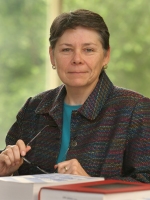
Professor Susan J. Becker

Professor Susan J. Becker

Professor Becker spoke on the status of same-sex marriage, gave a brief overview of the history of the issue from the 1971 Baker v. Nelson case in Minnesota through the Windsor v. U.S. case decided by the U.S. Supreme Court last summer. Most of her talk focused on the significant changes to federal law (Social Security, taxes, Medicare, Family Leave Act, etc.) since Windsor which extend benefits to same-sex marriage couples.  She also focused on the status of the 49 cases now pending in federal courts that will likely lead to a U.S. Supreme Court decision on the constitutionality of states denying marriage to same sex couples. Finally, she spoke about the status of the law in Ohio for LGBT families.


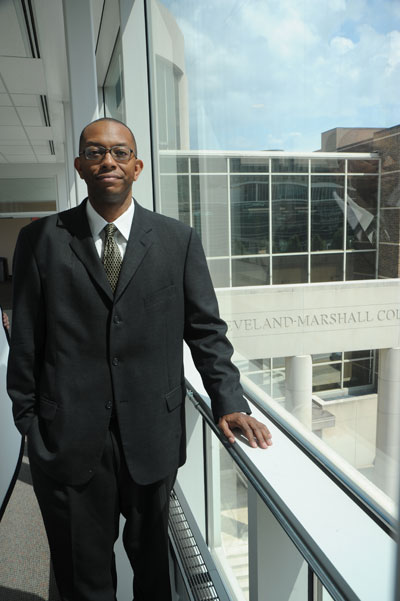
Professor Matthew Green

Professor Matthew Green

Professor Green explained that despite decades of repeated attempts, Congress has yet to enact federal legislation to ensure equality in employment for LGBT employees. Although protections under some state and local laws exist, a significant number of LGBT workers are without legal protection.  Despite these truths, the legal landscape is complex and warrants study, considering LGBT workers face stubbornly persistent and widespread workplace discrimination.  To that end, it is imperative that LGBT workers, allies and advocates understand the current legal landscape as well as potential hurdles to protection.  Despite the dearth of legislation directly protecting LGBT workers, courts have used stereotyping theory and changing understandings of the concept of “gender” to protect LGBT workers under extant discrimination law.  Moreover, the U.S. Supreme Court’s recent, plaintiff-friendly retaliation decisions may further serve as a vehicle in some instances to protect LGBT workers from discrimination, albeit indirectly.  In addition to this complex legal landscape, emerging issues with respect to religion and the workplace may well present new challenges for LGBT workers in their quest for equality in employment.

Plecnik Quoted in Tax Notes Today on Reducing the Error Rate for the Earned Income Tax Credit

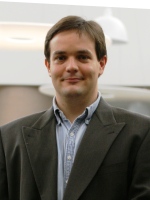
Professor John Plecnik

Professor John Plecnik

C|M|LAW Professor John Plecnik was quoted in Tax Notes Today, this morning, on reducing the error rate for the earned income tax credit.

The following quote appeared in EITC ERROR RATE GROWS; IMPROPER PAYMENTS TOP $ 13 BILLION, 2014 TNT 93-3:

“John T. Plecnik of Cleveland State University’s Cleveland-Marshall College of Law told Tax Analysts that increasing the IRS’s budget is one way to address EITC errors. Every increase in the IRS budget results in more tax revenues collected or fewer dollars inappropriately granted as credits, he said.

“I think solution number one is the IRS is underfunded, and they frankly need to have a larger enforcement budget if we expect them to have a more accurate administration of the earned income tax credit or any other program,” Plecnik said.

Another solution is for the IRS to wait to confirm the information on a return before issuing a refund, Plecnik said. “We shouldn’t be pushing the IRS to issue refunds preemptively,” he said. “Maybe that means people don’t get their refund until April or May as opposed to February, but I think that’s a small price to pay to avoid putting out billions of dollars in inappropriate credits.”


Sagers’ Work on Statute Names to Appear in the Georgetown Law Journal

Professor Chris Sagers

Professor Chris Sagers

C|M|LAW’s James A. Thomas Distinguished Professor of Law Chris Sagers’s essay on naming traditions in federal legislation will appear in the Georgetown Law Journal in 2014.  The essay, entitled A Statute by any Other (Non-acronomial) Name Might Smell Less Like S.P.A.M., or, The Congress of the United States Grows Increasingly D.U.M.B., was featured earlier this year in a column by New York Times legal affairs analyst Adam Liptak.  It documents a rapidly rising trend of sloganeering and manipulation in statute titles, and considers what these evolving trends say about the state of affairs in our federal Congress.

May Speaks on Inviting Student Creativity into the Legal Writing Classroom

Legal Writing Professor Claire Robinson-May

Legal Writing Professor Claire Robinson-May

C|M|LAW Legal Writing Professor Claire Robinson-May presented “Enhancing Understanding by Inviting Student Creativity into the Legal Writing Classroom,” on April 26, 2014, at the Southeastern Legal Writing Conference held at Stetson University College of Law.  In her presentation, May noted that teachers of legal writing rarely offer students an opportunity to be creative. Rather, they regularly ask students to produce research logs, memos, motions, and other documents that are similar to those produced by their peers. But, in addition to teaching legal writing, May is also pursuing an M.F.A. in creative writing. She brought that experience into her legal writing classroom and invited her law students to bring in their creativity as well. May’s presentation described an assignment in which she required students to outline and analyze a statute and then convey the information to the class through a creative presentation. Student group presentations included an original song, an interactive game, a comic strip, a public service announcement, an original children’s book, and more. May believes the assignment enhanced student understanding of the material by engaging student creativity in the learning process.

Falk to Serve on Cuyahoga County Prosecutor’s First Conviction Integrity Unit

Professor Patricia J. Falk

Professor Patricia J. Falk

C|M|LAW Professor Patricia J. Falk has been appointed to serve on Cuyahoga County Prosecutor Timothy McGinty’s newly announced Conviction Integrity Unit.  Falk, along with the other members of the group, will review innocence claims made by felons convicted of crimes in Cuyahoga County.  In particular, the group will review applications from prison inmates, attorneys and felons who believe they were wrongly convicted. 

For a Plain Dealer article on the topic, as well as a link to the Prosecutor’s Office’s full policy on the topic,click here:

http://www.cleveland.com/court-justice/index.ssf/2014/04/new_conviction_integrity_unit.html

Robertson Writes in Crain’s on Ohio Supreme Court Oral Argument regarding Local Attempts to Regulate Zoning of Shale Wells

Professor Heidi Gorovitz Robertson

Professor Heidi Gorovitz Robertson

C|M|LAW Professor and Associate Dean Heidi Gorovitz Robertson published Awaiting the court’s word on validity of local zoning control of well locations, in Crain’s Cleveland Business’ Energy Report on April 4, 2014.  In this post, Robertson notes that many Ohio communities hope to exercise some control over the shale oil and gas activities that will take place within their jurisdictions. Monroe Falls, in particular, would prohibit drilling in residentially zoned space and impose some other local requirements.

If the Ohio Court of Appeals was the end of the line, Monroe Falls’ zoning ordinance would be dead in the water, along with other local efforts to enact similar ordinances affecting the location of wells.  But Monroe Falls appealed to the Supreme Court of Ohio  and on February 26, 2014, the  Court heard oral argument on two specific issues. First, it considered whether the state statutes concerning oil and gas drilling deprive municipalities such as Monroe Falls of their Ohio Constitutional home rule authority to enact and enforce zoning laws (such as prohibiting shale drilling in residential zones).  The second issue was whether Monroe Falls’ ordinances, some of which required oil and gas drillers to submit information to Monroe Falls conflict with the state’s oil and gas law when the driller has already secured a drilling permit from ODNR.

Ohio and the affected driller, Beck Energy, argued that if the court allows localities to create their own rules, even zoning rules, the practice would undermine the state’s ability to carry out the Legislature’s statutory directives.  Monroe Falls, however, argued that local land-use regulation could operate in harmony with the state’s control of drilling operations and would not, therefore be pre-empted by the state law.

A couple of justices expressed serious doubts that ODNR really has “sole and exclusive authority” to preclude all local oversight with no administrative appeal. At least one seemed bothered that the statute does not expressly state a preclusion for municipal zoning authority, whereas the Legislature has shown that it knows how to do this in other statutes.  Justice Paul Pfeifer focused on the fact that under Ohio’s oil and gas statute, a driller can appeal a denied drilling request to the state agency, but a landowner has no opportunity to appeal the state’s decision to grant a driller’s permit request.

Only a few of the justices spoke up substantially at the oral arguments. We’ll have to wait to hear from the others when the opinion is released.  In the meantime, localities across the state will be watching to learn whether they will be able to decide where shale oil and gas drilling may occur within their borders.

To read the full post in Crain’s, click here:

http://www.crainscleveland.com/article/20140404/BLOGS05/140409906/awaiting-the-courts-word-on-validity-of-local-zoning-control-of-well