On April 12, Professor Deborah A. Geier appeared in the second of three segments on “The Sound of Ideas,” a program on the Cleveland NPR affiliate WCPN, to discuss the prospects for tax reform. To access the program, click here.
On April 12, Professor Deborah A. Geier appeared in the second of three segments on “The Sound of Ideas,” a program on the Cleveland NPR affiliate WCPN, to discuss the prospects for tax reform. To access the program, click here.
Chris Sagers, the James A. Thomas Distinguished Professor of Law, wrote in Saturday’s Washington Post to discuss the recent controversy over forcible removal of a United Airlines passenger, and the relation it might have to concentration and competition in the airline industry. You can read his piece here.
Professor Lolita Buckner Inniss has published a blog post entitled S/he Had it Coming: Rules, Resistance and Retribution. Her blog post is available here.
Professor Ray was selected to participate in the first annual Yale Cyber Leaders Forum organized by the Yale Law School, March 30 – April 1. The Forum included leaders from government, industry and academia who came together to discuss how best to understand and counter the most pressing cyber security challenges of our day. The Forum will publish a white paper summarizing the group’s discussions in the next several months.
In addition, Professor Ray and the Cleveland-Marshall Cybersecurity and Privacy Protection Center (of which Professor Ray serves as co-director) were featured in a recent news story on Channel 5 News about high demand for new cybersecurity professionals. The news story is available here.
Heidi Gorovitz Robertson, C|M|LAW’s Steven W. Percy Professor of Law, traveled to Juniata College in Huntingdon, Pennsylvania on April 4 and 5. to deliver the 2017 Will Judy Lecture. In addition, to the public lecture, Professor Robertson met with undergraduate students in the environmental studies program, with the College’s pre-law advisor and pre-law students, and with an upper-level class in environmental economics.
Professor and Associate Dean Milena Sterio has published a post on Intlawgrrls entitled “Syria: The (Il)legality of the United States’ Use of Force Against Assad.” This post, available here, discusses the legality of recent American air strikes against Syria under both international law and domestic law. Professor Sterio concludes in this post that the United States’ unilateral use of force against Syria most likely lacks a solid legal basis under international and domestic law.
Professor and Associate Dean Milena Sterio was elected Co-Chair of the International Criminal Law Interest Group at the American Society of International Law. She will serve a two-year term as Co-Chair. Professor Sterio just completed a two-year term as Co-Chair of the American Society of International Law-Midwest Interest Group, and she is also a member of the Steering Committee of the Women in International Law Interest Group at the American Society of International Law.
Professor Karin Mika was a brief grader for the Capital University Child Welfare and Adoption Law Moot Court Competition. In addition, Professor Mika presented at the 17th Annual Rocky Mountain Regional Legal Writing Conference, held at Arizona State, Sandra Day O’Connor School of Law on March 10-11. The title of her presentation was “The Evolving Classroom: How Technology Has Changed Our Students and Ourselves.”
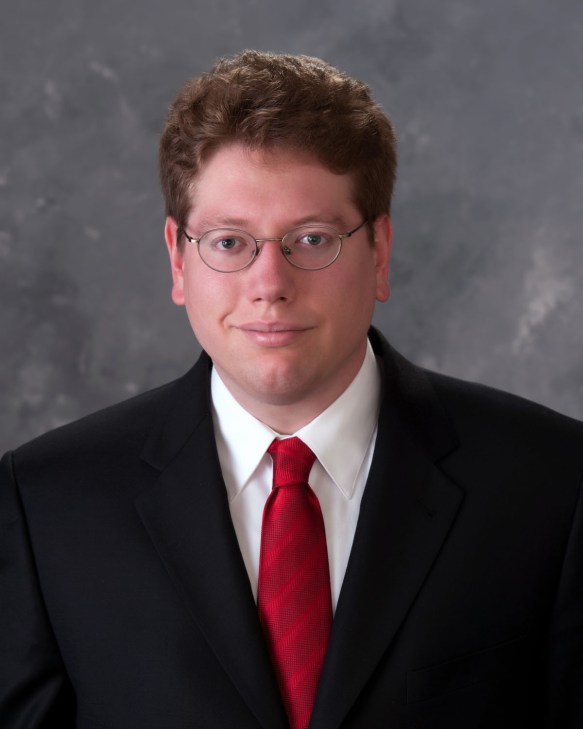
Professor John Plecnik
Professor John Plecnik was awarded a bilateral grant from the Public Research Agency of the Republic of Slovenia in partnership with Professor Jernej Letnar Černič, Professor Matej Avbelj and Assistant Lecturer Dejan Valentinčič of the Graduate School of Government and European Studies in Ljubljana, Slovenia. The grant will support an international faculty and research exchange between Cleveland State University and the Graduate School of Government and European Studies to discuss the “Constitutional and Legal Aspects of Real Estate Taxes—what Slovenia Can Learn From the U.S.”
Professor Plecnik’s research focuses on the intersection of taxation and public policy. His work on the fundamental fairness and constitutional limits of taxation was recently highlighted by the Office of Research at Cleveland State University with a “Featured Researcher” video. Professor Černič’s research focuses on political systems as well as constitutional law, international law, human rights law and administrative law. Professor Avbelj’s research focuses on democracy and the rule of law with an emphasis on European Union law. Assistant Lecturer Valentinčič’s research focuses on comparative constitutional law, international law and human rights law.
To fulfill their grant project, Professor Plecnik and his Slovenian colleagues will visit each other’s schools this fall for approximately a week. They will give a series of presentations and guest lectures on their latest research to faculty and students.
 CSU Law Faculty