Talking Foreign Policy, a New Radio on WCPN, to Feature C|M|LAW’s Sterio

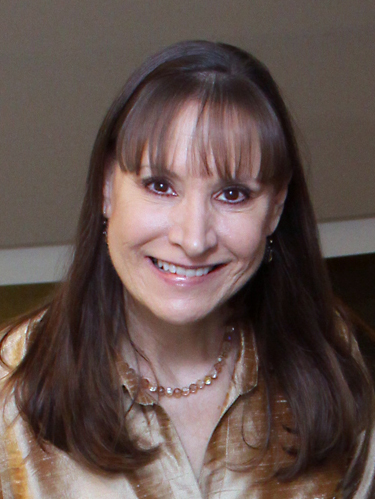
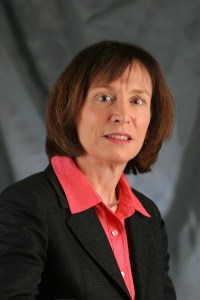
Tomorrow evening (Thursday, March 1) at 8:00 p.m., WCPN (90.3 FM) will air the first episode of Talking Foreign Policy.  This new radio will feature a regular group of panelists including C|M|LAW’s Professor Milena Sterio.  The station will air 4 episodes in 2012 at dates and times to be announced.  Topics discussed in the first episode include (1) Predator Drones (2) The International Criminal Court (and the controversy concerning al Bashir, Sief Gadaffi, and the Kenya Six) (3) Responding to Iranian Nukes (including the recent assassinations of Iranian Nuclear scientists).  In addition to Professor Sterio, who is an international law professor, regular panelists include: an ethicist, Shannon French, director of Case Western Reserve’s Inamori Center for Ethics and Excellence; a military expert: Mike Newton, professor of law at Vanderbilt University; and a negotiator: Paul Williams, president of the Public International Law and Policy Group.

For more information about the upcoming series, please see: http://www.ideastream.org/programs/entry/45303

Hoke Presided over Cross-Cutting Program on Election Law and Voting Technology at the AALS

Professor Candice Hoke

Professor Candice Hoke co-organized (with Martha Mahoney- Miami) and presided over a Cross-Cutting Program at the Association of American Law Schools annual meeting in Washington, D.C., on January 5, 2012.  The program, “The Law and Science of Trustworthy Elections: Facing the Challenges of Internet Voting & Other E-Voting Technologies” featured elections law and technology experts from throughout the nation.

In the heated 2012 presidential election cycle, most Americans will cast primary and general election ballots on aging computer-based voting systems built to standards that date at best from the early 2000s. At least 33 States now permit email, e-fax, or other internet transmission of voted ballots for military and civilian overseas absentee voters.  This cross-cutting program made high-tech election issues accessible for law professors through presentations from experts in computer science, statistics/political science, and government as well as legal scholars. The program identified legal and regulatory issues in urgent need of attention from legal scholars in fields that include administrative law, computer and internet law, election law, legislation and the political process, and other areas.

Premier computer scientists have evaluated currently deployed electronic voting equipment, finding flawed software and an ease of tampering even by hackers with little expertise. Yet those repeatedly confirmed scientific findings have yielded little effect on the voting technology approved for use. In 2008, States that produced at least 160 electoral votes and elect substantial portions of the U.S. Senate and House used voting equipment that has received grave criticism for being easiest to manipulate in ways that may be undetectable. In 2012, this flawed equipment will largely determine a similar number of Electoral College votes and scores of legislative seats, Federal and State.

The program’s first panel, “Understanding Computer Vulnerabilities” featured Professors Andrew Appel (Princeton) and David Wagner (Berkeley), both experienced in translating computer science into comprehensible insights for policymakers.  It provided an overview of the ways in which computers have been integrated into the election process, explain the design flaws that can cause serious undetectable problems in election results, and identify safeguards that are essential – though largely unused — to assuring votes are recorded and counted accurately.  The second panel, “Understanding the Risks of Internet Voting For Accurate, Accessible Elections” included Professor Alex Halderman (Michigan) who discussed how his team broke in, took control, and secretly re-voted ALL cast ballots for write-in science fiction characters in the District of Columbia internet voting public test in 2010. Computer scientist David Jefferson (Lawrence Livermore National Lab) explained the internet voting risks that cannot be managed in the foreseeable future with implications for national security and accurate elections.  Law professor Martha Mahoney (Miami) presented her study of a Federal pilot internet voting project that sought to establish that the internet can transmit voted ballots in compliance with laws requiring accuracy and ballot secrecy.  C|M|LAW’s Professor Candice Hoke identified federal agency activities promoting internet voting and litigation that has thus far unsuccessfully sought to establish voting rights to accurate election technologies.

In addition to an introduction and panel presentations, the program featured a roundtable discussions on the “Legal Implications and Recommendations.”  The roundtable featured presentations and interchange among Debra Bowen (Secretary of State of California), Richard Hasen (U.C. Irvine, Law), Walter Mebane (Michigan, Political Science and Statistics), and Daniel Tokaji (OhioState), on how to protect voting rights, election integrity, and national security in light of the voting system defects and risks presented in the earlier panels.

Weinstein Spoke on the Impact of the Religious Land Use and Institutionalized Persons Act at AALS on

Professor Alan Weinstein

On Saturday, January 7th, Professor Alan Weinstein spoke at Association of American Law Schools annual meeting.  The session was titled “The Impact of the Religious Land Use and Institutionalized Persons Act on State and Local Governments.”  Professor Weinstein’s paper focused on local governments and religious entities.  Professor Weinstein’s paper examined our now decade plus of experience with RLUIPA and concluded: (1) despite claims that the courts have been “flooded” with RLUIPA litigation, there have only been about 200 decided cases since the fall of 2000 (although the amount of threatened litigation giving rise to “settlements” and cases settled before any formal proceedings is larger); and (2) both state and federal courts have limited the reach of the statute by narrowly interpreting what comprises “religious exercise,” a “substantial burden” on religious exercise, and “land use regulation” for challenges brought under the “general rule” portion of the statute and by requiring that comparator uses meet stringent similarly situated requirements in equal terms challenges under the statute. Number (2) above demonstrates that what the statute effectively does is to “allow” — rather than “impose” — heightened scrutiny on land use decisions that would not have triggered heightened scrutiny absent RLUIPA. Other speakers in the session included March Hamilton (Cardozo) and Douglas Laycock (Virginia).

Geier Participates in U.S. Senate Tax Roundtables

Professor Deborah Geier

The U.S. Senate Finance Committee majority and minority staffs asked Professor Deborah A. Geier to participate, along with a select group of other tax law and public finance economics professors, in a two-day Academic Roundtable discussing fundamental tax reform on January 5th and 6th in Washington, DC. The roundtable discussions focused on Individual Taxation, Deferred Compensation and Tax-Exempt Organizations, Estate & Gift Taxation, Energy/Environmental Taxation, Business Taxation, and International Taxation. The discussions were wide-ranging and fruitful among the participants and the Senate Finance Committee staff. Professor Geier may be asked to continue conversations with Senate Finance Committee staff members as various tax reform possibilities are explored further.

Plecnik’s Article on Abolishing the Inflation Tax on the Poor and Middle Class Hits SSRN’s Top-10 Download Lists

Professor John Plecnik’s article, Abolish the Inflation Tax on the Poor and Middle Class, was recently included on SSRN’s Top Ten download list for Auditing, Litigation & Tax eJournal, Macroeconomics: Prices, Business Fluctuations, & Cycles eJournal and Political Economy: Taxation, Subsidies, & Revenue eJournal.  The article is forthcoming at 29 Quinnipiac L. Rev. 925 (2011).

You may view the abstract and download statistics at http://ssrn.com/abstract=1956692.

C|M|LAW Hosts Innovative Conference on E-Discovery

On Thursday, November 10, C|M|LAW hosted an innovative half-day conference on E-Discovery, Current E-Discovery Issues from a Practitioner and Judicial Perspective.   C|M|LAW presented and organized the conference in conjunction with the Cleveland-based e-discovery firm JurInnov and the Jones Day law firm.  The conference brought together judges, litigators, corporate counsel and industry experts to discuss the many pressing issues that have emerged in e-discovery practice.  Professor Brian Ray was the driving force behind the conference at C|M, working closely with Mr. Timothy Opsitnick of JurInnov, and Mr. Ted Hiser of Jones Day.

The conference began by convening a practitioner’s roundtable to discuss current and emerging e-discovery issues, then brought in several judges to present the judicial perspective.  Judicial participants included, The Honorable Dan Polster, Judge, U.S. District Court, Northern District of Ohio, The Honorable James R. Knepp, II, Magistrate Judge, U.S. District Court, Northern District of Ohio, and The Honorable Nancy Vecchiarelli, Magistrate Judge, U.S. District Court, Northern District of Ohio.  In addition to co-sponsor JurInnov, industry participants included, representatives from the Cleveland Clinic, Lubrizol, Cooper Tire & Rubber, Squire Sanders & Dempsey, Jones Day, Thorman & Hardin-Levine.  Conference attendees received a tour of C|M|LAW’s new state-of-the-art electronic trial courtroom, complete with demonstrations of the court room’s advanced technology.  Participants were invited to join a new Northern Ohio E-Discovery Roundtable that will convene periodically to continue discussing current trends and best practices in e-discovery.

Wilson and Sterio Speak at Central States Law Schools Conference; Sterio Elected President

Professors Milena Sterio and James Wilson spoke at last week’s Central States Law Schools Association Conference at the University of Toledo College of Law.  Sterio spoke on her work on piracy in Somalia.  Wilson presented his work on three chapters of his upcoming book, The Structure of Class War.

The chapters Wilson discussed are titled, respectively, “The One,” “The Few,” and “The Many.”   The book’s primary technique consists of using the wisdom of the ancient Greeks and The Buddha to demonstrate that most modern conservatives are not very conservative, most liberals not very compassionate, most Republicans not very republican, and most Democrats not very democratic.

Wilson’s three chapters apply the ancient Greeks’ distinction between governments ruled by the one, the few, and the many, to the United States and the global economy.   The chapter on the “One” first compares the symbiotic relationship between the President and the CEOs of major corporations, who are, to use Max Weber’s term, “monocrats.”   The rest of the chapter uses Plato’s political morality to help criticize Professor Posner and Vermeule’s proposal that the President should not be constrained by either “the rule of law” or “separation of powers.”  For example, Plato believed that the best practicable form of government consisted of a wise king who was limited by “the rule of law” created by a public assembly.

The chapter on the “Few” contrasts Plato’s defense of an aristocratic conception of “justice” in The Republic with competing conceptions of “injustice.”   The Republic contains much of continuing value and much to fear.   The next part of the chapter considers Aristotle’s responses, which simultaneously clarifies lingering analytical problems surrounding the “one, the few, and the many” and provides justifications for a republican form of government instead of an aristocratic one.   The final part employs and extends the economic distinction between “predatory” and “productive” modes of wealth accumulation to argue that the political economy of the United States has become increasingly predatory, a precursor to imperial decline.

Professor Sterio spoke on her work on piracy in Somalia.  According to her abstract, the rise of piracy off the coast of Somalia over the last five years has been spectacular, amounting to a true crisis in international law.  During the first six months of 2011, Somali pirates attacked 163 ships and took 361 sailors hostage.  As of June 30, 2011, Somali pirates were holding 20 ships and 420 crew members, demanding millions of dollars in ransom for their release.  Moreover, pirates have been attacking larger ships, such as oil tankers, and using more potent weapons, such as rocket-propelled grenades and automatic weapons.  Pirates have also been attacking during monsoon season, an otherwise risky endeavor.  According to the International Maritime Bureau Director, Pottengal Mukundan, “[i]n the last six months, Somali pirates attacked more vessels than ever before and they’re taking higher risks.”

Sterio concludes that piracy has increased shipping expenses, costing an estimated $10 billion per year in global trade.  She poses and responds to the following questions:  What has sparked this international law crisis off the coast of Somalia?  What can the international community do in order to alleviate the crisis and prevent piracy from spreading to other regions of the world? What should be the way forward?

Professor Sterio, currently Vice President of the CSLSA, was elected President for the upcoming year.  The Central States Law Schools’ Association, is a regional consortium of law schools which has attracted member schools such as Toledo, Akron, Albany Law School, Michigan State, Louisiana State, University of Arkansas-Fayetteville, Texas Tech, Northern Kentucky, SMU, etc.   With Sterio as President, it is likely that C|M|LAW will be the host of next year’s CSLSA annual conference.

For more information about the Central States Law Schools Association, click here: http://cslsa.us.

Crocker Named to Ohio Death Penalty Task Force

On Monday, October 31, Professor Phyllis Crocker was named by Ohio Chief Justice Maureen O’Connor to a joint task force of the Ohio Supreme Court and the Ohio State Bar Association on the death penalty.  The 21-member task force includes seven judges, four legislators, two prosecutors, two law professors, a sheriff and several others.  Its first meeting will be in Columbus this Thursday.  “The task force will not decide whether Ohio should or should not have the death penalty,” Chief Justice Maureen O’Connor said in a statement. “It will not be on the table for discussion.”  Instead, the task force is charged with determining whether Ohio’s death penalty is being administered fairly.

To see the announcement in the Columbus Dispatch, click here: http://www.dispatch.com/content/stories/local/2011/11/01/19-named-to-review-death-penalty-in-ohio.html

Litigation and Social Change: Developing Women’s Rights in the Twentieth Century

C|M|LAW Professor Emerita Jane M. Picker returned to CSU on Tuesday, October 18, to speak on Litigation and Social Change: Developing Women’s Rights in the Twentieth Century.  Professor Picker spoke, in particular, about a case she argued in the U.S. Supreme Court in 1973, LaFleur v. Cleveland Board of Education.  Her client, Jo Carol LaFleur (now Jo Carol Nesset-Sale) was present to introduce her.  LaFleur, then a Cleveland school teacher, had been suspended from her job because she was four months pregnant.  Under the applicable maternity leave rules, teachers were barred from Cleveland classrooms starting in their forth month of pregnancy.  LaFleur wanted to remain in the classroom and her baby was not due until July, well after the end of the school year.  Picker took her case, pro bono, all the way to the U.S. Supreme Court, and won.  Of course, by then LaFleur’s child was long-since born, and LaFleur herself had gone on to attend law school.  But as a result of this effort the women’s protective laws, like that which had barred LaFleur from the classroom, were overturned not only in the Cleveland schools, but all over the country.

For more information, see Chapter 13 in Peter Irons’ The Courage of Their Convictions- Sixteen Americans Who Fought Their Way to the Supreme Court, at: https://www.law.csuohio.edu/sites/default/files/newsevents/ironscouragechap13.pdf

C|M|LAW Conference on the Politicization of Judicial Elections Draws High Attendance, Press, and Publications

Last week’s C|M|LAW conference on The Politicization of Judicial Elections drew more than 200 participants, and led Professor Susan Becker to be sought out by a Nevada reporter for assistance in understanding a controversial redistricting decision a state judge recently entered there.

The conference was inspired by the November, 2010 elections in which three sitting Iowa Supreme Court justices were ousted from the bench as a result of the court’s unanimous ruling in Varnum v. Brien, 763 N.W.2d 862 (2009). The Varnum decision struck down, on equal protection grounds, a state statute limiting marriage rights to a union between a man and a woman.  The conference examined the effect, if any, the ouster of these judges may have on an judicial independence as well as its effect on future efforts to present state court challenges to laws prohibiting marriage for same-sex couples and to otherwise advance the civil rights for LGBT persons through state court litigation.

More specifically, the conference addressed such issues as the importance of an independent judiciary and whether that independence might be undermined by judicial elections that are highly politicized due to socially contentious issues the court has recently resolved or will resolve in the near future.  In Iowa, for example, that politicization took the form of partisan interest groups funneling resources into the election process to oust justices who voted the “wrong way” by favoring LGBT rights in Varnum.  A similar pattern has emerged in the recent Wisconsin elections where the incumbent justice was almost voted out of office due to opponents’ assumption that this conservative justice would vote to uphold state legislation rendering public employee unions powerless.

Speakers at the conference included Former Iowa Chief Justice Marsha K. Ternus, who spoke on judicial independence and the polarization of the judiciary, and Camilla Taylor, the Lambda attorney who successfully litigated Varnum through the Iowa courts.  Ms. Taylor spoke on the background of the case and her reaction to the election backlash.  In addition, Ohio State Professor Daniel Tokaji, an expert on election law and issues, discussed judicial elections more generally.  C|M|LAW Professors Susan Becker and Matthew Green organized the conference, offered introductory remarks, and moderated the panel discussion.

The Nevada news story, A political judiciary – A Carson City judge’s sortie into politics raises concerns, by Dennis Myers, explains the role of Nevada District Judge Todd Russell in that state’s legislative redistricting.  The Nevada Legislature had enacted redistricting plans for both the Legislature and the state’s U.S. House seats. Those plans were vetoed by Gov. Brian Sandoval, and rather than send the matter back to the legislature for resolution, Judge Russell appointed three ‘special masters’

The article’s author sought out Professor Becker for comment:  “Judge Russell’s creation of an entirely new system of appointing special masters to devise the redistricting plan is creative, and arguably born of necessity,” said Cleveland State University law professor Susan Becker, who has done work on the politicization of the courts. “But a strong argument can be made that the remedy is unconstitutional because it contravenes the unambiguous language of the Nevada constitution’s redistricting provisions.”

You may read the full story at:  http://www.newsreview.com/reno/political-judiciary/content?oid=4186254

The conference video and other supporting materials are available to the public as part of the C|M|LAW Library’s open access research guides at:  https://www.law.csuohio.edu/lawlibrary/guides/sexualorientation#judicialindependence

The Cleveland State Law Review will be publishing the comments and essays submitted by the speakers in its Spring 2012 issue.