Professor Laser Explores Legal Challenges in Blockchain, Cryptocurrency, and NFTs

Professor Christa Laser, recently shared her insights on the Ipse Dixit podcast about her paper, “Legal Issues in Blockchain, Cryptocurrency, and NFTs” which is set to be published in Nebraska Law Review. This article argues against the necessity of creating a distinct “Law of Blockchain” and instead emphasizes that existing legal frameworks can effectively address the complex legal issues arising in the blockchain and Web 3.0 space. It highlights the growing importance of applying established laws, such as securities regulations and intellectual property rights, to address the evolving challenges posed by emerging technologies like blockchain.

Listen to her podcast episode here:
https://shows.acast.com/ipse-dixit/episodes/christa-laser-of-the-law-of-the-blockchain

This paper is available for comment here: https://papers.ssrn.com/sol3/papers.cfm?abstract_id=4591858
Professor Sundahl Speaks at 2023 Great Lakes Space Symposium

This week, Professor Mark Sundahl joined a panel discussion at the Ohio Aerospace Institute which was hosting the  2023 Great Lakes Aviation and Space Technology Symposium, held in partnership with AeroMontreal. Professor Sundahl outlined the contributions of the CSU Global Space Law Center, emphasizing its impact on the development of space law, spanning topics like commercial regulation and the prevention of orbital pollution and weaponization.
Professor Sundahl underscored the significance of professional and academic international collaboration, particularly in situations where formal cooperation between nations may face challenges — pointing to his recent positive experience working with an official at the Chinese Foreign Ministry.

Professor Sterio Featured as a Panelist on Climate Change and Ecocide in International Law

Professor Milena Sterio participated as a panelist at the CWRU Law School Cox Center conference on September 29. The conference centered around the theme of “Climate Change and the Intersection with International Law.” Additionally, Professor Sterio is contributing a conference-related article, to be published in the Case Journal of International Law, on the topic of “The Crime of Ecocide under the Rome Statute of the International Criminal Court.

Professor Sterio Participates in Peace Negotiations Training

Professor Sterio had dedicated several years to working on accountability and transitional Justice issues in Sudan. Most recently, Professor Milena Sterio participated in a training organized for Sudanese civilians on the topic of peace negotiations. The training took place on September 21, and it was organized by the Public International Law and Policy Group.

Professor Sterio Develops Accountability Roadmap for Syria Accountability Working Group

Professor Milena Sterio recently delivered a speech at the Syria Accountability Working Group launch event on Capitol Hill, in Washington, DC, on September 28. Professor Sterio has been a key advisor to the SAWG, contributing to the development of an accountability roadmap. Her research assistant, Matthew Hosler, a 2L student, provided valuable support in drafting the roadmap and also participated remotely in the September 28 launch event.

Professor Kalir Examines the First Amendment Implications of White Christian Nationalism

Professor Doron Kalir’s paper, on the rise of White Christian Nationalism and the threat it poses to the Jewish community in America, was recently accepted by the editors of the third annual “Law vs. Antisemitism” symposium. Next year’s symposium will be held in February at Florida International University School of Law in Miami. In the paper, Kalir explores the First Amendment doctrines relevant to such rise, in particular freedom of speech and the Free Exercise Clause. Relying in large part on the Supreme Court’s recent Counterman v. Colorado, 143 S.Ct. 2106 (2023), Kalir argues that many of the actions and rhetoric used by WCN may rise to the level of “true threats of violence,” and therefore may not merit First Amendment protection.

Professor Sundahl and 1L Student Caylan Fazio Explore Artemis Accords

Professor Mark Sundahl, in collaboration with first-year student Caylan Fazio, recently published an article on the Australian Outlook website. The article, titled “How Private Companies and NASA’s Artemis Accords Will Shape Space Law,” offers a comprehensive exploration of the evolving landscape of space law. Hosted on the online portal of the Australian Institute of International Affairs, the piece has already gained attention and recognition, with Lunapolitics featuring it prominently. The full article can be found here: How Private Companies and NASA’s Artemis Accords Will Shape Space Law

Prof. Ray Discusses Senate AI Hearings on NPR LAist Air Talk

Leon M. and Gloria Plevin Professor of Law Brian Ray joined the NPR program LAist’s AirTalk to discuss recent U.S. Senate hearings on artificial intelligence (AI) with Sarah Myers Westmanaging director of AI Now Institute. Here’s the show description:

Some of the biggest names in tech have been flooding Capitol Hill this week as several Congressional meetings are taking place to outline comprehensive AI regulation and policy. The main event, held Wednesday, was a closed-door meeting between all 100 senators and tech giants including Elon Musk, CEO of Twitter (now rebranded as X), Mark Zuckerburg, co-founder of facebook, Bill Gates, co-founder Microsoft, and Sam Altman, CEO of the ChatGPT company OpenAI. The forum is part of an effort by a bipartisan group of senators, led by Senate Majority Leader Chuck Schumer, to create AI legislation. However, the forum has received criticism from others in the tech and media space for not being open to the public and seemingly prioritizing the opinions of tech companies over researchers, employees and activists. Among the CEOs invited to speak were also civil society members such as AFL-CIO President Liz Shuler and Leadership Conference on Civil and Human Rights President and CEO Maya Wiley. Senators Richard Blumenthal of Connecticut and Josh Hawley of Missouri also recently introduced a framework for the US AI Act calling for more transparency in training data and registration requirements for AI companies. So, what exactly is Congress hoping to get out of these discussions? And what kind of AI regulation can we expect in the near future?

Dean Fisher Imparts Wisdom to First Year Law Students

In a recent feature in Cleveland Magazine, Dean Lee Fisher shares valuable life lessons that transcend the boundaries of legal education. He encourages aspiring lawyers to see themselves as more than just professionals in the making; rather, as future custodians of civility, defenders of democracy, and guardians of justice. Dean Fisher’s message serves as a powerful reminder to CSU’s 1L class: always remember your “why.”
You can read the full articles here: Message to our First Year Class

Professor Sterio Covers Cyber Attacks under the ICC’s Rome Statute

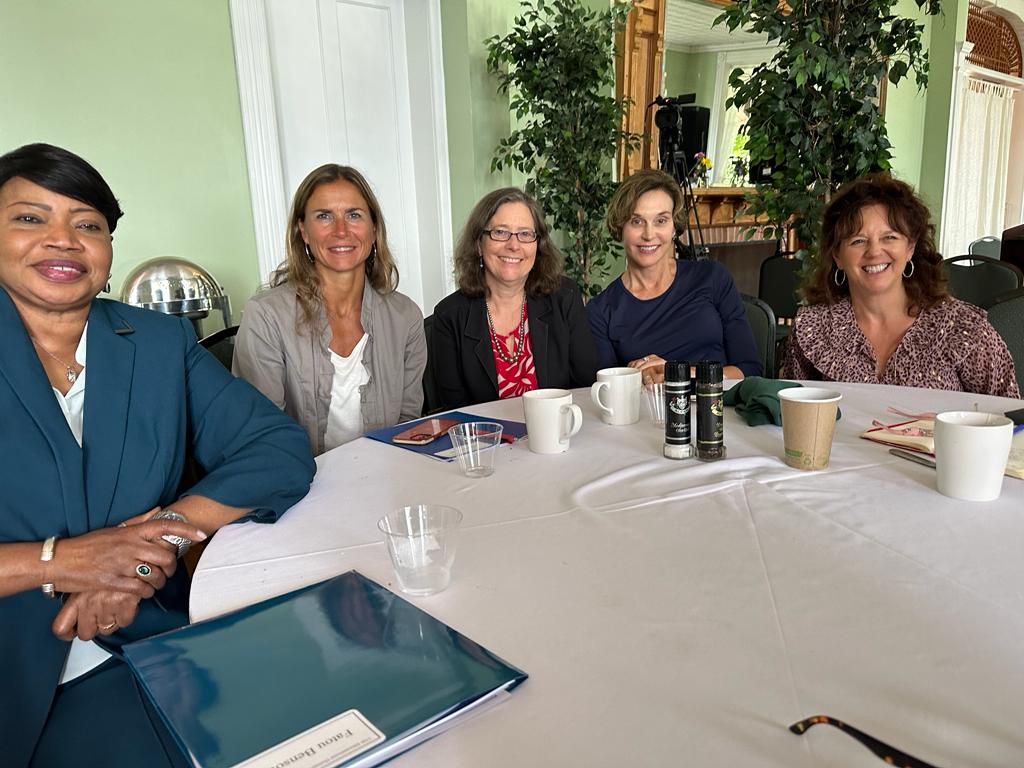
Last week, Professor Milena Sterio participated in the International Humanitarian Law Roundtable in Chautauqua, New York. The IHL Roundtable is a conference which assembles academics, experts, and international criminal tribunals’ prosecutors and judges to discuss relevant topics in international humanitarian law. This year, Professor Sterio co-chaired a sub-group at the IHL Roundtable on the topic of Cyber Attacks under the International Criminal Court’s Rome Statute. In addition, Professor Sterio provided the formal introduction and welcome for the Katherine B. Fite lecturer, Binta Mansaray, Registrar at the Residual Special Court for Sierra Leone.

(From left to right): Fatou Bensouda, former ICC Prosecutor and the Gambian Ambassador to the United Kingdom; Professor Sterio; Professor Jennifer Trahan, NYU; Professor Yvonne Dutton, Indiana University McKinney School of Law; Professor Leila Sadat, Washington University School of Law.

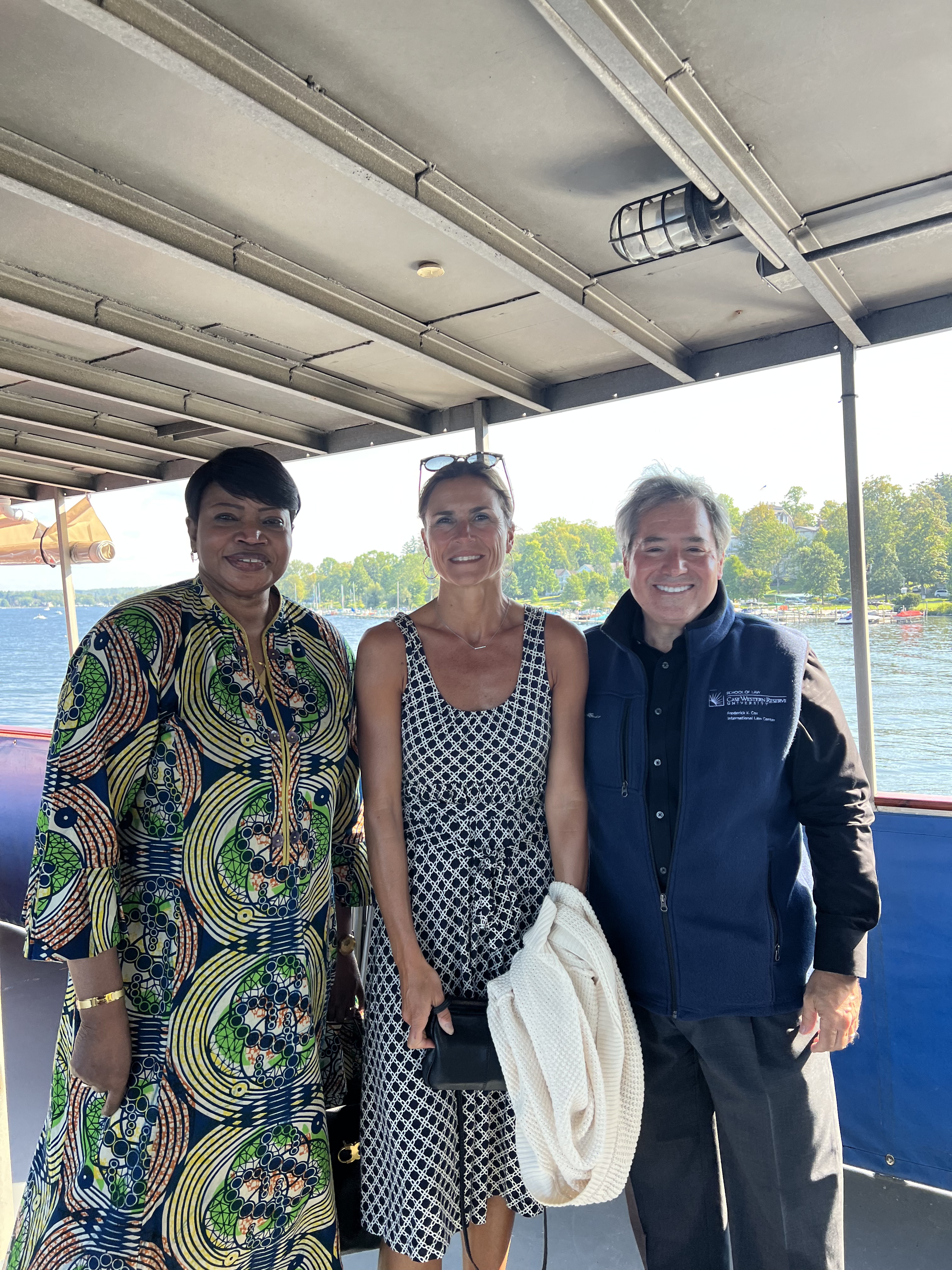
(From left to right): Fatou Bensouda; Professor Sterio; Michael Scharf, Co-Dean of Case Western Reserve University School of Law.