
Professor Chris Sagers’ paper, Legal Boundaries as Political Economy: The Scope of Antitrust and a General Theory of the Competition-Regulation Dichotomy, was selected for the NYU Next Generation of Antitrust Scholarship Conference, to be held in January 20, 2012 at NYU. The event is co-sponsored by NYU, the AALS, and the ABA Antitrust Section. The paper was selected through a competitive process by a panel senior scholars in antitrust.
Category Archives: Faculty in the Media
Crocker Named to Ohio Death Penalty Task Force
On Monday, October 31, Professor Phyllis Crocker was named by Ohio Chief Justice Maureen O’Connor to a joint task force of the Ohio Supreme Court and the Ohio State Bar Association on the death penalty. The 21-member task force includes seven judges, four legislators, two prosecutors, two law professors, a sheriff and several others. Its first meeting will be in Columbus this Thursday. “The task force will not decide whether Ohio should or should not have the death penalty,” Chief Justice Maureen O’Connor said in a statement. “It will not be on the table for discussion.” Instead, the task force is charged with determining whether Ohio’s death penalty is being administered fairly.
To see the announcement in the Columbus Dispatch, click here: http://www.dispatch.com/content/stories/local/2011/11/01/19-named-to-review-death-penalty-in-ohio.html
Lind Comments on Mortgage Foreclosure Servicers’ Surge in Business
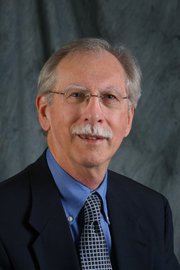
Professor Kermit Lind
Clinical Professor Emeritus Kermit Lind was interviewed for the Washington Post article Good business for bad times: Mortgage field services, by Brady Dennis, Friday, October 28. The article addresses the surge in businesses that service the mortgage foreclosure industry. In particular, the article focuses on a Cleveland-area business, Safeguard Enterprises, that cares for foreclosed upon properties. Safeguard fixes broken windows, mows lawns, repairs pipes, etc. Business is booming and critics contend that Safeguard’s founder is “a shill for the banks whose mortgage abuses helped create and exacerbate the crisis.” Lind was asked about the paradoxical situation of Safeguard’s founder — as a businessman making a fortune out of the foreclosure crisis, or as a businessman serving the needs of his clients by caring for their properties. “He’s an apologist of the first order” for mortgage servicers, says Kermit Lind, a housing expert and former Cleveland State University professor. . . “[a]nd why not? They are the ones who are making him rich.” But, Lind adds, “To his credit, he’s tried to position himself as a mediator between the banks and the public. Sometimes it works, sometimes it doesn’t.”
To read the full article, click here: http://www.washingtonpost.com/business/good-business-for-bad-times-mortgage-field-services/2011/10/24/gIQA2FTlPM_story.html
O’Neill Interviewed Regarding Social Media Governance in the Court Room

Professor Kevin O'Neill
Professor Kevin O’Neill was recently interviewed for Judicial System v. Social Media – Lawyers, courts argue pros and cons of online communication’s pervasive, yet useful nature, by Kathy Ames Carr, in Crain’s Cleveland Business, October 3-9, 2011. The article addressed issues concerning the role of social media in the court room. With access to and use of smart phones constantly increasing, jurors and others involved in trials have easy access to the internet. This means they can check their email, send and receive tweets and text messages, and browse websites. This easy, constant, and almost universal access presents challenges to the integrity of trials. Judges are now wrestling with the problem of managing electronic access to the outside world as cases are carefully presented within the walls of their courtrooms. According to O’Neill, there are presently no cases addressing the governance of social media the courtroom, and he doesn’t expect to see any cases soon. Instead, he suggests that judges need to be clear with juries, in their jury instructions, regarding court room expectations with respect to social media and electronic access. Judges have broad discretion to instruct juries, and O’Neill believes this is an area ripe for their control.
To read this full story, see: https://www.law.csuohio.edu/sites/default/files/newsevents/crainsjvsm.pdf
C|M|LAW Conference on the Politicization of Judicial Elections Draws High Attendance, Press, and Publications
Last week’s C|M|LAW conference on The Politicization of Judicial Elections drew more than 200 participants, and led Professor Susan Becker to be sought out by a Nevada reporter for assistance in understanding a controversial redistricting decision a state judge recently entered there.
The conference was inspired by the November, 2010 elections in which three sitting Iowa Supreme Court justices were ousted from the bench as a result of the court’s unanimous ruling in Varnum v. Brien, 763 N.W.2d 862 (2009). The Varnum decision struck down, on equal protection grounds, a state statute limiting marriage rights to a union between a man and a woman. The conference examined the effect, if any, the ouster of these judges may have on an judicial independence as well as its effect on future efforts to present state court challenges to laws prohibiting marriage for same-sex couples and to otherwise advance the civil rights for LGBT persons through state court litigation.
More specifically, the conference addressed such issues as the importance of an independent judiciary and whether that independence might be undermined by judicial elections that are highly politicized due to socially contentious issues the court has recently resolved or will resolve in the near future. In Iowa, for example, that politicization took the form of partisan interest groups funneling resources into the election process to oust justices who voted the “wrong way” by favoring LGBT rights in Varnum. A similar pattern has emerged in the recent Wisconsin elections where the incumbent justice was almost voted out of office due to opponents’ assumption that this conservative justice would vote to uphold state legislation rendering public employee unions powerless.
Speakers at the conference included Former Iowa Chief Justice Marsha K. Ternus, who spoke on judicial independence and the polarization of the judiciary, and Camilla Taylor, the Lambda attorney who successfully litigated Varnum through the Iowa courts. Ms. Taylor spoke on the background of the case and her reaction to the election backlash. In addition, Ohio State Professor Daniel Tokaji, an expert on election law and issues, discussed judicial elections more generally. C|M|LAW Professors Susan Becker and Matthew Green organized the conference, offered introductory remarks, and moderated the panel discussion.
The Nevada news story, A political judiciary – A Carson City judge’s sortie into politics raises concerns, by Dennis Myers, explains the role of Nevada District Judge Todd Russell in that state’s legislative redistricting. The Nevada Legislature had enacted redistricting plans for both the Legislature and the state’s U.S. House seats. Those plans were vetoed by Gov. Brian Sandoval, and rather than send the matter back to the legislature for resolution, Judge Russell appointed three ‘special masters’
The article’s author sought out Professor Becker for comment: “Judge Russell’s creation of an entirely new system of appointing special masters to devise the redistricting plan is creative, and arguably born of necessity,” said Cleveland State University law professor Susan Becker, who has done work on the politicization of the courts. “But a strong argument can be made that the remedy is unconstitutional because it contravenes the unambiguous language of the Nevada constitution’s redistricting provisions.”
You may read the full story at: http://www.newsreview.com/reno/political-judiciary/content?oid=4186254
The conference video and other supporting materials are available to the public as part of the C|M|LAW Library’s open access research guides at: https://www.law.csuohio.edu/lawlibrary/guides/sexualorientation#judicialindependence
The Cleveland State Law Review will be publishing the comments and essays submitted by the speakers in its Spring 2012 issue.
Sundahl Coordinates 53rd Annual Colloquium on the Law of Outer Space in Cape Town, South Africa
Associate Dean Mark Sundahl coordinated the 53rd Annual Colloquium on the Law of Outer Space this week in Cape Town, South Africa. This Colloquium involves leading experts in the field of space law who delivered more than 50 papers in five sessions. The topics addressed include the commercial use of outer space, space debris and the environmental protection of space, militarization of orbital space, and the use of space for public services. The Colloquium also hosts the World Finals of the Manfred Lachs Space Law Moot Court Competition which is judged by three sitting judges of the International Court of Justice. Dean Sundahl presented a paper at the Colloquium on the recently promulgated commercial human spaceflight regulations issued by the FAA and NASA.
Associate Dean Sundahl also co-edited a book, (with V. Gopalakrishnan, Indian Space Research Organisation, Bangalore), New Perspectives on Space Law – Proceedings of the 53rd IISL Colloquium on the Law of Outer Space – Young Scholars Session. At this time, a single copy is available in the Faculty Lounge for viewing.
Sundahl Quoted in the New York Times Regarding the Falling NASA Satellite
Associate Dean Mark J. Sundahl was quoted in the New York Times on Saturday, September 24, regarding tort liability, under international law, for potential damage caused by NASA’s falling satellite. The article, Satellite Falls to Earth, but We Know Not Where, by Kenneth Chang, addresses the worldwide concern about where the satellite might land and what damage would occur upon its landing. According to Sundahl, under international treaties, NASA would have paid compensation for damage or injuries caused in other countries, but if the satellite caused damage in the a United States territory, “the harmed U.S. person would have no recourse under international law, but would have to sue the U.S. government under the Federal Tort Claims Act.”
You may read the full text at http://www2.law.csuohio.edu/newsevents/images/Satellite_NYTimes.com.pdf
Inniss Participates in Around Noon Book Club: Their Eyes Were Watching God by Zora Neale Hurston
Professor Lolita Buckner Inniss participated in the Around Noon Book Club on the local National Public Radio station, WCPN, on Monday, September 19th. The topic of discussion was the 20th century classic Their Eyes Were Watcing God by Zora Neale Hurston. Joining Professor Inniss in the panel discussion, led by WCPN’s Dee Perry, were CWRU’s Rhonda Williams and Laurel School’s Ann Klotz. You may listen to the podcast here: http://www.ideastream.org/an/entry/42414
Forte Comments on Religion, Reason, and Same-Sex Marriage
Professor David Forte published a Letter to the Editor in First Things: A Monthly Journal of Religion and Public Life. In the letter, published in response to the article “Religion, Reason, and Same-Sex Marriage,” by Matthew J. Franck (First Things, May 2011), Forte praised Dr. Franck’s defense of the moral legitimacy of those argue against same-sex marriage. He disagrees, however, with Franck’s conclusion that the tactics of same-sex marriage advocates will be self-defeating. He writes that contrary to Franck’s position that opponents of same-sex marriage will win in the end because the majority of Americans agree with them, the sentiments of the majority may be changing. As evidence for this assertion Forte notes that the popularity of marriage in the general population has decreased dramatically, divorce rates are up, and people who divorce often do not seek to remarry as they used to. Instead, they tend to co-habit with a new partner. As such, they see marriage as a lifestyle choice. Because they are co-habiting themselves, he argues, people do not seem to see same-sex marriage as a threat to the lifestyle they are trying to build. In fact, he writes that same-sex marriage advocates may attempt to take the moral high ground, arguing that in a world where many are choosing less committed relationships, same-sex marriage advocates are arguing for the most committed relationship. Therefore, they can argue that it is they who hold marriage in the highest esteem. Forte concludes, “The attack on marriage, therefore, is deontological, political, and social. On the one hand, some, knowing that the strongest argument for marriage arises out of natural law, wish to “de-nature” marriage, as one visiting scholar stated at my university. The political attack on marriage comes through the courts, as we have seen. But the social attack comes from the new habits and sensibilities of the American people, who when asked, speak of holding marriage in high esteem, but when put to the test of practice, are more and more preferring forms of less committed relationships.”
You may read the full text of the letter at
http://web.ebscohost.com/ehost/detail?vid=4&hid=17&sid=827f540d-015b-41aa-be2f-6904cf3ac306%40sessionmgr11&bdata=JnNpdGU9ZWhvc3QtbGl2ZQ%3d%3d#db=hlh&AN=64087720.
Crocker Comments on Ohio Supreme Court’s Formation of Committee to Study Ohio Death Penalty Law
Professor Phyllis Crocker, who served C|M|LAW as Interim Dean for the past 18 months, has become quickly reengaged in her discipline. Crocker was recently quoted in an AP news article praising Ohio Supreme Court Chief Justice Maureen O’Connor’s announcement that she will be forming a committee to review the state’s death penalty law. O’Connor made clear in her announcement that the committee will not debate the law itself, which was enacted 30 years ago. Instead, it will be charged with making sure the current system is administered fairly, efficiently and in the most “judicious manner possible.” O’Connor pledged to convene a 20-member committee with broad experience on this subject to produce a fair, impartial, and balanced analysis. The committee will consist of judges, prosecuting attorneys, criminal defense lawyers, lawmakers and academic experts. It will also be charged with reviewing a 2007 ABA-sponsored comprehensive study of Ohio’s death penalty statute. Professor Crocker was well suited to comment on this announcement. She served as Chair of the 10-person committee that produced the ABA study of Ohio’s death penalty law in 2007. Crocker was pleased with O’Connor’s announcement, saying “[a] thorough examination of our state’s death penalty system was one of the goals of the 2007 ABA Death Penalty Report.”
To read the full story, click here: http://www.chron.com/news/article/Ohio-s-top-judge-calls-for-death-penalty-review-2161796.php

