Forte Joins Amicus Brief on NLRB Recess Appointments

C|M|LAW Professor David Forte joined an amicus brief submitted to the U.S. Supreme Court in NLRB v. Noel Canning.  The case is the appeal from the D.C. Circuit striking down President Obama’s recess appointments to the National Labor Relations Board.  The amici argue that the recess appointments clause of the Constitution only permits the President to make appointments during genuine adjournments, or intersessions, of the Congress, and that presidents in recent decades have exceeded their authority in making recess appointments during short intersession recesses.

Mika Edits Articles for ABA International Law Section Publication

C|M|LAW Legal Writing Professor Karin Mika was appointed a Deputy Editor for the ABA Section of International Law’s “Year in Review.”   The Year in Review is the summer issue of “The International Lawyer,” the quarterly journal of the ABA’s International Law Section. 

Sundahl Appointed Chair of FAA International Space Policy Working Group

C|M|LAW Associate Dean Mark Sundahl has been appointed the Chair of the International Space Policy Working Group (ISPWG) of the FAA’s Commercial Space Transportation Advisory Committee.  The ISPWG will monitor international developments in the regulatory landscape of commercial spaceflight and provide recommendations to the FAA to help ensure the continued international competitiveness of the U.S. space industry.

O’Neill Comments on California Decision Upholding the State’s Ban on Psychiatric Counseling to Dissuade Homosexual Conduct

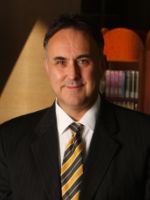
Professor Kevin F. O'Neill

Professor Kevin F. O’Neill

C|M|LAW Professor Kevin O’Neill was quoted at length in an article,1st Amendment at issue in ban on gay-conversion therapy for minors, by David L. Hudson Jr., in
the January 2014 issue of the ABA Journal, on page 18.   The article deals with a recent Ninth Circuit decision upholding a California statute that bans a type of psychiatric therapy designed to dissuade gay and lesbian minors from homosexual conduct.  Professor O’Neill was asked to comment on the court’s First Amendment analysis.

According to O’Neill, “[p]laying the old ‘conduct-not-speech’ card is something that judges do when faced with particularly thorny speech issues . . .” He adds, “I don’t find it persuasive here, but it gave the 9th Circuit a convenient basis for applying rational-basis review.”

O’Neill says “[t]he statute singles out a particularly ludicrous treatment—a ‘medical’ treatment that is grounded upon ignorance and hostility toward gays and lesbians—and simply bans it. but the ugliness of the treatment doesn’t provide a constitutional basis for banning it.”

O’Neill notes that the Supreme Court invalidated “efforts to ban some of the ugliest speech ever” in the prohibition of images of animal cruelty in U.S. v. Stevens (2010) and violent video games in Brown v. Entertainment Merchants Association (2011).

“If you’re going to uphold this statute, you have to focus on the government’s legitimate power to protect children from medical quackery,” O’Neill says. “But that doesn’t fit too easily into any of the unprotected categories of speech, such as obscenity, child porn, true threats or advocacy of imminent lawless action. The absence of clear guidance in First Amendment law may be a strong reason for granting cert in this case.”

Here is a link to the article:

http://www.abajournal.com/magazine/article/1st_amendment_at_issue_in_ban_on_gay-conversion_therapy_for_minors/

Professor O’Neill’s comments appear toward the end of the article, in a section entitled, “Beyond Ugliness.”


Engel Notes that Cleveland was Ahead of its Time on Subprime Lawsuits

Former C|M|LAW Professor Kathleen Engel published an Opinion piece in the Plain Dealer on December 23, 2013.  In the piece, Cleveland ahead of its time on subprime lawsuits, Engel notes that “Cleveland was the one of the first cities to cry foul when subprime lenders targeted people with complex and unaffordable loan products.” She explains that although Cleveland’s early efforts against the banks’ practices were ahead of their time and ultimately unsuccessful, they lit the way for those that followed.

To read Professor Engel’s piece, click here:

http://www.cleveland.com/opinion/index.ssf/2013/12/cleveland_ahead_of_its_time_in.html

Plecnik to Serve as Willoughby Hills Council Representative to the Willoughby Hills Income Tax Board of Review

On Monday, January 6, 2014, the Willoughby Hills City Council held its organizational meeting for calendar years 2014 and 2015.  During that meeting, Council unanimously voted to elect C|M|LAW Professor John Plecnik the Council Representative to the Willoughby Hills Income Tax Board of Review, a three member body which consists of the Council Representative, City Law Director, and City Finance Director.  The Income Tax Board of Review is tasked with approving local income tax regulations as well as hearing and deciding taxpayer appeals.

Daiker-Middaugh Praises Jack Liber’s Kindness, Generosity and Work on CMBA’s Education Initiative

In an article in the Cleveland Metropolitan Bar Association’s Bar Journal, C|M|LAW Clinical Professor Pamela Daiker-Middaugh is quoted in a tribute to Jack Liber.  Liber was known for the hard work and energy he devoted to the launch of the CMBA’s Education Initiative, which led to the launch of the Street Law program, the Cleveland Mock Trial Competition, and scholarships to summer civics programs.  According to Daiker-Middaugh, not only was he “a gifted lawyer, . . . in all the years I knew him, I never heard him say an unkind word about anyone.”  Daiker-Middaugh praised his work on law-related education in city classrooms and said that his “legacy lives on in  . . . all the children helped by these wonderful education programs.”

Sagers’ Work on Federal Statute Names Featured in New York Times

Chris Sagers, the James A. Thomas Distinguished Professor of Law at Cleveland-Marshall College of Law, was featured in this week’s New York Times in a weekly legal affairs column by Adam Liptak.  In an entry entitled “Laws Deserve More Than Those Cute Names,” Liptak covered Sagers’ work on the naming of federal statutes, and what evolving trends in statute names say about the growing malaise in our federal Congress.

Sagers’s article, on which the  column is based, is entitled “A Statute by Any Other (Non-Acronomial) Name Might Smell Less Like S.P.A.M., or, The Congress of the United States Grows Increasingly D.U.M.B.”  You can view the paper at http://papers.ssrn.com/sol3/papers.cfm?abstract_id=1113026

The Times column appears here:  http://www.nytimes.com/2013/12/31/us/colorful-names-for-laws.html?_r=0 .

Crocker Quoted in Crain’s Article on Law School Interim Deans

C|M|LAW Professor Phyllis L. Crocker was quoted in the article Interim law school deans at Akron, Case face leadership challenges in critical era, by Michelle Park Lazette, in Crain’s Cleveland Business on Monday, December 9, 2013.   Crocker served as C|M|LAW’s Interim Dean from March 2010 to June 2011. The Crain’s article quoted from Crocker’s article The Paradox of Being an Interim Dean:  The Permanent Nature of a Transitory Position, 44 U. Tol. L. Rev. 319 (Leadership in Legal Education Symposium XII 2013). Crocker noted that “Interim deans can be just as effective as a permanent dean if they work as though their leadership is not limited.”

You may read the Crain’s article by clicking here:

http://www.crainscleveland.com/article/20131209/FREE/131209827/0/SEARCH

Robertson to Serve as U.S. Reporter for Common Core of European Private Law Project

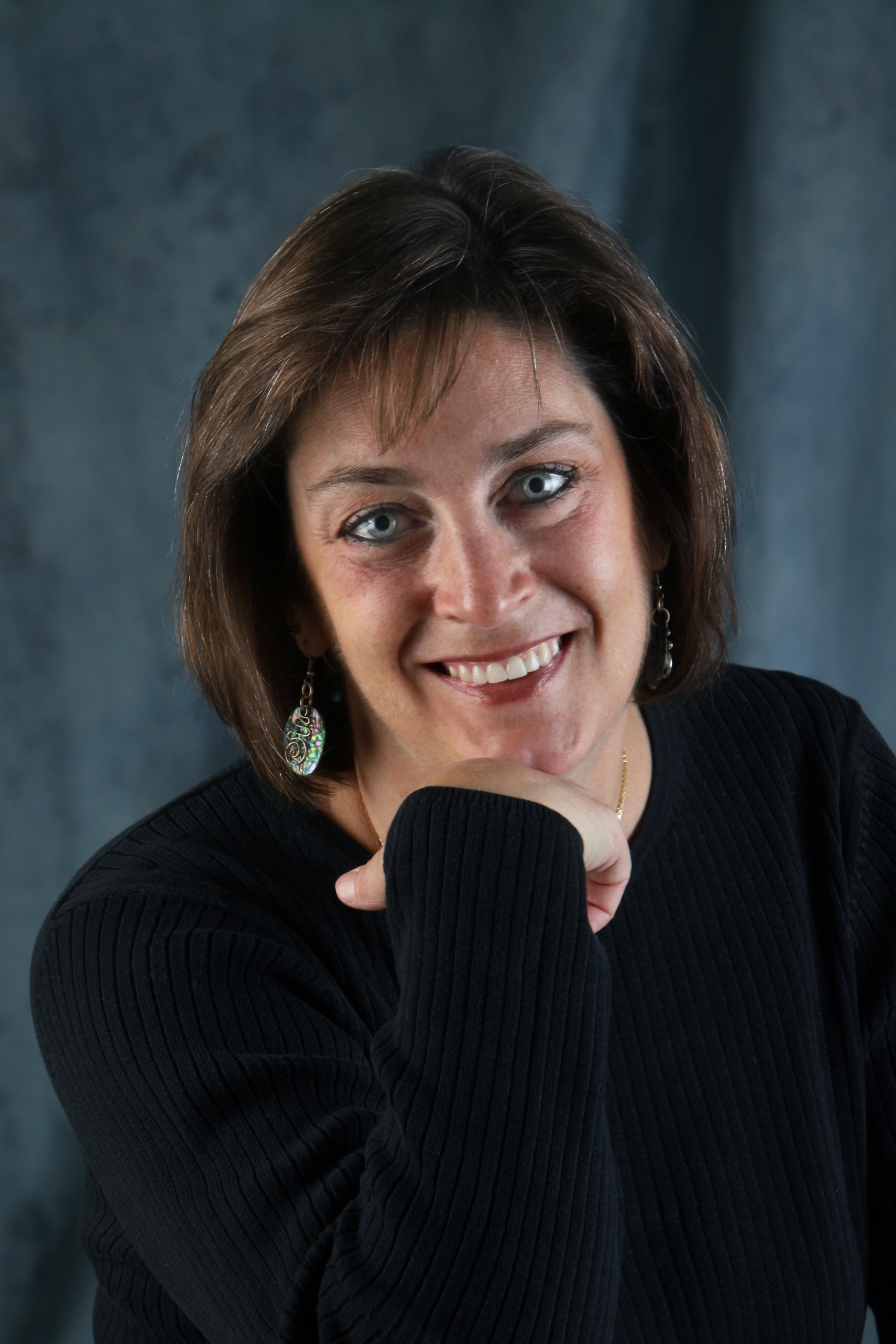
Professor Heidi Gorovitz Robertson

Professor Heidi Gorovitz Robertson

C|M|LAW Professor and Associate Dean, Heidi Gorovitz Robertson, who holds a joint appointment at CSU’s Levin College of Urban Affairs, will be serving as the United States Reporter for a new project of the Common Core of European Private Law.  The Common Core projects, funded by the European Commission, the International University College of Turin (Italy) and others, examine aspects of European private law through the lens of carefully created case studies.  The purpose is to discover the commonalities in law among the European nations by applying a consistent set of facts to the laws of various countries. In applying the law of their country to the case studies, reporters are asked to apply three levels of analysis, so the research goes beyond the rote application of fact to a civil code or common law structure.  Reporters are asked to consider influences on the law of political, economics, geography, and other factors, and to make and discuss their predictions regarding outcome of the case studies.  Robertson will be participating in the Access to Commons project for the Common Core of European Private Law.  She was selected for this project based on her earlier work on public access to privately owned land for recreation, Public Access to Private Land for Walking: Environmental and Individual Responsibility as Rationale for Limiting the Right to Exclude, 23 Geo. Int. Envtl. L. Rev. 211 (2011).

Her article is available here:  http://papers.ssrn.com/sol3/papers.cfm?abstract_id=1874046

To learn more about the Common Core Project, click here:  http://www.common-core.org/index.php?option=com_content&view=article&id=46&Itemid=34