
On May 4, 2015, Heidi Gorovitz Robertson, C|M|LAW’s Steven W. Percy Distinguished Professor of Law, presented Sorting Out Local Governance in Shale Oil and Gas Development, at a full-day workshop at the University Center for Social and Urban Research, co-sponsored b y the University of Pittsburgh’s Graduate School of Public and International Affairs. The workshop, titled Regional Impacts of Shale Gas Drilling – Understanding Economic and Governance Implications on Communities and Regions, drew together researchers from the fields of economic development, economics, urban policy, local government, and law. In particular, the goal of the workshop was to bring together researchers focused on analyzying the economic impacts of shale, how these impacts vary by region, and how governance and geography affect regional variation.
Category Archives: Faculty in the Media
Professor Browne Lewis Presents at Harvard Law School
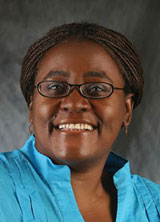
Professor Browne Lewis
On May 2, 2015, Leon and Gloria Plevin Professor of Law Browne Lewis presented at the Baby Markets Roundtable held at Harvard Law School. Professor Lewis’ presentation was entitled “Human Oocyte Presentation: Supplying Babies or Selling False Hope”. In 2012, the American Society for Reproductive Medicine ASRM declared that human oocyte cryopreservation (HOC) should no longer be considered to be experimental. Thus, that new reproductive technology provides a viable option for women seeking to preserve their fertility. Women who want to focus on their careers or those who have not yet met “Mr. Right” may choose to have their oocytes frozen, so that they can defer motherhood. Other women are forced to have their oocytes frozen when faced with potential infertility as a consequence of medical treatment or military service. Women, men, and children may benefit from a technology that permits women to pause their biological clocks. If women do not have to worry about potentially becoming infertile, they can postpone motherhood until they are ready to parent. Unplanned pregnancies and infertility also negatively impact men.
The availability of HOC will serve the best interests of children by permitting them to be born to parents who want them and who are able to care for them. Persons opposed to the use of HOC are concerned about the safety of the woman, the oocyte and the resulting child. Based upon the low percentage of live births resulting from the use of cryopreserved oocytes, opponents also argue that it is unethical to give women false hope. Those persons advocate banning the use of HOC or limiting it to use by women who are of child-bearing age. However, bans or strict restraints on the availability of HOC may infringe on a woman’s reproductive freedom and violate her right to be treated the same as a similarly situated man. Professor Lewis’ chapter on this topic will be published in an Oxford University Press book on the topic.
Professor Inniss Awarded a Graduate Faculty Travel Award by CSU Research Council
Professor Lolita Buckner Inniss was awarded a Graduate Faculty Travel Award, by the Cleveland State University Research Council. Pursuant to the terms of the Award, Professor Inniss will attend and present at the Workshop for the Feminist International Judgments Project in London, England in June 2015.
Professor Inniss to Publish Article in the Columbia Journal of Race and Law
Professor Lolita Buckner Inniss will publish Cherokee Freedmen and the Color of Belonging in the Columbia Journal of Race and Law in the upcoming May-June 2015 issue. The article addresses the Cherokee Nation and their historic conflict with the descendants of their former black slaves, designated Cherokee Freedmen. In the article, Professor Inniss discusses the rise of color-based belonging and its relationship to black slavery, Cherokee constitutionalism and the search for Cherokee political legitimacy.
Professor Robertson writes about the potential impact of Ohio House Bill 8 on landowners and local governments
Heidi Gorovitz Robertson, C|M|LAW’s Steven W. Percy Distinguished Professor of Law, has published a post in Crain’s Cleveland Business’ Energy Report regarding Ohio House Bill 8. Robertson writes that the bill, which passed unanimously through the Ohio House and is now in Senate committee, would make it substantially faster and easier for shale oil and gas developers to gain access to public and private land for drilling. Among other things, the bill would speed up the hearing process before the Ohio Oil and Gas Commission and mandate that the chief of the Division of Oil and Gas Resources Management issue an order to include publicly-controlled land in a drilling unit upon request.
Professor Robertson’s post is available here.
Professor Lewis Selected to Present at Gresham College, London
Professor Browne Lewis
Through a competitive process, Leon and Gloria Plevin Professor of Law Browne Lewis has been selected to present a public lecture at Gresham College, the oldest higher education institution in London. Gresham College is an independent institution, governed by the Council and with the Lord Mayor of London as its President. For over 400 years, Gresham College has hosted free public lectures in the City of London. The College, named after Sir Thomas Gresham, is one of the most prestigious academic institution in the United Kingdom.
The lecture is scheduled for Monday, January 25, 2016. The topic is “The Ethics of Physician-Assisted Suicide.” The legalization of assisted suicide in the UK is as controversial as the Death with Dignity Act (DWDA) that led to its decriminalization in Oregon in 1994. The United States Supreme Court subsequently rejected an attempt to have the law declared unconstitutional but steps seem to be needed to address the ethical concerns raised by members of the academic, political, and religious communities, including safeguards to protect vulnerable people. What can be learned in the UK from the USA experience?
Professor Lewis will spend the spring 2016 semester in the United Kingdom as a Fulbright Scholar. Her host institution will be King’s College in London.
Professor Mika Coordinates “Legends in the Law” Panel Presentation at Northwest Regional Legal Writing Conference
 Professor Karin Mika coordinated the “Legends in the Law” panel presentation at the Northwest Regional Legal Writing Conference held at the University of Oregon (Eugene) on April 25-26. The panel included Ralph Brill (Chicago-Kent), Marjorie Rombauer (University of Washington), and Mary Lawrence (University of Oregon), all three of whom are William C. Burton “Legends in the Law” award winners for their contributions to innovation and improving the quality of legal communication in the profession.
The panel discussed the decades-long struggle to give credibility to skills training in law schools, as well as the decades-long struggle to convince the academy that it is not enough for students to be taught to “think like lawyers” but that students must learn how to apply their thinking to legal issues involving real people and to communicate their thinking clearly. The panel also discussed how the name “Legal Writing” has always suggested the erroneous concept that Legal Writing is a grammar and sentence-writing course as opposed to a course about critical thinking, problem solving, and communicating clearly one’s thinking. Finally, the panel discussed the future of legal education in terms of the necessity for incorporating experiential learning in a modified law school curriculum.
Professor Weinstein Presents at the American Planning Association National Conference in Seattle
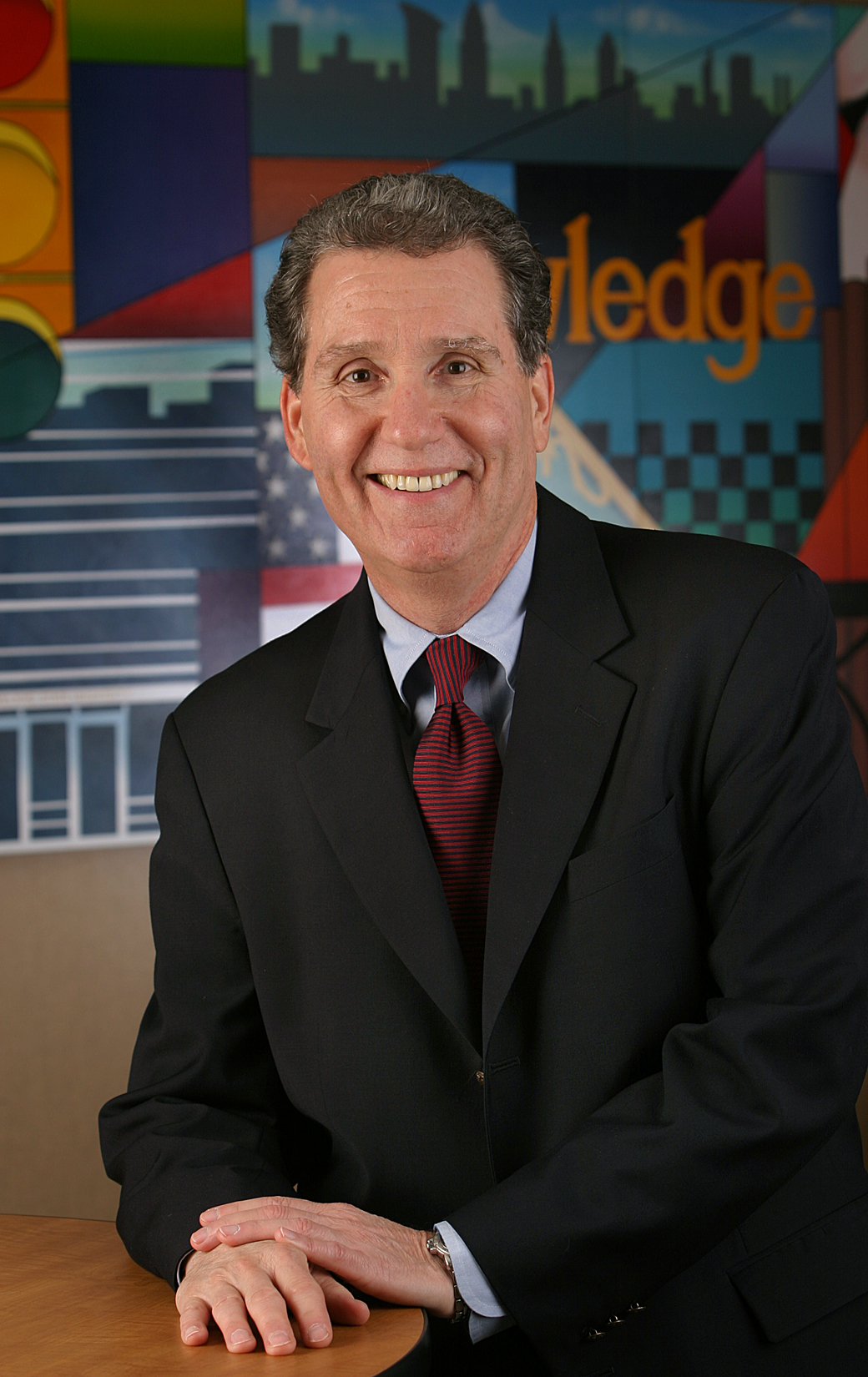
Professor Alan Weinstein
Professor Alan Weinstein presented at the American Planning Association National Conference in Seattle, Washington, on April 20. Professor Weinstein (and two other speakers) discussed Reed v. Town of Gilbert, in which the Supreme Court this term will resolve a Circuit split on the issue of the appropriate standard for finding that government regulation of signs is content-based.
Several Circuits have adopted an “absolute” view on the question, ruling that any regulation that characterizes a sign by the message it displays is content based and subject to strict scrutiny. Other Circuits have adopted a “purposive” rule that applies only intermediate scrutiny when government regulates a sign depending on the message it displays so long as the purpose of the regulation is unrelated to any attempt to suppress particular messages.
Professor Weinstein argued that the imposition of strict scrutiny in this context in an effort to ensure free speech values will have the perverse effect of lessening speech by leading to more restrictive regulation of signs. If sign regulations that consider a sign’s message are subject to strict scrutiny, government will adopt content neutral regulations that will treat all signs alike. Professor Weinstein predicted this will lead to fewer and smaller signs, thus constricting, rather than supporting, speech values.
Professor Kalir Appointed to Ohio Supreme Court’s Commission on Certification of Attorneys as Specialists
Clinical Professor of Law Doron Kalir was appointed today to the Ohio Supreme Court’s Commission on Certification of Attorneys as Specialists. The Commission approves and regulates agencies that certify lawyers practicing in Ohio as specialists in a wide arrays of specialty areas, ranging (in alphabetical order) from Administrative Agency law to Workers’ Compensation. The Commission is comprised of 12 attorneys and three law faculty members, as well as two judges. The appointment is for three years. “I am honored and delighted to be appointed by the Ohio Supreme Court,” said Professor Kalir, a former antitrust attorney of many years. “I hope I can serve the Court and the Ohio Bar to the best of my abilities, as well as represent the law school with honor.”
Professor Falk’s Article Accepted for Publication by Women’s Rights Law Reporter
Professor Patricia Falk’s article, Husbands Who Drug and Rape their Wives: The Injustice of the Marital Exemption in Ohio’s Sexual Offenses, was accepted for publication by the Women’s Rights Law Reporter (published by the Rutgers-Newark Law School).
 CSU Law Faculty