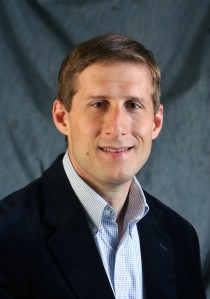
Legal Writing Professor Sandra Kerber has been reappointed to the Judicial Candidates Rating Coalition (JCRC). The JCRC interviews judges to evaluate them for integrity, judicial temperament, diligence, and professional competence. The JCRC serves the voting community at large by disseminating information on judicial qualifications through the website Judge4Yourself.com. Judge4Yourself educates Cuyahoga County voters about judicial candidates’ qualifications in an effort to eliminate the judicial “guessing game.” Judge4Yourself.com offers ratings for all the candidates running in contested races in every judicial election in Cuyahoga County. It also provides biographies of each candidate.
Author Archives: CSU|LAW
Crocker Comments on Ohio Supreme Court’s Formation of Committee to Study Ohio Death Penalty Law
Professor Phyllis Crocker, who served C|M|LAW as Interim Dean for the past 18 months, has become quickly reengaged in her discipline. Crocker was recently quoted in an AP news article praising Ohio Supreme Court Chief Justice Maureen O’Connor’s announcement that she will be forming a committee to review the state’s death penalty law. O’Connor made clear in her announcement that the committee will not debate the law itself, which was enacted 30 years ago. Instead, it will be charged with making sure the current system is administered fairly, efficiently and in the most “judicious manner possible.” O’Connor pledged to convene a 20-member committee with broad experience on this subject to produce a fair, impartial, and balanced analysis. The committee will consist of judges, prosecuting attorneys, criminal defense lawyers, lawmakers and academic experts. It will also be charged with reviewing a 2007 ABA-sponsored comprehensive study of Ohio’s death penalty statute. Professor Crocker was well suited to comment on this announcement. She served as Chair of the 10-person committee that produced the ABA study of Ohio’s death penalty law in 2007. Crocker was pleased with O’Connor’s announcement, saying “[a] thorough examination of our state’s death penalty system was one of the goals of the 2007 ABA Death Penalty Report.”
To read the full story, click here: http://www.chron.com/news/article/Ohio-s-top-judge-calls-for-death-penalty-review-2161796.php
Green Invited to Join Cleveland Employment Inns of Court
Professor Matthew Green has been invited to join the Cleveland Employment Inns of Court. The Cleveland Employment Inns of Court was formed in 2005 and is a Charter Member of the American Inns of Court and was organized to enhance the professional and ethical quality of legal practice. The Inn holds educational programs and is a forum for discussion of its discipline.
Sterio Speaking at International Law in Crisis Conference
Professor Milena Sterio will be speaking today at the International Law in Crisis Conference at Case Law School. The conference is designed to examine both the application of international law in times of crisis and whether these events are pushing international law itself to the brink of crisis, with panels examining developments in Northern Africa and the Middle East, climate change, international economic law, universal jurisdiction, piracy, and the war on terrorism. Professor Sterio will be appearing from 11:15 a.m. to 12:30 p.m. You can watch the proceedings live at: http://law.case.edu/centers/cox/webcast.asp?dt=20110909
Witmer-Rich Publishes Interrogation and the Roberts Court in the Florida Law Review
Professor Jonathan Witmer-Rich recently published “Interrogation and the Roberts Court” in the top-50 ranked Florida Law Review. In this work, he argues that 5 cases decided under the Roberts court are reshaping and limiting the rules for the interrogation of suspects by the police. In particular, the Court is limiting the rules that would have been protective of suspects rights. In Kansas v. Ventris, Montejo v. Louisiana, Florida v. Powell, Maryland v. Shatzer, and Berghuis v. Thompkins, the Roberts Court has created, but not yet articulated, a new principle of ‘fair play’ in interrogations. Witmer-Rich explains that the Warren Court was moved by the idea that suspects under interrogation are, by their circumstances, under compelling pressures from which the Court must protect them. To do this, the Warren Court created the rules in Miranda and Massiah and others. In contrast, although it mentions concern in its opinions for the relative strength of position between the interrogator and suspect, the Roberts Court does not seem similarly influenced it. Instead, it presupposes that each suspect understands and is protective of his or her own rights.
Witmer-Rich approaches his analysis of this assertion, that the Roberts Court has moved away from the suspect protective Warren Court position, by evaluating, independently, the Roberts Court’s cases on the 5th amendment and the 6th amendment. In his section on the 5th amendment, Witmer-Rich studies three opinions–Powell, Thompkins, and Shatzer–and describes how each decision illustrates the Roberts Court’s movement towards a ‘fair play’ principle. In his section on the 6th amendment, he does the same with respect to two additional cases, Montejo and Ventris.
Ultimately, Witmer-Rich decides that the Roberts Court’s ‘fair play’ rubric is not a fair and adequate principle for organizing constitutional interrogation doctrine. He explains that the Roberts Court, in moving away from the Warren Court’s assumption that suspects need and are entitled to protection of their rights, towards the assumption that suspects are fully capable, autonomous, informed agents who can protect their own interests, takes an important step backward in terms of real fairness. The Roberts Court’s ‘fair play’ concept is not fair at all and fails to protect the constitutional rights of suspects against self-incrimination and the guarantee of assistance of counsel in criminal cases.

Kowalski Interviewed on WKYC Channel 3 Regarding Firefighters’ Anti-Issue 2 TV Ad
Clinical Professor Ken Kowalski was interviewed yesterday, Tuesday, September 6, by Dick Russ of WKYC Channel 3 News. Russ asked Kowalski whether the firefighters’ assertion in their ad, that SB5, if not repealed through Issue 2, would make it illegal for them to negotiate the proper number of firefighters to ensure public safety, was accurate. In particular, the ad states”Issue 2 makes it illegal for [firefighters] to negotiate for enough firefighters to do the job. . . ” and “[f]ewer firefighters means slower response time and that can make the difference between life and death.” Kowalski responded by saying “[SB5] does say the number of employees required to be on duty would be an inappropriate subject for collective bargaining,” and that he believes “it means neither side is permitted to bargain about that.” When asked about the firefighters’ assertion that SB5 will lead to there being fewer firefighters to protect us, Kowalski says that is the firefighters’ professional opinion and not a matter of fact.
You can watch Dick Russ’ interview of Professor Kowalski, which he conducted on E.18th Street in front of C|M|LAW, at http://www.wkyc.com/news/article/205510/45/Truth-Test-Firefighters-anti-Issue-2-TV-ad
Listen to Dean Boise’s Appearance on WCPN’s The Sound of Ideas
Dean Craig Boise appeared on WCPN’s radio show ‘The Sound of Ideas’ on Monday, August 29th. Along with the Dean Lawrence Mitchell from Case, Dean Boise discussed the many strengths of C|M|LAW, our faculty, and our graduates, emphasizing our interconnection with the Cleveland legal community and our growing national reach. You can listen to the program at http://www.ideastream.org/soi/entry/42077.
Dean Craig Boise to Speak on WCPN’s Sound of Ideas on Monday, August 29, at 9 a.m.
Dean Craig M. Boise, along with the new Dean at CWRU law school, Lawrence Mitchell, will appear on the Sound of Ideas radio show on Monday, August 29, at 9 a.m. They will discuss changes in the legal profession, how law interfaces with our everyday lives, how we prepare law students for legal profession, the teaching of ethics, and other topics of interest to our community as well as the broader community. You can tune in to 90.3 FM, or listen to the show via live streaming by clicking on the Listen Live link at http://www.ideastream.org/programs/live
Kowalski Agrees with Warren Buffett: The Rich Should Pay More Taxes
Clinical Professor Ken Kowalski published a letter to the editor in the Cleveland Plain Dealer on Tuesday, August 23rd, supporting Warren Buffett’s assertion that the rich should pay more taxes. To read the letter, click here: http://blog.cleveland.com/letters/2011/08/warren_buffet_is_right_the_ric.html
Sagers Signs US Supreme Court Amicus Brief on Antitrust Matter
Professor Chris Sagers has signed an amicus brief submitted to the U.S. Supreme Court by a group of antitrust professors and scholars in Hosanna-Tabor Evangelical Lutheran Church and School v. Equal Employment Opportunity Commission. In this brief, the professors argue that the ministerial exception does not and should not be expanded to protect professional associations of clergy from antitrust scrutiny. They argue that a broadly or loosely defined ‘ministerial exception’ could allow clergy to form agreements that would otherwise be condemned under the Sherman Act. In particular, the group is concerned that certain professional organizations of clergy organize their labor markets through restraints that, absent First Amendment projections, would violate the Sherman Act, and that the ‘ministerial exception’ was not intended to facilitate or immunize such actions. They argue that the ministerial exception was intended to apply to hierarchical religious organizations to avoid government intrusion into matters regarding employment of their clergy. It was not intended to apply to all matters of employment, such as the employment rules imposed by professional associations and those imposed by independent congregations.
To read the brief, click here:
https://www2.law.csuohio.edu/newsevents/images/HosannaTaborAmicus.pdf


