
Legal Writing Professor Karin Mika presented Sight and Sound in the Legal Writing Classroom at the Western Regional Legal Writing Conference held at the University of Oregon (Eugene) on August 9 and 10th. The presentation focused on the current generation, which is primarily entertained by videos and music, and how connecting with the students in the classroom can be enhanced by including videos and music in substantive material. Mika explained how music videos can be used as substantive material in examining the Fair Use statute for purposes of a research and writing assignment.
Author Archives: CSU|LAW
Geier Clarifies Distinctions Between the Tax Reform Act of 1986 and Steve Forbes’s Flat Tax
In a Letter to the Editor in today’s Wall Street Journal, C|M|LAW Professor Deborah Geier commented on “The Weekend Interview with Dave Camp: Is Tax Reform Politically Possible?,” by Stephen Moore, August 11, 2012. In her letter, she states that “Rep. David Camp engages in selective memory when he implies that both the Tax Reform Act of 1986 and Steve Forbes’s flat tax are similar.” She clarifies that the Tax Reform Act”increased the capital gains tax rate from 20% to 28%, treating all income the same at the individual level, which ensured that the distribution of the tax burden was not made radically more regressive. The flat tax, in contrast, applies a 0% tax rate to capital income (whether dividends, capital gain, interest, etc.) at the individual level where it is a tax on labor income only.” Specifically, “[t]he TRA ’86 retained “income” as the tax base, while the Forbes flat tax would have shifted to a form of consumption taxation. To illustrate this distinction, she notes that under the Forbes flat tax, Mitt Romney’s tax rate would have been 0% (as opposed to 13.9%) in 2010.
To read Professor Geier’s Letter to the Editor, click here: http://online.wsj.com/article/SB10000872396390443324404577591042394246160.html
Hoke Comments on Ohio Redistricting Proposal on WCPN 90.3’s Sound of Ideas
C|M|LAW Professor Candice Hoke appeared this morning on WCPN’s Sound of Ideas radio show. The show focused on a proposal by the non-profit group Voters’ First to change the system by which Ohio allocates its state legislative and U.S. House districts. Currently, whichever party is in power is able to exert influence over the process and draw boundary lines to its own benefit. Voters’ First hopes to alter the system to remove much of the politics, but critics argue that the proposal lacks a mechanism for accountability and asks judges to play an improper role. The proposal would ask judges to select and vet redistricting-commission members. The Ohio State Bar Association has expressed deep concerns,” that the setup would be a conflict of interest and undermine the Constitutional doctrine of the separation of powers.”
The proposal would create an independent citizens commission that would always meet in public sessions to discuss redistricting. The commission would include equal numbers of Republicans, Democrats, and independents, who would serve for 10-year terms. They would be charged to create districts that are compact and which minimize division of counties, towns, and and municipalities.
Ohio Republican lawmakers redrew the state’s Congressional boundaries last year. As a result, many districts now appear to favor Republicans at the ballot box. The Voters First proposal will be on the ballot in November. This radio show addressed whether the proposed system would be an improvement over the current one. Other guests included: Professor Dan Tokaji, Ohio State University Law School, Chris Redfern, Chairman of the Ohio Democratic Party, and Rob Frost, Chair of the Cuyahoga County Republican Party.
To listen or watch, click here: http://www.ideastream.org/soi/entry/48410
Niedringhaus Elected to Vice Chair of the Society of Academic Law Library Directors
C|M|LAW Professor and Law Library Director Kristina Niedringhaus was recently elected Vice-Chair/Chair-Elect of the Society of Academic Law Library Directors. The purpose of this organization is to promote academic law librarianship and to represent the interests of academic law libraries.
Weinstein Speaks in Wall Street Journal and on Radio regarding Chick-fil-A and the First Amendment
C|M|LAW Professor Alan Weinstein was quoted in the July 28, 2012, edition of the Wall Street Journal in an article by Jack Nicas, entitled First Amendment Trumps Critics of Chick-fil-A’s Views. The article concerns the First Amendment coming to the rescue of a chicken-sandwich chain that has drawn the ire of politicians outraged by its president’s public opposition to gay marriage.
In the article, Weinstein says that he has seen officials try to use zoning laws to block adult stores or religious institutions, but never a commercial enterprise because of political views. He said that beyond the First Amendment, “in the land-use sphere, the government has no legitimate interest” in the political views of an applicant.
Weinstein was also interviewed on-air on the same topic by WLW, a radio station in New Orleans.
Click here to read the Wall Street Journal article:
http://search.proquest.com/wallstreetjournal/docview/1029897265/1383EB695975B27D4CF/1?accountid=10165
Click here to listen to the radio interview:
http://audio.wwl.com/a/60027462/7-30-12-6-45am-alan-weinstein.htm?q=Chick-Fil-A
Weinstein Moderates National Planning Law Teleconference and Contributes to Housing Encyclopedia

Professor Alan Weinstein
On Wednesday, June 26th, C|M|LAW Professor Alan Weinstein, who is jointly appointed at CSU’s Levin College of Urban Affairs, moderated a panel and spoke at the American Planning Association’s 2012 National Planning Law Review Teleconference/Webinar. The two other speakers on the panel were Michael Allan Wolf, who holds the Richard E. Nelson Chair in Local Government Law at the University of Florida’s Levin College of Law, and Dwight Merriam, a Partner in the Robinson & Cole law firm in Hartford, CT. There were over 850 registrants for the teleconference/webinar.
The speakers discussed a number of issues, including: the Supreme Court’s ruling in Armour v. Indianapolis, 132 S.Ct. 2073 (2012), and what it means in the broader context of challenges to local government actions based on the equal protection and due process clauses of the 14th Amendment; the Court’s granting cert. in Arkansas Game & Fish Commission v. United States, 648 F.3d 1377 (Fed. Cir. 2011), an unusual physical takings claim against the federal government; and recent developments in such areas as first amendment, telecommunications, “green” building codes, beach erosion, and rent control.
In addition, Professor Weinstein contributed an entry on Zoning to the second edition of the Encyclopedia on Housing, edited by C|M|LAW/Levin Professor Dennis Keating. (See https://cmlawfaculty.wordpress.com/2012/07/25/keating-edits-encyclopedia-of-housing-moderates-panel-on-lending-and-loss-mitigation/.)
Keating Edits Encyclopedia of Housing, Moderates Panel on Lending and Loss Mitigation
Sage has published the second edition of the Encyclopedia of Housing. Professor of Urban Studies and Law Dennis Keating served on the editorial board for this publication and authored two of its entries, those on Displacement and Community Development Corporations.
In addition, on June 28 at the Federal Reserve Bank of Cleveland’s 2012 Policy Summit on Housing, Human Capital, and Inequality, Professor Keating moderated the panel on “Lending and Loss Mitigation: Towards a Stronger Housing Market”. Panelist Andrea Ghent (CUNY- Baruch College) convincingly refuted the (conservative) argument that federal affordable housing legislation was a major cause of the subprime mortgage boom that led to the housing bubble bursting. Mary Weselcouch (NYU – Furman Center for Real Estate and Urban Policy) analyzed determinents of the incidence of mortgage loan modification, arguing that, so far, problems continue with the federal programs and the participating lenders. Lei Ding (Wayne State – Department of Urban Studies) analyzed loss mitigation practices by mortgage loan servicers in “soft” housing markets like Detroit. Difficulties remain with those facing foreclosure trying to get the loan servicers to respond positively, especially in a weak market like Detroit.
Lind and Keating Publish on Cleveland Responses to the Mortgage Crisis
Professor Dennis Keating, jointly appointed by CSU’s Levin College of Urban Affairs and C|M|LAW, and C|M|LAW Clinical Professor Emeritus Kermit Lind, have co-authored “Responding to the Mortgage Crisis: Three Cleveland Examples” in the Winter 2012 issue of The Urban Lawyer, Vol. 44, No. 1:1-135.
Keating and Lind write that years before the mortgage crisis fueled by subprime and predatory lending became a national crisis in 2008, this emerging disaster was ravaging neighborhoods in Cleveland, Ohio. Investigations that followed revealed that homeowners were being persuaded to refinance their mortgages and often to finance home repairs and amenities through predatory lending, including adjustable rate mortgages with initial low interest rates (“teaser loans”). The Cleveland neighborhood of Slavic Village was especially hard hit, with massive amounts of mortgage fraud followed by hundreds of foreclosures of borrowers resulting in housing abandonment and widespread blight. Despite these discouraging data, the three examples of responses described in this article give hope that the challenges caused by this crisis can be met and the city’s neighborhoods can be rebuilt even with a reduced population and reconfigured land uses.
The article is available at:http://www.americanbar.org/publications/urban_lawyer/2012/winter_2012.html
Lewis Publishes “Papa’s Baby” with NYU Press
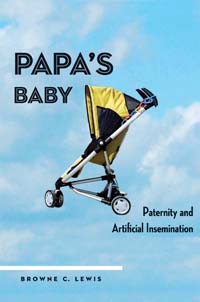 When a child is conceived from sexual intercourse between a married, heterosexual couple, the child has a legal father and mother. Whatever may happen thereafter, the child’s parents are legally bound to provide for their child, and if they don’t, they’re held accountable by law. But what about children created by artificial insemination? When it comes to paternity, the law is full of gray areas, resulting in many cases where children have no legal fathers.
In Papa’s Baby, C|M|LAW’s Professor Browne C. Lewis argues that the courts should take steps to insure that all children have at least two legal parents. Additionally, state legislatures should recognize that more than one class of fathers may exist and allocate paternal responsibility based, again, upon the best interest of the child. Lewis supplements her argument with concrete methods for dealing with different types of cases, including anonymous and non-anonymous sperm donors, married and unmarried women, and lesbian couples. In so doing, she first establishes different types of paternity, and then draws on these to create an expanded definition of paternity.
To order Papa’s Baby from NYU Press click here: http://nyupress.org/books/book-details.aspx?bookid=5825 or through Amazon, click here: http://www.amazon.com/Papas-Baby-Paternity-Artificial-Insemination/dp/0814738486/ref=sr_1_1?s=books&ie=UTF8&qid=1343232500&sr=1-1&keywords=papa%27s+baby
Inniss Comments on the 40th Anniversary of Title IX, Notes Potential Uses for Combating Sexual Harassment
In marking the 40th anniversary of Title IX, Lolita Buckner Inniss, C|M|LAW’s Joseph C. Hostetler-Baker & Hostetler Chair in Law, recently posted the following at the American Constitution Society Blog:
The principal provision of Title IX reads:
No person in the United States shall, on the basis of sex, be excluded from participation in, be denied the benefits of, or be subjected to discrimination under any education program or activity receiving Federal financial assistance.
Although Title IX is best known for having transformed the arena of women’s sports, Inniss notes that Title IX has a much broader reach. She writes that it also applies to sexual violence and sexual harassment. Inniss writes that one of the more controversial aspects of Title IX jurisprudence is that sexual harassment is not only defined by persistent behavior but may also be found in a single episode. She argues that Title IX should give women an opportunity for articulating the legal and ethical wrongness of such behavior by telling their own stories in their own voices.

