C|M|LAW Professor and Associate Dean Mark J. Sundahl was interviewed for CSU’s “Engaged” regarding his endeavors in space law.
See:
http://clevelandstate.tumblr.com/post/35633537079/q-a-dr-mark-sundahl-is-cleveland-states-rocket
C|M|LAW Professor and Associate Dean Mark J. Sundahl was interviewed for CSU’s “Engaged” regarding his endeavors in space law.
See:
http://clevelandstate.tumblr.com/post/35633537079/q-a-dr-mark-sundahl-is-cleveland-states-rocket
C|M|LAW’s Leon and Gloria Plevin Professor of Law, Browne Lewis, has been invited to serve as a visiting scholar with the Vulnerability and the Human Condition Initiative and Feminism and Legal Theory Project at Emory Law School. She will be at Emory from March 7 to March 17, 2013. While at Emory, she will work with Rabbi Broyde, a Professor in Emory’s Center for Law and Religion, on the issue of Jewish Law and assisted reproduction and will make several presentation to the law faculty and students.
The U.S. Secretary of Transportation has appointed Mark J. Sundahl, C|M|LAW Associate Professor and Associate Dean for Administration, to the Commercial Space Transportation Advisory Committee (COMSTAC). The COMSTAC advises the Federal Aviation Administration regarding new regulations governing private space activity. The work of the COMSTAC helps to develop regulations that ensure safety during commercial launch operations and policies that support the international competitiveness of the U.S. commercial spaceflight industry. The membership of the COMSTAC consists of senior executives from the commercial space transportation industry; state and local government officials; representatives from firms providing insurance, financial investment and legal services for commercial space activities; and academics. Prof. Sundahl will be serving a two-year term on the committee. More information regarding the COMSTAC can be found here: http://www.faa.gov/about/office_org/headquarters_offices/ast/advisory_committee.
Chris Sagers, C|M|LAW’s James A. Thomas Distinguished Professor of Law, recently participated on a panel at a conference entitled “In re Books: A Conference on Law and the Future of Books” (http://www.nyls.edu/centers/harlan_scholar_centers/institute_for_information_law_and_policy/events/upcoming_conferences/in_re_books) held at the Institute for Information Law & Policy at New York Law School. Professor Sagers, who teaches and writes about antitrust law, spoke about the Justice Department’s pending antitrust suit against the Apple computer corporation and several publishing firms, who are alleged to have fixed the prices for electronic books. He explained his view that while the suit exposes some apparent ironies in antitrust policy, the ironies are only apparent and not real.
A video webcast of Professor Sagers’ presentation (at 3:04- 3: 18) is available at: (http://www.nyls.edu/centers/harlan_scholar_centers/institute_for_information_law_and_policy/events/upcoming_conferences/in_re_books/webcast) It has been featured in media coverage (http://paidcontent.org/2012/10/26/do-book-publishers-deserve-special-treatment-anti-trust-experts-say-no/).
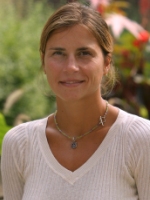
Professor Milena Sterio
C|M|LAW Professor Milena Sterio’s first book, The Right to Self-determination Under International Law: “Selfistans,” Secession, and the Rule of the Great Powers, will be published on Monday, November 5, 2012. Published by Routledge Press, it proposes a novel theory of self-determination; the Rule of the Great Powers. It argues that traditional legal norms on self-determination have failed to explain and account for recent results of secessionist self-determination struggles. While secessionist groups like the East Timorese, the Kosovar Albanians and the South Sudanese have been successful in their quests for independent statehood, other similarly situated groups have been relegated to an at times violent existence within their mother states. Thus, Chechens still live without significant autonomy within Russia, and the South Ossetians and the Abkhaz have seen their conflicts frozen because of the peculiar geo-political equilibrium of power within the Caucuses region.
The Rule of the Great Powers, which asserts that only those self-determination seeking entities which enjoy the support of the majority of the most powerful states (the Great Powers) will ultimately have their rights to self-determination fulfilled. The Great Powers, potent military, economic and political powerhouses such as the United States, China, Russia, Japan, the United Kingdom, France, Germany, and Italy, often dictate self-determination outcomes through their influence in global affairs. Issues of self-determination in the modern world can no longer be effectively resolved through the application of traditional legal rules; rather, resort must be had to novel theories, such as the Rule of the Great Powers.
For more information, or to order a copy, see http://www.routledge.com/books/details/9780415668187/
C|M|LAW Professor Brian Ray posted an article on i.CONnectblog, a blog sponsored by the Journal of Constitutional Law and ConstitutionMaking.org. This piece is the first installment of I•CONnect’s Article Review & Response Series. In it, Professor Ray reviews David Landau’s article on “The Reality of Social Rights Enforcement.” Professor Landau then responds to Professor Ray’s review.
To read the post, click here:
On October 22, 2012, C|M|LAW Clinical Professor Emeritus Kermit Lind was quoted in the Detroit Free Press in an article by Eric D. Lawrence, Metro taxpayers foot bill as banks walk away from homes. The article was about homeowners who walk away from their homes when they can no longer make mortgage payments. This leaves cities with unpaid taxes, and potential nuisances that have to be dealt with at the expense of the taxpayers.
According to Lind, “local officials often face a tough challenge in notifying the mortgage servicer when a problem, such as a nuisance issue, arises. He said taxing entities seeking unpaid taxes — such as county treasurers, or municipalities dealing with nuisance violations — have no choice legally but to contact those listed on property records. And the company on file is likely not the loan servicer, the company that might be designated to handle things such as tax payments. A simple solution, Lind said, would be for banks to file an affidavit with the register of deeds that lists the name of the servicer.
“It’s up to them to do something about it,” Lind said of banks. “If the servicer isn’t doing their job, then the burden shouldn’t be on the taxpayer for that.””
.
To read the full article, see:
http://tablet.olivesoftware.com/Olive/Tablet/DetroitFreePress/SharedArticle.aspx?href=DFP%2F2012%2F10%2F22&id=Ar00114

Associate Dean Sundahl and the ICJ Judges
C|M|LAW Associate Professor and Associate Dean Mark J. Sundahl served as the co-coordinator of the 55th Annual Colloquium on the Law of Outer Space earlier this month in Naples, Italy. This Colloquium involves leading experts in the field of space law who delivered more than 60 papers in five sessions. The topics included the commercial use of outer space, the application of public international law to space activities, and the use in court of evidence derived from satellite systems. Sundahl presented a paper at the Colloquium on the intersection of existing space law with the provision of the newly adopted Space Assets Protocol to the Cape Town Convention which governs asset-backed finance of satellites and other space assets.The Colloquium also hosts the World Finals of the Manfred Lachs Space Law Moot Court Competition which is judged by three sitting judges of the International Court of Justice. Dean Sundahl is pictured here with the three members of the International Court of Justice who attended the Colloquium: Judge Xue Hanqing (China), Judge Leonid Skotnikov (Russian Federation), and, to the left of Dean Sundahl, Judge Joan E. Donoghue (United States).
C|M|Law hosted the October meeting of the Cleveland eDiscovery Roundtable on October 17, 2012. The group was formed by C|M|LAW Professor Brian Ray and Tim Opsitnick, founder and CEO of the eDiscovery firm JurInnov, in response to interest generated by a conference on eDiscovery at the Law School last fall. The Roundtable is an informal group of attorneys, in-house counsel, judges and eDiscovery experts who meet monthly to discuss current issues and best practices in electronic discovery and data management. The October meeting focused on a report of potential changes to the Federal Rules of Civil Procedure, an initiative to integrate electronic discovery processes into broader data management, and pn plans for organizing eDiscovery training/information events for local judges and attorneys.
The Roundtable’s next meeting will be on Wednesday, November 28, 2012, at C|M|Law. Anyone interested in attending or joining the group can contact Brian Ray at brian.ray@law.csuohio.edu.
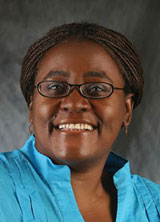
Professor Browne Lewis
C|M|LAW Professor Browne Lewis has been invited to be a visiting scholar for the first 2 weeks in July at the Hastings Center for Bioethics and for the last 2 weeks in July at Yale University’s Interdisciplinary Center for Bioethics.
The Hasting Center is an independent, nonpartisan, and nonprofit bioethics research institute located in Garrison, New York. The Hastings Center hosts scholars from around the world to research ethical issues in the areas of health, medicine, law, and the environment as they impact individuals, communities, and societies. The Visiting Scholars Program permits scholars to conduct research on issues in or related to bioethics. As a part of the program, the scholars work with the Hastings Center’s staff and make presentations. As a visiting scholar at the Hastings Center, Professor Lewis’ research will focus on the ethics of harvesting the gametes of dead people.
Yale’s Interdisciplinary Center for Bioethics has a teaching and research program that is broader than most bioethics programs. Research at the Yale Center focuses on biomedical ethics, environmental ethics, animal ethics, the ethics of scientific research, business and professional ethics, and ethics issues relating to new technologies. The Yale Center hosts scholars at Yale’s campus in New Haven. The program permits scholars to conduct research and to interact with Yale faculty in several disciplines. As a visiting scholar at Yale, Professor Lewis’ research will focus on the ethics issues that relate to new reproductive technologies.
 CSU Law Faculty