
In his capacity as a member of the Ohio Advisory Committee to the United States Civil Rights Commission, C|M|LAW Professor David Forte participated in two days of hearings on June 5 and 6 at the University of Toledo on the problem of human trafficking. The Committee heard testimony from research experts, the FBI, the Assistant U.S. Attorney for the Northern District of Ohio, Attorney General DeWine’s Office, rescuers, victims, and legislators. Northwest Ohio is one of the country’s most active transit points and sources of young victims of the sex trade, which involves tens of thousands of young people, girls and boys, every year. The Committee shall continue to gather information over the next few weeks and then issue a report.
Author Archives: CSU|LAW
Sagers Attends Rose Garden Press Conference and White House Summit on Federal Judicial Vacancies
On Tuesday, June 3, 2013, C|M|Law’s James A. Thomas Distinguished Professor of Law Chris Sagers attended a press conference in the Rose Garden, along with a day-long briefing session in the White House concerning the confirmation of federal judicial nominees. As was widely reported [http://www.washingtonpost.com/blogs/post-partisan/wp/2013/06/04/obama_dc_circuit_judge_nominations/], at the Rose Garden event President Obama announced three new nominations to the D.C. Circuit Court of Appeals, and gave his remarks on the long-running political stalemate over judicial confirmations. During the closed-door briefing sessions, Sagers and approximately 100 other activists from around the country heard presentations by White House Counsel Kathryn Ruemmler, Special Counsel Chris Kang, and other White House officials on the judicial confirmation process and the political issues surrounding it. Sagers was invited to this event due to his work on the steering committee of the Ohio Coalition of Constitutional Values, a chapter of the national umbrella organization the Coalition of Constitutional Values, whose major focus is streamlining and de-politicizing the confirmation of federal judges.
Majette Comments on Variations in Health Care Costs
CardHub.com, an on-line resource for everything concerning credit cards, recently posted an article on its website entitled, Why Do Credit Card Costs Vary So Widely? Following the article, the site included comments by experts in the field, including C|M|LAW Professor Gwendolyne Roberts Majette. The post describes the findings of a recent report from the Centers for Medicare and Medicaid Services showing that the prices hospitals charge insurance providers vary widely within and among regions, states, and even individual hospitals.
Following the article, experts in the field were asked “What do you make of [the Centers for Medicare and Medicaid Services’] findings?”
Majette said that “The use and purchase of health care services is unlike other services. Health care is one of the few services that individuals receive without knowing the price in advance. This is because many people use some type of insurance to purchase these services. It is also because health care is ‘special.’ Receipt of health care can prevent death, serious illness, disability, and the spread of contagious diseases. Thus there is a desire to not allow costs to prevent receipt of necessary care.”
The mere fact that CMS is collecting and publishing this data will affect future prices because consumers, regulators, and researchers can use the information to comparison shop and begin to investigate further the reasons for the price variation. Additionally, the hospitals themselves now know what their competitors’ prices are and they will have to justify the prices they charge in the future. Antitrust laws preclude hospitals from sharing their prices with each other.”
To read the full post, see:
http://www.cardhub.com/edu/ask-the-experts-health-care-pricing-disparities/
Lewis Selected For Robert Wood Johnson Foundation Public Health Scholar-in-Residence Fellowship
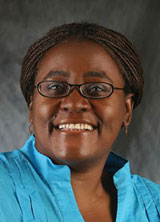
Professor Browne Lewis
C|M|LAW’s Leon and Gloria Plevin Professor of Law, and Director of the Center for Health Law and Policy, Browne Lewis, has been selected for the Robert Wood Johnson Foundation’s Public Health Scholar-in-Residence program. The recently launched fellowship program was designed to bring the expertise of legal scholars to assist public health agencies in tackling pressing health issues. The program helps to improve the teaching and scholarly work of the academicians through field experience and provides public health agencies access to legal experts. Professor Lewis is one of six scholars, nationwide, selected for this program. She will focus on current state and federal preemption issues regarding local government regulation of the labeling, marketing and sale of small cigars. She will be working with both the Cleveland Department of Public Health and the Shaker Heights Department of Public Health.
For more information, see:
Robertson Publishes in Case Western Reserve Law Review on the Regulation of Hydraulic Fracturing

Professor Heidi Gorovitz Robertson
C|M|LAW Professor and Associate Dean Heidi Gorovitz Robertson has published Applying Lessons from the Gulf Oil Spill to Hydraulic Fracturing, at 63 Case Western Res. L. Rev. 1279 (2013). In this article, Robertson notes that Ohio is moving quickly towards hydraulic fracturing of horizontal wells and some argue it has insufficiently considered and managed that rush in light of the potentially disastrous, albeit unlikely, consequences of groundwater contamination, explosion at wells or drilling sites, depletion of freshwater supply as high volumes are used in fracturing, and disposal of contaminated flowback water. Similarly, although drilling for oil from deep water rigs was neither a new idea nor a new technology when the Macondo well blew out on April 20, 2010—killing 11 people, spewing tons of oil in the Gulf of Mexico, and sinking a $50 million drilling rig—most deep water wells that preceded it had not been drilled quite so deeply into the seafloor. Many of the technologies employed there were untested at such great depths, and regulation and enforcement had not kept pace with the advances in technology. This Article considers just a few of the lessons identified through government and other studies that followed the Deepwater Horizon oil spill. It considers how those lessons might be applied to Ohio’s regulation of hydraulic fracturing in the hope that Ohio can avoid some of the same mistakes that arguably paved the way for the blowout in the Gulf. In particular, this Article discusses three areas of potential concern: agency structure and responsibility, inadequacies in research or follow though, and emergency planning and preparedness for disaster.
You may read the article at:
http://law.case.edu/journals/LawReview/Documents/63CaseWResLRev4.10.Article.Robertson.pdf
O’Neill and Charles Write on The Origins of a Free Press in Utah Law Review

Professor Kevin F. O’Neill
C|M|LAW alumnus Patrick J. Charles & C|M|LAW Professor Kevin Francis O’Neill, have published Saving the Press Clause from Ruin: The Customary Origins of a “Free Press” as Interface to the Present and Future in 2012 Utah L. Rev. 1691. Based on a close reading of original sources dating back to America’s early colonial period, this article offers a fresh look at the origins of the Press Clause. Then, applying those historical findings, the article critiques recent scholarship in the field and reassesses the Press Clause jurisprudence of the Supreme Court. Finally, the article describes the likely impact of its historical findings if ever employed by the Court in interpreting the Press Clause.
You may download the full text here:
Mika Presents on Color Coding in the Teaching of Legal Writing

Legal Writing Professor Karin Mika
C|M|LAW Legal Writing Professor Karin Mika recently made two presentations on the teaching of legal writing. The first presentation, Using Color Coding to Teach Legal Analysis and Cogent Writing, took place at the Southeastern Regional Legal Writing Conference, April 26-27, 2013 (John Marshall of Atlanta Law School, Savannah Branch). The second presentation, Memo Writing in Technicolor, took place at the Rocky Mountain Regional Legal Writing Conference, March 22-24, 2013 (University of Colorado at Boulder Law School). Memo Writing concerned her theory that color coding segments of a memo could help students understand the order of how a memo should be written. She demonstrated by using good color-coded memos as compared to not-so-good color -coded memos to demonstrate how students could self-assess their work using visuals.
In Legal Analysis and Cogent Writing, Professor Mika demonstrated how color-coding particular analytical paragraphs could give students visual cues on the structure of legal analysis. She also demonstrated how highlighting various portions of sentences within a paragraph (e.g., active voice, linking transitions, parallel structure) gave insight into how a well-structured, easy-to-read paragraph would look in color when it had all the proper parts.
Finally, Professor Mika has been appointed Treasurer of the AALS Teaching Section.
Sterio Blogs in Opinio Juris on Potential Liability for French Companies’ Participation in West Bank Projects
Opinio Juris has published the following post by C|M|LAW Professor Milena Sterio in which she discusses a recent French Court of Appeals case on the potential liability of French companies for their participation in a West Bank building project:
Geier Debated Three Corporate Tax Reform Issues at the ABA Section on Taxation Meeting in Washington, D.C

Professor Deborah Geier
C|M|LAW Professor Deborah Geier participated in a Lincoln-Douglas-style debate on Corporate Tax Reform at the ABA Section of Taxation meeting held in Washington, D.C., on May 9-10. Professor Joshua Blank from NYU organized the panel and served in the role of Speaker of the House. In addition to Professor Geier, the three debaters were Professor Adam Rosenzweig (Washington University at St. Louis), Professor Omri Marian (University of Florida), and David Miller (partner at Cadwalader, Wickersham & Taft of New York and adjunct Professor at Columbia). Three resolutions were debated: (1) “Be it resolved that the United States should impose a corporate income tax,” (2) Be it resolved that, assuming integration is desirable, the best way to achieve it is by exempting dividends from taxation in the shareholders’ hands,” and (3) “Be it resolved that, assuming the United States imposes a corporate income tax, it should lower the statutory rate below 35% in a revenue-neutral way.” The debate was lively, and the audience participated during cross-examination periods.
Lewis Quoted in Plain Dealer Regarding MetroHealth System’s Decision Not to Hire Smokers
Professor Browne Lewis
C|M|LAW’s Leon and Gloria Plevin Professor of Law and Director of the Center for Health Law and Policy, Browne Lewis, was quoted in the Plain Dealer in an article, MetroHealth joins Cleveland Clinic and University Hospitals with policy to not hire tobacco users, by Ellen Jan Kleinerman, on April 29, 2013. The article described the MetroHealth system’s decision not to hire smokers after June 1, 2013. According to a MetroHealth representative, refusing to hire smokers is a move that follows a national trend to “to encourage healthier life styles, increase worker productivity and lower health-care costs.” In this decision, MetroHealth follows the Cleveland Clinic and University Hospitals, which have both adopted this policy, along with a growing number of employers across the country. Professor Lewis acknowledges that smokers are not a protected class in terms of employment discrimination, but argues that “[e]ven if it’s legal, it’s bad public policy. Where do you draw the line? Is the next step not hiring obese people or people who drink alcohol? It makes more sense to use other incentives to get people to stop smoking instead of just closing the gates.”
To read the article, see:
http://www.cleveland.com/healthfit/index.ssf/2013/04/metrohealth_joins_cleveland_cl.html
 CSU Law Faculty