May Speaks on Inviting Student Creativity into the Legal Writing Classroom

Legal Writing Professor Claire Robinson-May

Legal Writing Professor Claire Robinson-May

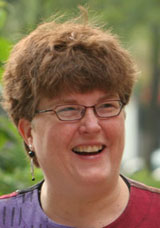
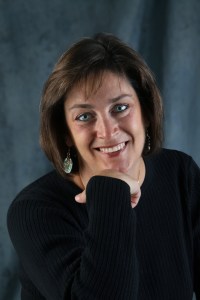
C|M|LAW Legal Writing Professor Claire Robinson-May presented “Enhancing Understanding by Inviting Student Creativity into the Legal Writing Classroom,” on April 26, 2014, at the Southeastern Legal Writing Conference held at Stetson University College of Law.  In her presentation, May noted that teachers of legal writing rarely offer students an opportunity to be creative. Rather, they regularly ask students to produce research logs, memos, motions, and other documents that are similar to those produced by their peers. But, in addition to teaching legal writing, May is also pursuing an M.F.A. in creative writing. She brought that experience into her legal writing classroom and invited her law students to bring in their creativity as well. May’s presentation described an assignment in which she required students to outline and analyze a statute and then convey the information to the class through a creative presentation. Student group presentations included an original song, an interactive game, a comic strip, a public service announcement, an original children’s book, and more. May believes the assignment enhanced student understanding of the material by engaging student creativity in the learning process.

Falk to Serve on Cuyahoga County Prosecutor’s First Conviction Integrity Unit

Professor Patricia J. Falk

Professor Patricia J. Falk

C|M|LAW Professor Patricia J. Falk has been appointed to serve on Cuyahoga County Prosecutor Timothy McGinty’s newly announced Conviction Integrity Unit.  Falk, along with the other members of the group, will review innocence claims made by felons convicted of crimes in Cuyahoga County.  In particular, the group will review applications from prison inmates, attorneys and felons who believe they were wrongly convicted. 

For a Plain Dealer article on the topic, as well as a link to the Prosecutor’s Office’s full policy on the topic,click here:

http://www.cleveland.com/court-justice/index.ssf/2014/04/new_conviction_integrity_unit.html

Sagers Speaks on Apple Case in New York, Chicago, and Case Western Reserve University

Professor Chris Sagers

Professor Chris Sagers

In February, C|M|LAW’s James A. Thomas Distinguished Professor of Law Chris Sagers was invited to discuss his work on the Justice Department’s price-fixing lawsuit against Apple, United States v. Apple, Inc., before the Antitrust Section of the New York State Bar Association.  In January, he spoke about the case as a guest speaker before the Case Western Reserve University’s faculty of law.

Sagers will also speak on the topic again later this week as one of four speakers at the Loyola University of Chicago’s 2014 Consumer Antitrust Colloquium, one of the best attended annual conferences in antitrust.

Sagers has been quoted on the case frequently in the media, and has spoken on it several times previously.


Robertson Writes in Crain’s on Ohio Supreme Court Oral Argument regarding Local Attempts to Regulate Zoning of Shale Wells

Professor Heidi Gorovitz Robertson

Professor Heidi Gorovitz Robertson

C|M|LAW Professor and Associate Dean Heidi Gorovitz Robertson published Awaiting the court’s word on validity of local zoning control of well locations, in Crain’s Cleveland Business’ Energy Report on April 4, 2014.  In this post, Robertson notes that many Ohio communities hope to exercise some control over the shale oil and gas activities that will take place within their jurisdictions. Monroe Falls, in particular, would prohibit drilling in residentially zoned space and impose some other local requirements.

If the Ohio Court of Appeals was the end of the line, Monroe Falls’ zoning ordinance would be dead in the water, along with other local efforts to enact similar ordinances affecting the location of wells.  But Monroe Falls appealed to the Supreme Court of Ohio  and on February 26, 2014, the  Court heard oral argument on two specific issues. First, it considered whether the state statutes concerning oil and gas drilling deprive municipalities such as Monroe Falls of their Ohio Constitutional home rule authority to enact and enforce zoning laws (such as prohibiting shale drilling in residential zones).  The second issue was whether Monroe Falls’ ordinances, some of which required oil and gas drillers to submit information to Monroe Falls conflict with the state’s oil and gas law when the driller has already secured a drilling permit from ODNR.

Ohio and the affected driller, Beck Energy, argued that if the court allows localities to create their own rules, even zoning rules, the practice would undermine the state’s ability to carry out the Legislature’s statutory directives.  Monroe Falls, however, argued that local land-use regulation could operate in harmony with the state’s control of drilling operations and would not, therefore be pre-empted by the state law.

A couple of justices expressed serious doubts that ODNR really has “sole and exclusive authority” to preclude all local oversight with no administrative appeal. At least one seemed bothered that the statute does not expressly state a preclusion for municipal zoning authority, whereas the Legislature has shown that it knows how to do this in other statutes.  Justice Paul Pfeifer focused on the fact that under Ohio’s oil and gas statute, a driller can appeal a denied drilling request to the state agency, but a landowner has no opportunity to appeal the state’s decision to grant a driller’s permit request.

Only a few of the justices spoke up substantially at the oral arguments. We’ll have to wait to hear from the others when the opinion is released.  In the meantime, localities across the state will be watching to learn whether they will be able to decide where shale oil and gas drilling may occur within their borders.

To read the full post in Crain’s, click here:

http://www.crainscleveland.com/article/20140404/BLOGS05/140409906/awaiting-the-courts-word-on-validity-of-local-zoning-control-of-well

 

Lewis Speaks at Columbia on Reproductive Technology and Parenting

Professor Browne Lewis

Professor Browne Lewis

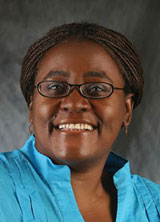
On April 9, 2014, C|M|LAW’s Leon and Gloria Plevin Professor of Law Browne Lewis presented a lecture at Columbia University’s Mailman School of Public Health.  The lecture dealt with the of impact reproductive technology on legal parentage.  Professor Lewis discussed the factors courts consider when determining the legal mother of a child conceived as the result of a surrogacy arrangement.  She also explained the manner in which the court adjudicates the paternity of a man whose wife is artificially inseminated with donor sperm and with an anonymous sperm donor.  Lastly, she analyzed the public health consequences of creating designer children using reproductive technology.

In addition, Professor Lewis was recently elected to the AALS Women in Legal Education Archives Subcommittee.  This Committee is charged with reviewing the contents of the current archives; creating a mechanism to share the archival information with our members; adding oral histories and other additional data to the archives; and maintaining the Schlesinger Archives.


Mika Writes on Increased Importance of Appearance of Contracts

Legal Writing Professor Karin Mika

Legal Writing Professor Karin Mika

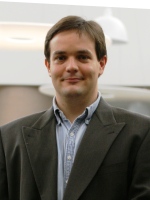
C|M|LAW Legal Writing Professor Karin Mika recently published Visual clarity in contract drafting in Clarity, a journal published twice a year by Clarity-international, an international association promoting plain legal language.  The article discusses how the appearance of contracts (including font, paragraphing, and white space) contribute to the quality and user-friendly nature of the contract.  The article emphasizes how contracts must be usable instruments for those entering into a bargain and also suggests that people have become quicker readers so more visual cues are needed in written works to enhance people’s understanding of content.

Here is a link to the article:

http://clarity.shuttlepod.org/Resources/Documents/Clarity%2070..pdf


Sterio Discusses the Future of the International Criminal Court at the ASIL Annual Meeting

C|M|LAW’s Calfee Halter & Griswold Professor Milena Sterio participated in a panel discussion entitled “The Future of the International Criminal Court,” on April 10, 2014, at the American Society of International Law Annual Meeting in Washington D.C..  Professor Sterio joined several other well-known panelists, including Judge Hans Peter Kaul of the International Criminal Court, Professor Jane Stromseth of Georgetown Law School (currently working in the Office of Global Criminal Justice in the State Department), and Professor Dire Tladi (University of Pretoria, South Africa).  The panel was conducted in a roundtable format, with the moderator, Professor David Kaye of UC Irvine School of Law asking “unscripted” questions.  The questions centered on the role of the Security Council referral in ICC investigations, the politics of the ICC, recent cases of the Yugoslavia and Rwanda tribunals, and the overall legacy of the ad hoc tribunals.

To see a “cable” about this event, published on the American Society of International Law website, click here:

http://www.asil.org/blogs/future-international-criminal-law

In addition, Professor Sterio wrote a brief book review, also in “cable” format, which was published on the same website a few days before the conference. The book related to maritime piracy.  To see the book review, click here:

http://www.asil.org/blogs/book-comment-law-and-practice-piracy-sea-european-and-international-perspectives-panos


Kerber Helps Judge4Yourself Vet Judicial Candidates

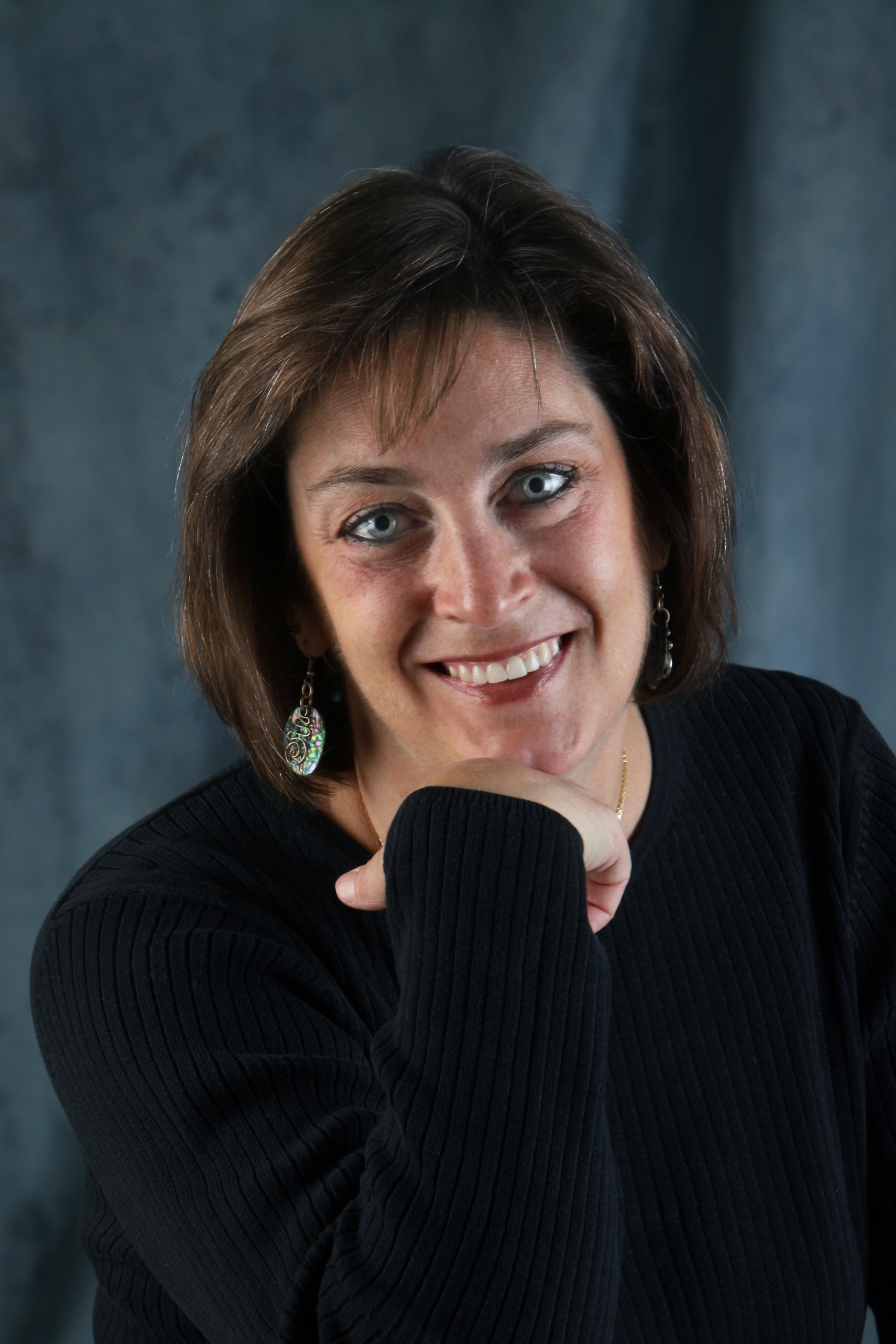
C|M|LAW Legal Writing Professor Sandra Kerber participated in Judge4Yourself.com’s interviews of judicial candidates running in the May 6th, 2014 Ohio Primary Election.  Judge4Yourself.com’s ratings are made by four cooperating bar associations, with the help of dozens of experienced lawyers, including Professor Kerber.

To learn more about Judge4Yourself’s ratings, see http://www.judge4yourself.com/

Sterio Debates Militarized Humanitarian Intervention at International Affairs Symposium


Professor Milena Sterio

Professor Milena Sterio

C|M|LAW’s Calfee Halter & Griswold Professor of Law Milena Sterio participated in the 52nd International Affairs Symposium at Lewis and Clark College on April 8, 2014.  Professor Sterio’s panel was entitled “Militarized Humanitarian Intervention: Guns for Good?”.  The panel was conducted in a debate format in which Professor Sterio argued the pro-militarized humanitarian intervention position. The other participants included law professors, international affairs/political science professors, and several retired officers of the Army and Air Force.  One of the debaters was Gen. Michael Hayden, former director of the NSA and then the CIA (during the Bush administration). Livening up the proceedings were many student protesters outside of the auditorium with signs like “don’t spy on me” and “the Constitution isn’t dead.” 

Plecnik’s “Modest Proposal” for a Constitutionally Apportioned Wealth Tax Published in Hastings Constitutional Law Quarterly

Professor John Plecnik

Professor John Plecnik

C|M|LAW Professor John Plecnik’s article, The New Flat Tax: A Modest Proposal For a Constitutionally Apportioned Wealth Tax, was published in the Hastings Constitutional Law Quarterly at 41 Hastings Const. L.Q. 483 (2014).  As usual, Professor Plecnik begins with a flourish:

“Eat the poor children,” proposes Jonathan Swift.
“Nay,” protests Occupy Wall Street, “Eat the rich!”

His Article does not really propose eating the rich with draconically high taxes. However, he says, the United States has experienced years of multi-billion dollar deficits. Many liberals have proposed a European-style value added tax or VAT to balance the budget. Many conservatives have proposed a “fair” or flat tax. Like the Devil, regressive consumption taxes go by many names. Whether they know it or not, liberals and conservatives are proposing essentially the same thing — a federal sales tax, which disproportionately impacts the poor and middle class. Plecnik’s article counters with a truly modest proposal for the New Flat Tax on wealth rather than consumption.

Congressional power to “lay and collect Taxes” is subject to two rules. Indirect taxes must be uniform, whereas direct taxes must be apportioned so that states pay in proportion to their population. Under the Obamacare decision, there is little doubt that wealth taxes are direct taxes. However, levying a wealth tax based on population has the unfair result of different tax rates in different states.

For some time, scholars have debated ways to skirt the Apportionment Clause. For the first time, this Article demonstrates how a wealth tax may comply with Apportionment and still be fair. Under this Article’s proposal, the federal government would collect a wealth tax at a uniform rate and retain each state’s constitutionally apportioned share of the tax. The excess unapportioned share would be refunded to the state of origin via a state-level “pick up” tax. This revenue sharing arrangement — inspired by the pre-EGTRRA credit for state death taxes — ensures a uniform state and federal tax burden without redistributing wealth among the states. Thus, horizontal equity is achieved and both the letter and spirit of the law are satisfied.

You can read the full article on SSRN at:

http://papers.ssrn.com/sol3/papers.cfm?abstract_id=2423803