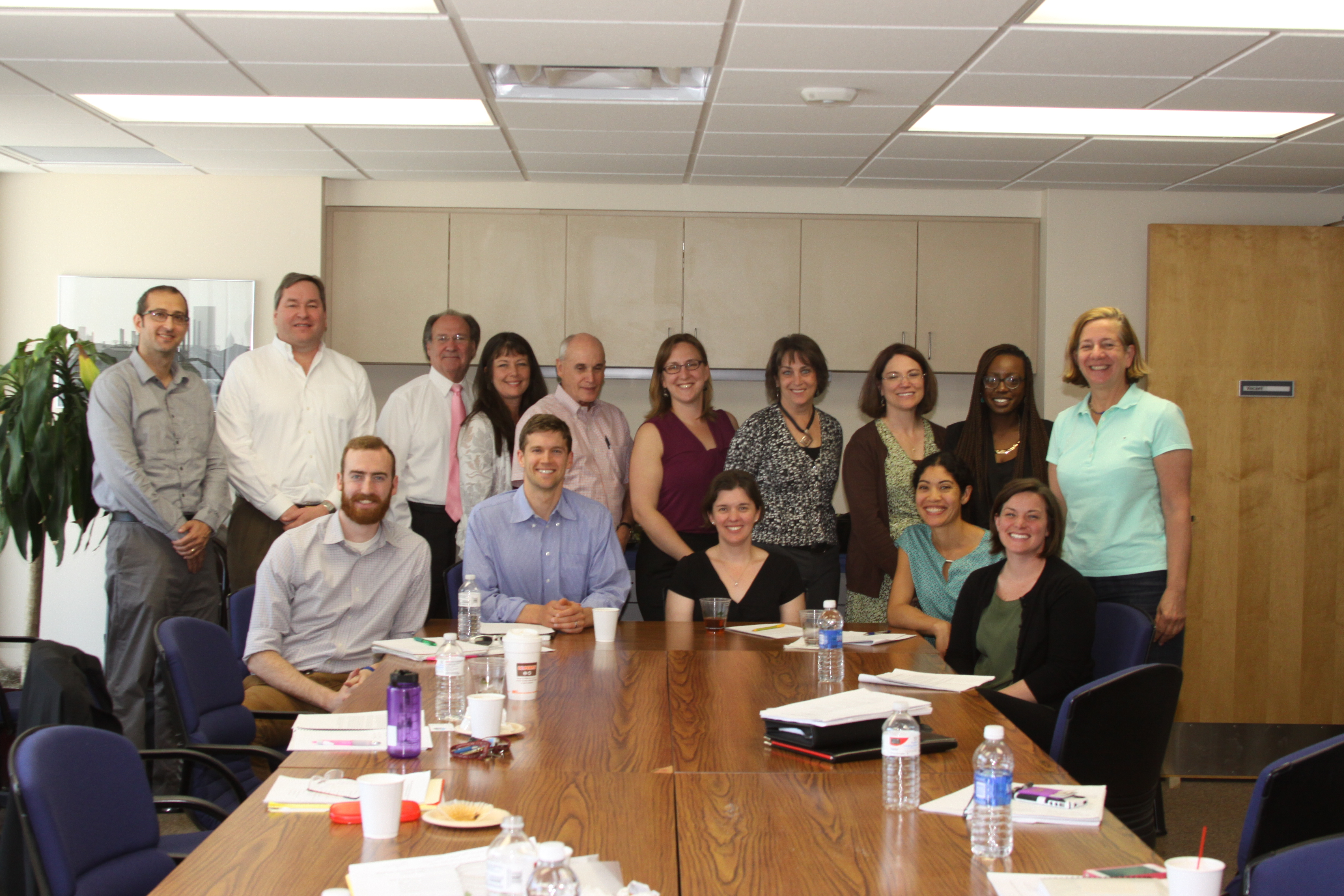
Professor Weinstein presented Friday, May 8 at the Inaugural Annual Sustainability Conference for Legal Educators at the Sandra Day O’Connor College of Law at Arizona State University. More than 60 law faculty members from over 50 law schools attended, including the law schools at: Berkeley, NYU, Stanford, Vanderbilt & Yale. Professor Weinstein’s presentation, “What Can Legal Educators Learn About Sustainability from Urban Planning Researchers and Practitioners?,” argued that the answer to his question is “a great deal.” Comparing the law literature on Sustainability with the planning literature, Professor Weinstein found that the planning literature focused significantly more on: (1) empirical data, particularly as regards actual implementation; (2) the need to balance Sustainability policy goals with other critical goals — particularly those associated with “at-risk” groups — such as social equity, and enhanced employment opportunities; and (3) the role of design-based policies to achieve Sustainability goals. He argued that these findings strongly suggest that: (1) legal scholars could obtain useful information from the planning literature, particularly empirical data; and (2) legal scholars should seek opportunities for collaborative projects with planning researchers and practitioners.
Author Archives: CSU|LAW
Professor Witmer-Rich Participates in “The Sound of Ideas” on 90.3 WCPN
On May 13, 2015, Associate Professor Jonathan Witmer-Rich was a featured speaker on “The Sound of Ideas,” on 90.3 WCPN. Along with other panelists, he discussed a proposal by state Senator Sandra Williams to abolish or modify the use of grand juries in the state of Ohio. In addition, the panelists discussed problems with plea bargaining. Professor Witmer-Rich argued that preliminary hearings would be a better process for screening most cases than the grand jury system.
The archived episode of the radio show is available here.
Professor Sterio Participates in Human Rights Documentation Workshop in Nairobi, Kenya

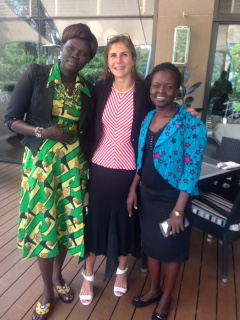
Professor Milena Sterio (center) with participants of the Human Rights Documentation workshop in Nairobi, Kenya (Victoria Akur, left, and Grace John, right – representatives of South Sudan’s civil society organizations)
Professor and Associate Dean, Milena Sterio, participated in a four-day workshop entitled “Human Rights Documentation in South Sudan” in Nairobi, Kenya, as a consultant for the Public International Law and Policy Group (PILPG). PILPG is a Nobel Peace Prize-nominated non-governmental organization based in Washington, D.C., whose mission is to provide legal assistance to states and governments with the negotiation and implementation of peace agreements, the drafting of post-conflict constitutions, and the creation and operation of war crimes tribunals.
PILPG has been involved with several projects in South Sudan already; the human rights documentation project, which Professor Sterio participated in, brought together about forty participants – representatives from South Sudan civil society organizations, the United Nations, as well as several PILPG members from the Washington, D.C. and Nairobi offices, to draft a road map agreement which South Sudanese organizations can implement in order to begin documenting human rights violations. The documentation is an important step toward peace-building, reconciliation, and accountability.
Professor Sterio published a blog post on Intlawgrrls, describing the workshop in more detail; the post is available here.
Professor Kalir named to the Hillel Board
Clinical Professor of Law Doron Kalir was named, on May 13, a member of the Board of Directors of the Cleveland Hillel Foundation. The Cleveland Hillel, founded in 1947, was created to engage and empower Jewish students on and off campuses around the Cleveland area. Kalir, who serves as the faculty adviser of the Jewish Student Law Association (JLSA) at Cleveland-Marshall, and is a frequent lecturer at synagogues around town, was truly excited about the nomination: “I am truly honored by the Board decision to allow me join their ranks,” says Professor Kalir. “These are some trying times for Jewish students in campuses across the country, and I am certain that the Cleveland Hillel Board is the best forum prepare, engage, and support these students all around Cleveland.”
Professor Robertson Speaks at Pitt’s Regional Workshop on Shale Governance
On May 4, 2015, Heidi Gorovitz Robertson, C|M|LAW’s Steven W. Percy Distinguished Professor of Law, presented Sorting Out Local Governance in Shale Oil and Gas Development, at a full-day workshop at the University Center for Social and Urban Research, co-sponsored b
y the University of Pittsburgh’s Graduate School of Public and International Affairs. The workshop, titled Regional Impacts of Shale Gas Drilling – Understanding Economic and Governance Implications on Communities and Regions, drew together researchers from the fields of economic development, economics, urban policy, local government, and law. In particular, the goal of the workshop was to bring together researchers focused on analyzying the economic impacts of shale, how these impacts vary by region, and how governance and geography affect regional variation.
Professor Browne Lewis Presents at Harvard Law School
On May 2, 2015, Leon and Gloria Plevin Professor of Law Browne Lewis presented at the Baby Markets Roundtable held at Harvard Law School. Professor Lewis’ presentation was entitled “Human Oocyte Presentation: Supplying Babies or Selling False Hope”. In 2012, the American Society for Reproductive Medicine ASRM declared that human oocyte cryopreservation (HOC) should no longer be considered to be experimental. Thus, that new reproductive technology provides a viable option for women seeking to preserve their fertility. Women who want to focus on their careers or those who have not yet met “Mr. Right” may choose to have their oocytes frozen, so that they can defer motherhood. Other women are forced to have their oocytes frozen when faced with potential infertility as a consequence of medical treatment or military service. Women, men, and children may benefit from a technology that permits women to pause their biological clocks. If women do not have to worry about potentially becoming infertile, they can postpone motherhood until they are ready to parent. Unplanned pregnancies and infertility also negatively impact men.
The availability of HOC will serve the best interests of children by permitting them to be born to parents who want them and who are able to care for them. Persons opposed to the use of HOC are concerned about the safety of the woman, the oocyte and the resulting child. Based upon the low percentage of live births resulting from the use of cryopreserved oocytes, opponents also argue that it is unethical to give women false hope. Those persons advocate banning the use of HOC or limiting it to use by women who are of child-bearing age. However, bans or strict restraints on the availability of HOC may infringe on a woman’s reproductive freedom and violate her right to be treated the same as a similarly situated man. Professor Lewis’ chapter on this topic will be published in an Oxford University Press book on the topic.
Professor Inniss Awarded a Graduate Faculty Travel Award by CSU Research Council
Professor Lolita Buckner Inniss was awarded a Graduate Faculty Travel Award, by the Cleveland State University Research Council. Pursuant to the terms of the Award, Professor Inniss will attend and present at the Workshop for the Feminist International Judgments Project in London, England in June 2015.
Professor Inniss to Publish Article in the Columbia Journal of Race and Law
Professor Lolita Buckner Inniss will publish Cherokee Freedmen and the Color of Belonging in the Columbia Journal of Race and Law in the upcoming May-June 2015 issue. The article addresses the Cherokee Nation and their historic conflict with the descendants of their former black slaves, designated Cherokee Freedmen. In the article, Professor Inniss discusses the rise of color-based belonging and its relationship to black slavery, Cherokee constitutionalism and the search for Cherokee political legitimacy.
Professor Robertson writes about the potential impact of Ohio House Bill 8 on landowners and local governments
Heidi Gorovitz Robertson, C|M|LAW’s Steven W. Percy Distinguished Professor of Law, has published a post in Crain’s Cleveland Business’ Energy Report regarding Ohio House Bill 8. Robertson writes that the bill, which passed unanimously through the Ohio House and is now in Senate committee, would make it substantially faster and easier for shale oil and gas developers to gain access to public and private land for drilling. Among other things, the bill would speed up the hearing process before the Ohio Oil and Gas Commission and mandate that the chief of the Division of Oil and Gas Resources Management issue an order to include publicly-controlled land in a drilling unit upon request.
Professor Robertson’s post is available here.
Professor Lewis Selected to Present at Gresham College, London
Through a competitive process, Leon and Gloria Plevin Professor of Law Browne Lewis has been selected to present a public lecture at Gresham College, the oldest higher education institution in London. Gresham College is an independent institution, governed by the Council and with the Lord Mayor of London as its President. For over 400 years, Gresham College has hosted free public lectures in the City of London. The College, named after Sir Thomas Gresham, is one of the most prestigious academic institution in the United Kingdom.
The lecture is scheduled for Monday, January 25, 2016. The topic is “The Ethics of Physician-Assisted Suicide.” The legalization of assisted suicide in the UK is as controversial as the Death with Dignity Act (DWDA) that led to its decriminalization in Oregon in 1994. The United States Supreme Court subsequently rejected an attempt to have the law declared unconstitutional but steps seem to be needed to address the ethical concerns raised by members of the academic, political, and religious communities, including safeguards to protect vulnerable people. What can be learned in the UK from the USA experience?
Professor Lewis will spend the spring 2016 semester in the United Kingdom as a Fulbright Scholar. Her host institution will be King’s College in London.