On Friday, November 21, CSU Law School hosted a day-long seminar on Advanced Appellate Advocacy in partnership with the Eighth District Court of Appeals. The seminar featured Justices, Judges, court staff, and practitioners who shared their experiences and expertise on appellate practice.
Two CSU Law faculty members also presented at the event. Professor Methab Khan presented on a panel titled “Generative AI 101 for courts: Hallucinations, Deepfakes, and the Record.” Professor Doron Kalir presented on “The Art of Persuasion – How to Write an Appellate Brief.”
The seminar was extremely well-received, and the MCR was full to near capacity.
Professor Sterio reviewed former International Criminal Court Judge Chile Eboe-Osuji’s book, “The End of Immunity: Holding World Leaders Accountable for Aggression, Genocide, War Crimes, and Crimes Against Humanity” (Prometheus, 2024). Judge Eboe-Osuji’s book espouses the view that customary international law rejects the principle of personal immunity before international criminal courts for sitting political and military leaders who commit atrocity crimes. This view, which Judge Eboe-Osuji had adopted and advanced as an ICC judge, is shared by some scholars but rejected by others who argue that sitting heads-of-state waive immunity only if they are judged before an international tribunal whose jurisdiction their respective states have agreed to. Judge Eboe-Osuji’s book addresses an important scholarly as well as practical topic. It also provides a comprehensive historical analysis of various international negotiations, agreements, and other instruments as proof, according to Judge Eboe-Osuji, that customary law rejects personal immunity as a bar to prosecution of atrocity crimes before an international court.
According to Professor Sterio’s review, “The strengths of ‘The End of Immunity’ lie in its elegant language, its thorough recounting of historical developments regarding immunity, and its passionate call to action for accountability for heads of state who commit atrocity crimes. It thus reflects Judge Eboe-Osuji’s long-standing quest to establish accountability for high-ranking officials and represents a kind of intellectual culmination of his career. In Eboe-Osuji’s words, “[a]ny argument for immunity of heads of state is effectively a protest against the judicial process[.]”
We are pleased to share that Cory Scott, of the Center for Cybersecurity and Privacy Protection at CSU|LAW provided testimony for a legislative proposal in Ohio addressing artificial intelligence personhood, and his insights are included in an article published by the Ohio Capital Journal.
In the piece titled “What’s in Ohio’s proposal banning AI personhood,” the article explores House Bill 469, which would prohibit AI systems from obtaining legal personhood (such as marrying an AI or holding decision-making authority within a company) and ensure that human actors are held accountable for harm caused by AI tools.
Mr. Scott’s testimony emphasized the need for legal clarity around liability and the definition of sentience or consciousness in AI systems, reinforcing that accountability must remain with the human or entity behind the technology.
Please join us in commending Mr. Scott for his engagement in this important policy discussion at the intersection of law and emerging AI regulation.
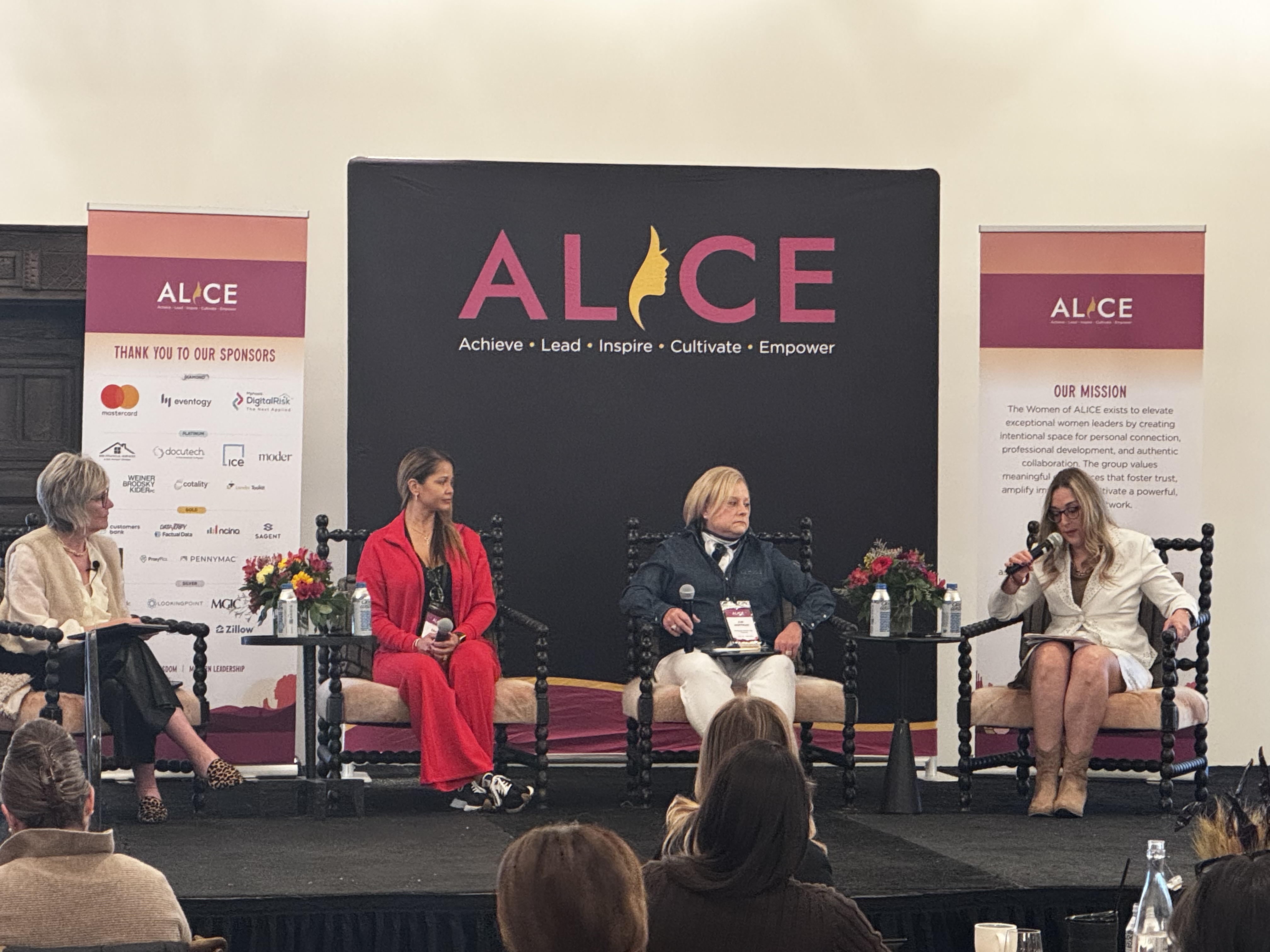
Debbie Hoffman, Visiting Assistant Professor of Law at CSU College of Law, spoke on November 11, 2025, at the Executive Women’s Summit 2025 (EWS) in Santa Fe, hosted by the Women of ALICE. She joined Brooke Anderson-Tompkins, Erica Acie, and Kim Hoffman for a featured panel titled“Beyond the Hype: Leading with clArIty.”
The discussion examined how financial and technology leaders can navigate the rapidly evolving landscape of artificial intelligence and emerging technologies with purpose and accountability. Panelists addressed building trust and transparency around AI adoption, aligning innovation with organizational mission and risk tolerance, strengthening vendor governance, and exploring how blockchain and tokenization are shaping the future of mortgage and financial services.
Hoffman’s remarks emphasized clarity and responsible innovation as essential leadership tools for guiding technology adoption in regulated industries.
Professor Debbi Hoffman (right) speaking at the Executive Women’s Conference.
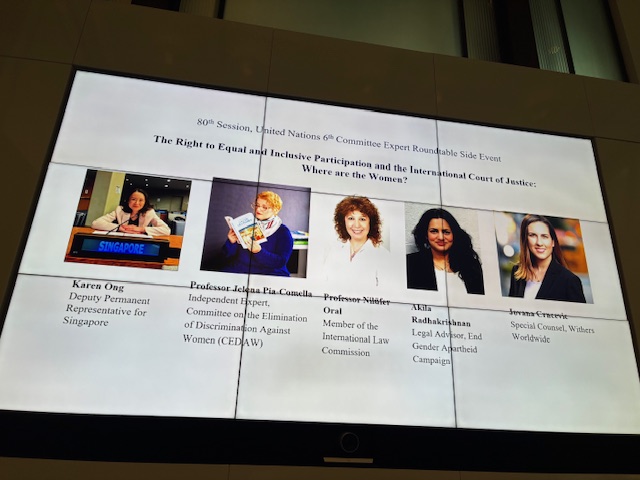
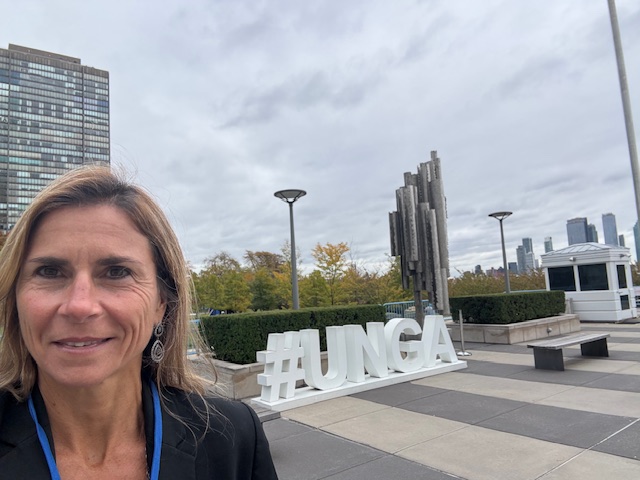
Professor Milena Sterio organized and participated in a side event at the United Nations 6th Committee during International Law Week, on Friday, October 31. The event, “The Right to Equal and Inclusive Participation and the International Court of Justice: Where are the Women,” focused on the need for gender parity at the International Court of Justice. The event was hosted by the Gender Parity at the International Court of Justice Project (Professor Sterio serves on the Steering Committee), and the American Branch of the International Law Association’s Gender Justice in International Law Committee (Professor Sterio co-chairs this Committee, which she also co-founded). In addition, the event was co-sponsored by the United Nations Permanent Missions of Canada, Mexico, Sweden, and Singapore.
Since its inception in 1945, there has been only six female judges on the bench of the ICJ. In the upcoming ICJ judicial elections, out of eleven candidates thus far nominated by states, only three are women. The side event, which featured remarks by a slate of distinguished panelists, stressed the need for equal and inclusive participation for women on the ICJ’s judicial bench, as a fundamental human right. Professor Sterio moderated the discussion along with Dr. Jessica Corsi (University College London). Expert panelists included Karen Ong, Deputy Permanent Representative of Singapore to the United Nations, Prof. Nilufer Oral, International Law Commission, Prof. Jelena Pia-Commella, Member of the Commission of the Elimination of Discrimination Against Women Committee, Jelena Crncevic, Special Counsel, Withers Worldwide, and Akhila Radhakrishnan, End Gender Apartheid Campaign.

 CSU Law Faculty