Sterio Debates Militarized Humanitarian Intervention at International Affairs Symposium


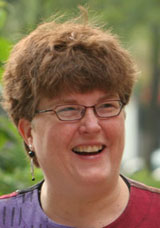
Professor Milena Sterio

Professor Milena Sterio

C|M|LAW’s Calfee Halter & Griswold Professor of Law Milena Sterio participated in the 52nd International Affairs Symposium at Lewis and Clark College on April 8, 2014.  Professor Sterio’s panel was entitled “Militarized Humanitarian Intervention: Guns for Good?”.  The panel was conducted in a debate format in which Professor Sterio argued the pro-militarized humanitarian intervention position. The other participants included law professors, international affairs/political science professors, and several retired officers of the Army and Air Force.  One of the debaters was Gen. Michael Hayden, former director of the NSA and then the CIA (during the Bush administration). Livening up the proceedings were many student protesters outside of the auditorium with signs like “don’t spy on me” and “the Constitution isn’t dead.” 

Plecnik’s “Modest Proposal” for a Constitutionally Apportioned Wealth Tax Published in Hastings Constitutional Law Quarterly

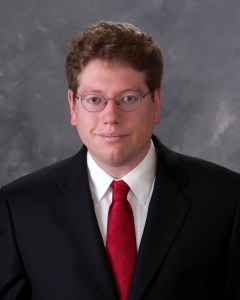
Professor John Plecnik

Professor John Plecnik

C|M|LAW Professor John Plecnik’s article, The New Flat Tax: A Modest Proposal For a Constitutionally Apportioned Wealth Tax, was published in the Hastings Constitutional Law Quarterly at 41 Hastings Const. L.Q. 483 (2014).  As usual, Professor Plecnik begins with a flourish:

“Eat the poor children,” proposes Jonathan Swift.
“Nay,” protests Occupy Wall Street, “Eat the rich!”

His Article does not really propose eating the rich with draconically high taxes. However, he says, the United States has experienced years of multi-billion dollar deficits. Many liberals have proposed a European-style value added tax or VAT to balance the budget. Many conservatives have proposed a “fair” or flat tax. Like the Devil, regressive consumption taxes go by many names. Whether they know it or not, liberals and conservatives are proposing essentially the same thing — a federal sales tax, which disproportionately impacts the poor and middle class. Plecnik’s article counters with a truly modest proposal for the New Flat Tax on wealth rather than consumption.

Congressional power to “lay and collect Taxes” is subject to two rules. Indirect taxes must be uniform, whereas direct taxes must be apportioned so that states pay in proportion to their population. Under the Obamacare decision, there is little doubt that wealth taxes are direct taxes. However, levying a wealth tax based on population has the unfair result of different tax rates in different states.

For some time, scholars have debated ways to skirt the Apportionment Clause. For the first time, this Article demonstrates how a wealth tax may comply with Apportionment and still be fair. Under this Article’s proposal, the federal government would collect a wealth tax at a uniform rate and retain each state’s constitutionally apportioned share of the tax. The excess unapportioned share would be refunded to the state of origin via a state-level “pick up” tax. This revenue sharing arrangement — inspired by the pre-EGTRRA credit for state death taxes — ensures a uniform state and federal tax burden without redistributing wealth among the states. Thus, horizontal equity is achieved and both the letter and spirit of the law are satisfied.

You can read the full article on SSRN at:

http://papers.ssrn.com/sol3/papers.cfm?abstract_id=2423803

 

Cherry Speaks on Maternal Orthodoxy and the Criminalization of Women’s Behaviors

Professor April Cherry spoke at C|M|LAW’s Journal of Law and Health Conference on March 7, 2014.  Her talk was entitled: “Self-Harm, Fetal-Harm and the Ideology of the Good Mother.” It explored the connection between the “compelling state interest in the fetus” rhetoric, feticide statutes, and the image of maternal orthodoxy that leads us to criminalize behavior of pregnant women that results in fetal harm, regardless of the mental illness or mental health status of the pregnant woman.

Falk Speaks about the Epidemics of Rape on College Campuses and in the Military

Professor Patricia J. Falk

Professor Patricia J. Falk

On March 29, 2014, C|M|LAW Professor Patricia J. Falk presented Is VAWA Enough?:  The Epidemics of Rape on College Campuses and in the Military at a conference presented by Dusquesne Law School in Pittsburgh– The Violence Against Women Act and Its Impact on the U.S. Supreme Court and International Law.

Professor Falk explained that on January 22, 2014, President Barack Obama created a special task force to combat the epidemic of rape on college campuses.  She noted that the statistics are alarming:  one in five college women is either sexually assaulted or the victim of an attempted sexual assault during her college years, and only 10-12% of those who are sexually assaulted reported the attacks.  Less than a month earlier, in December of 2013, President Obama had issued a warning to the military – that it had to decrease the number of sexual assaults experienced by service members within one year.  The President stated that if improvement were not forthcoming, he would have to step in and take more aggressive measures himself.  The statistics are also alarming.  In Fiscal Year 2010, 19,000 service members were victims of sexual assault, and only about 14 percent of the victims reported the crime.  A recent VA study indicated that nearly one in four women sent to Iraq or Afghanistan reported being sexually assaulted.

Professor Falk indicated that within the past few months, the Obama administration had identified two specific sites in our society that are in urgent need of reform in terms of sexual assault.  In this talk, she explored whether these very different spaces have some things in common that make the crime of rape more likely to occur.  She asked whether, if we can understand the characteristics that make these spaces fertile ground for sexual assault (i.e., more rape-prone), we might be able to turn the tide on these epidemics and make progress toward their eradication.   In particular, she examined victims’ accounts, the juxtaposition of non-legal actors in decision making regarding the prosecution of rape, conflicts of interest in those to whom sexual assault is reported, motivated offenders and a surfeit of potential victims, the role of alcohol and drugs, and the current legal rules or systems.