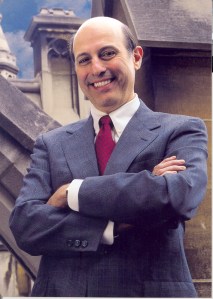
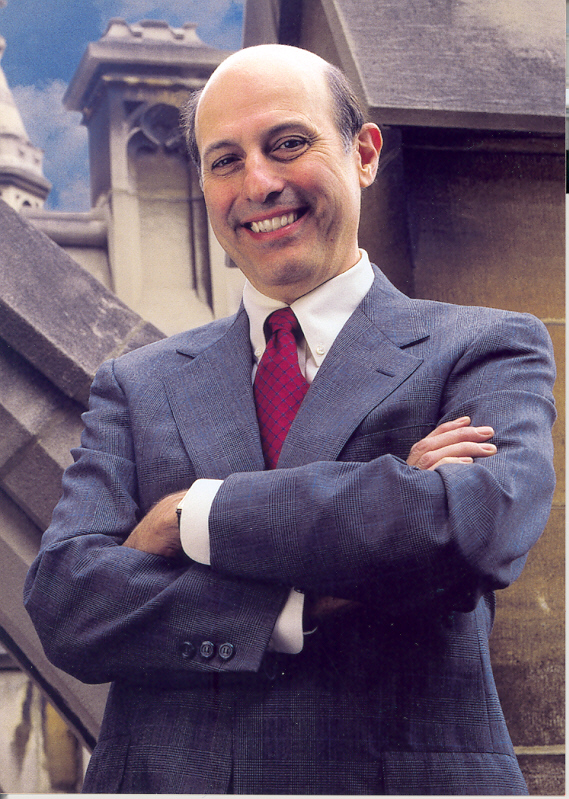
Professor David Forte
C|M|LAW Professor David Forte has had a busy summer and fall!
The Ohio State Law Journal published his article, Life, Heartbeat, Birth: A Medical Basis for Reform, 74 Oh. St. L. J. 121 (2013). In this article, Professor Forte argued that recent medical research demonstrates that the onset of cardiac activity is a better marker for fetal survival to birth (and hence for the state interest in “potential life”) than the uncertain “point of viability.”
On May 28, Professor Forte presented “The Deja-vu Future of Legal Education,” to the Harvard College 50th Reunion, in Cambridge, Massachusetts. He noted how modern reforms in legal education were cycling back to the example of the Tapping Reeve school in the early 19th century, which had been supplanted by formal university based law training.
On June 19, he gave an address entitled, “What’s the Pro-Life Strategy Now?” to the Catholic Lawyers’ Guild at the City Club of Cleveland. At the City Club event, Professor Forte discussed the advances made on behalf of the unborn by pro-life advocates in state legislatures over the past four years, and the prognosis for the future.
On July 16, Professor Forte gave a talk entitled, “Religious Liberty through Time,” to the Bastiat Society, here in Cleveland and discussed how the cultures of Judeo-Christianity, Greece, Rome, Scholasticism, the Reformation, and the Enlightenment merged to produce the notion of religious liberty as we understand it today.
On August 30, he presented a paper entitled “The Natural Law Bridge between Religion and the Constitutional State,” to the International Conference of Catholic Jurists in Frascati, Italy, followed by an audience with Pope Francis. The paper, which discusses the role of natural law rationality linking Christianity and the modern state has been accepted for publication in The Jurist, a refereed journal, published by the Catholic University of America.
On September 18, he gave a lecture “Why is Freedom of Religion under Attack across the World?” at the University of Toledo Law School. His thesis was that religion is always a threat to positivist legal regimes, whether they be ideological (e.g. Marxist), politico-religious (e.g. Islamism) or intolerantly secularist.
On Saturday, September 28, he addressed the We the People Convention in Columbus, Ohio, on the topic, “Religion in the Public Square.” He noted that religious presence as a social force for human betterment was being pushed aside by governmental programs.
On Sunday, September 29, Professor Forte was featured as a commentator in Brazil’s largest circulation daily news paper, CORREIO BRAZILIENSE, regarding home grown terrorism in the United States. In his comments, Forte suggested that the American education system should replicate the kind of welcoming assimilation that was present in the early twentieth century when a large group of immigrants with “alien” traditions came to our shores.
On October 15, Professor Forte gave a lecture at Southern Illinois University Law School entitled, “Isn’t it Time We Stopped Trusting Judges?” There followed commentary by Professors William Schroeder and Mark Brittingham. The theme of the lecture is that Originalism offers a solution to the recent politicization of the judiciary.
On October 23, he debated Professor Mitch Pickerell at Northern Illinois University Law School on the question, “Whether the Roberts Court is expanding State Sovereign Rights.” He asserted the affirmative, citing dormant commerce clause cases and Shelby County v. Holder. Professor Pickerell argued that preemption cases have gone strongly against the states under the Roberts Court.

 CSU Law Faculty